

Learn how to optimize keywords for SEO effectively in 2026. Boost your rankings with smart keyword placement and research tactics now!
TL;DR:
- Keyword optimization involves strategically placing keywords in on-page elements to improve search engine rankings. Prioritizing primary and long-tail keywords while aligning content with search intent significantly increases visibility and conversions. Consistent monitoring and updates ensure sustained performance and relevance.
Keyword optimization for SEO is the process of placing primary and related keywords in specific on-page elements so search engines can match your content to the right queries. The industry term is “on-page keyword optimization,” and it covers everything from title tags to URL slugs to body copy. 93.5% of page-one results include the target keyword in the title tag. That single stat tells you where the game is won or lost. Digital marketers and content creators who treat keyword placement as an afterthought leave rankings on the table every time they publish.
How to optimize keywords for SEO: research and selection
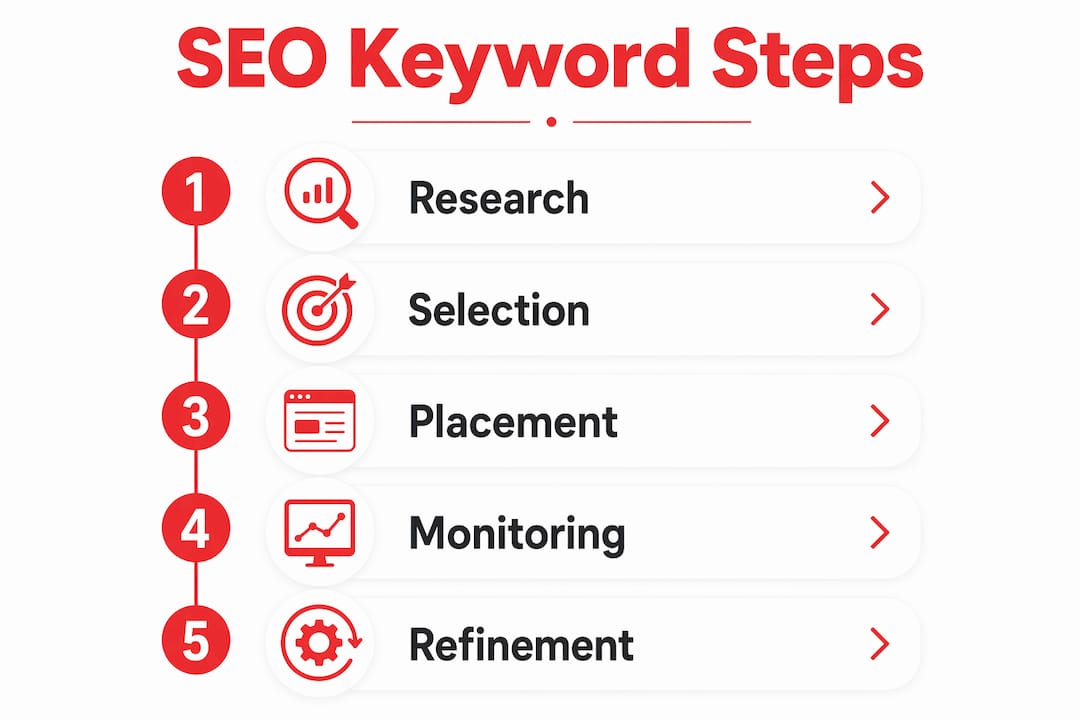
Good keyword optimization starts before you write a single word. You need to know what your audience searches, how competitive those terms are, and what they actually want when they type a query.
Build your keyword list with real metrics
Start with search volume and keyword difficulty. Search volume tells you how many people search a term monthly. Keyword difficulty tells you how hard it is to rank. Both numbers matter together. A keyword with 50,000 monthly searches and a difficulty score of 90 is nearly impossible for a new page. A keyword with 2,000 searches and a difficulty of 20 is a real opportunity.

Use tools like Google Search Console, Google Keyword Planner, or any reputable keyword research platform to pull these numbers. Filter by your niche. Relevance to your audience beats raw volume every time.
Prioritize long-tail keywords
Long-tail keywords convert better because they carry clearer intent. “SEO tips” is broad. “How to do SEO for your website in 2026” is specific. The person searching the second phrase knows what they want. That specificity translates directly to higher conversion rates, even when search volume is lower.
A solid keyword list for one page looks like this:
- One primary keyword (the main topic of the page)
- Two to four long-tail variants that support the primary term
- A handful of semantically related terms that cover expected subtopics
Avoid keyword cannibalization
Target one primary keyword per page and use semantically related terms to fill out the topic. When two pages on your site compete for the same keyword, search engines get confused about which one to rank. The result is both pages rank lower than either would alone. Map your keywords to specific pages before you write, and stick to that map.
Pro Tip: Create a simple spreadsheet with three columns: page URL, primary keyword, and supporting terms. Update it every time you publish. This one habit prevents cannibalization before it starts.
How does search intent affect keyword placement?
Search intent is the reason behind a query. Get it wrong and your page will not rank, no matter how well you place the keyword. Search engines categorize intent into four types: informational, navigational, transactional, and commercial investigation.
- Informational: The searcher wants to learn. (“How to use SEO for your website”)
- Navigational: The searcher wants a specific site. (“Rule27design blog”)
- Transactional: The searcher wants to buy. (“buy SEO content tool”)
- Commercial investigation: The searcher is comparing options before buying. (“best SEO platforms 2026”)
Analyzing the top 10 search results for your target keyword reveals the content type search engines already favor. If the top results are all blog posts, write a blog post. If they are all product pages, a blog post will not rank there. This is not a suggestion. It is how the algorithm works.
Pro Tip: Open an incognito window and search your primary keyword. Look at the format, length, and angle of the top three results. Your content needs to match the format and beat the depth.
Intent alignment also changes where you place your keyword. An informational page leads with a definition or direct answer. A transactional page leads with the product benefit and a clear call to action. The keyword appears in both, but the surrounding content serves a completely different purpose. Matching keyword placement to intent is what separates content that ranks from content that sits on page four.
Best practices for natural keyword placement in 2026
Keyword placement follows a clear hierarchy. Put the primary keyword in these locations, in this order of priority:
- Title tag: The single most important placement. Title tags with the target keyword appear in 93.5% of page-one results.
- H1 heading: One H1 per page, containing the primary keyword or a close variant.
- First 100 words: Search engines weight early content more heavily. Get the keyword in fast.
- URL slug: Keyword-inclusive URLs achieve up to 45% higher click-through rates. Keep the slug short and descriptive.
- H2 subheadings: Use the primary keyword in at least one H2. Use related terms in others.
- Final paragraph: Reinforce the topic at the close of the page.
Heading hierarchy matters more than most marketers realize
A single H1 with logically nested H2 through H6 tags improves crawlability and increases the chance of earning a featured snippet. Search engines and AI systems read heading structure to understand what a page covers. A flat structure with five H1 tags or random heading levels sends a confusing signal.
Keyword frequency: the real rule
Repeating a target keyword more than 5–8 times in a 1,500-word post reads as manipulative to search engines. The fix is not to count repetitions obsessively. The fix is to write naturally and use semantically related terms. “Web page SEO,” “on-page optimization,” and “search engine optimization” all reinforce the same topic without repeating the exact phrase.
| Placement | Priority | Notes |
|---|---|---|
| Title tag | Critical | Include exact or close variant of primary keyword |
| H1 heading | Critical | One per page only |
| First 100 words | High | Natural inclusion, not forced |
| URL slug | High | Short, descriptive, keyword-inclusive |
| H2 subheadings | Medium | Primary keyword in at least one; variants in others |
| Final paragraph | Medium | Reinforces topic relevance at close |
Pro Tip: Run your draft through a free readability checker after writing. If the keyword feels forced in any sentence, rewrite the sentence first. Natural language beats mechanical placement every time.
What advanced tactics improve keyword optimization results?
Keyword placement gets you in the game. These tactics help you win it.
-
Add schema markup. Schema markup and structured data make your content more extractable for AI-powered search engines. They increase eligibility for featured snippets and AI citations in tools like ChatGPT, Claude, and Perplexity. Article schema, FAQ schema, and HowTo schema are the three most useful types for content creators.
-
Format content answer-first. Answer-first paragraphs help AI systems generate direct responses and increase the chance your content gets cited. Lead every section with the direct answer. Expand with evidence after. This structure also improves user experience, which reduces bounce rate.
-
Build internal links deliberately. Internal linking passes authority from high-performing pages to newer or weaker ones. Link from your strongest pages to pages you want to rank. Use descriptive anchor text that includes the target keyword or a close variant. This is one of the most under-used tactics in content SEO. For a deeper look at how this connects to AI-driven visibility, the guide on AI content optimization covers the mechanics well.
-
Cover the topic completely. Content completeness is a stronger ranking factor than keyword density. Write to answer every expected subtopic and related question. A page that covers the full topic outranks a page that repeats the keyword more often.
Pro Tip: Check the “People Also Ask” box in Google for your primary keyword. Each question there is a subtopic your page should address. Answering them adds depth and increases the chance of earning a featured snippet.
For digital marketers building out a full semantic SEO strategy, internal linking and topic completeness work together to signal authority across an entire site, not just a single page.
How do you monitor and refine keyword optimization over time?
Publishing is not the finish line. Rankings shift. Algorithms update. Content ages. Monitoring keyword performance is what separates a one-time win from sustained visibility.
“SEO now includes AI answer engine optimization, requiring content that is easily extractable by AI systems through schema markup and structured formatting. Content that earns citations in AI-powered search tools follows the same principles as content that ranks in traditional search: clear structure, direct answers, and complete topic coverage.”
Track these metrics after every publish:
- Keyword ranking position: Check weekly for the first month, then monthly.
- Organic click-through rate: A low CTR despite a good ranking means your title tag or meta description needs work.
- Average time on page: Short sessions signal a mismatch between the keyword’s intent and your content.
- Pages indexed: Confirm search engines have crawled and indexed the updated page.
Common mistakes that kill keyword performance include targeting keywords that are too broad, ignoring intent, and never updating old content. A page published in 2023 with outdated statistics will lose rankings to a fresher page that covers the same topic more completely. Schedule a content audit every six months. Update statistics, add new subtopics, and refresh the keyword placement based on current search behavior. The SEO-friendly content guide from Rule27design covers what “complete” content looks like in practice.
Key takeaways
Keyword optimization for SEO works when you combine precise placement, intent alignment, and complete topic coverage — not keyword repetition alone.
| Point | Details |
|---|---|
| Title tag is non-negotiable | 93.5% of page-one results include the target keyword in the title tag. |
| Long-tail keywords convert better | Specific queries signal clear intent and outperform broad head terms for conversions. |
| One primary keyword per page | Targeting multiple unrelated keywords dilutes ranking signals and causes cannibalization. |
| Intent alignment determines content format | Match your content type to what the top 10 results already show for that keyword. |
| Content completeness beats keyword density | Covering all expected subtopics ranks better than repeating the primary keyword more often. |
What I’ve learned after watching keyword strategies fail and succeed
The biggest shift I’ve seen in SEO over the past few years is this: marketers who obsess over keyword frequency consistently underperform marketers who obsess over topic completeness. I’ve reviewed pages that hit the primary keyword 15 times in 1,200 words and rank nowhere. I’ve also seen pages that mention the keyword four times and sit in position two because they answered every related question the searcher had.
The uncomfortable truth is that keyword stuffing is not just penalized. It actively signals low-quality content to both algorithms and readers. When I read a page that forces the same phrase into every paragraph, I leave. So does everyone else. That bounce rate tanks the ranking further.
What actually works is treating the keyword as a signal, not a quota. Place it where it belongs. Then write the most complete, direct, useful page on that topic. Use semantic SEO techniques to cover related terms naturally. Build internal links from your strongest pages. Add schema markup so AI systems can extract and cite your content.
The marketers winning in 2026 are not chasing keyword counts. They are building content systems that serve both search engines and real readers. That shift in mindset is the actual optimization.
— Josh
Rule27design and your keyword optimization goals
Keyword strategy only works when your content infrastructure supports it. Rule27design builds custom content management systems and admin tools that give growth-stage teams real control over their SEO workflow, from keyword mapping to publishing to performance tracking.
If you are ready to move beyond spreadsheets and disconnected tools, Rule27design can build a system that fits how your team actually works. Clients typically see a 40% improvement in operational efficiency after implementation. Check out the SEO digital marketing guide to see how keyword optimization fits into a full digital strategy, or visit Rule27design to talk through what a custom content system could look like for your team.
FAQ
What is keyword optimization in SEO?
Keyword optimization is the process of placing a primary keyword and related terms in specific on-page elements, including the title tag, H1, URL, and body copy, so search engines can match your content to relevant queries.
How many times should I use a keyword on a page?
Repeating a target keyword more than 5–8 times in a 1,500-word post signals keyword stuffing to search engines. Use the keyword naturally and fill out the topic with semantically related terms instead.
What is the most important place to put a keyword?
The title tag is the single most critical placement. 93.5% of page-one results include the target keyword in the title tag, making it the highest-priority location for any on-page SEO effort.
What are long-tail keywords and why do they matter?
Long-tail keywords are specific, multi-word phrases with lower search volume but higher conversion potential. Their specificity signals clear intent, which means the traffic they attract is more likely to take action.
How does search intent affect keyword strategy?
Search intent determines the content format your page needs to use. Analyzing the top 10 results for your target keyword reveals whether search engines favor blog posts, product pages, or another format, and your content must match that format to compete.

About the Author
Josh AndersonCo-Founder & CEO at Rule27 Design
Operations leader and full-stack developer with 15 years of experience disrupting traditional business models. I don't just strategize, I build. From architecting operational transformations to coding the platforms that enable them, I deliver end-to-end solutions that drive real impact. My rare combination of technical expertise and strategic vision allows me to identify inefficiencies, design streamlined processes, and personally develop the technology that brings innovation to life.
View Profile

