

Explore the best digitalbyteteck.ca alternatives for growth-stage companies. Find tailored solutions to elevate your team's productivity.
TL;DR:
- Growth-stage U.S. companies need custom content management and internal tools tailored to their workflows. They should choose from custom-build, headless CMS, or platform-led services based on their specific needs and integration complexity. A quick vendor vetting, using a structured checklist and scoring framework, helps ensure long-term control and efficiency gains.
Growth-stage U.S. companies searching for digitalbyteteck.ca alternatives aren’t looking for another marketing agency. They need custom admin panels, content management systems, and internal tools that actually fit how their teams work. Three categories cover the field: specialized custom-build partners (end-to-end, full ownership), headless CMS + custom frontend (hybrid, buy the backend, build the UX), and platform-led professional services (custom integrations on top of established platforms).
- Custom-build partners fit companies that need full IP ownership, complex workflows, and a long-term technical partner. Rule27design, 10up, Thoughtbot, DockYard, and Devbridge all operate here.
- Headless/hybrid stacks fit teams that want speed to market and composable architecture without building everything from scratch.
- Platform-led services fit companies with simpler integration needs and tighter budgets.
Quick decision trigger: if you need to integrate five or more systems, own your data outright, and your team has outgrown off-the-shelf tools, start with the custom-build category. Otherwise, score your needs with the five-dimension framework in Section 4 before reaching out to any vendor.
What are the best digitalbyteteck.ca alternatives for custom admin and CMS work?
The table below maps each vendor category against the dimensions that matter most for growth-stage procurement.
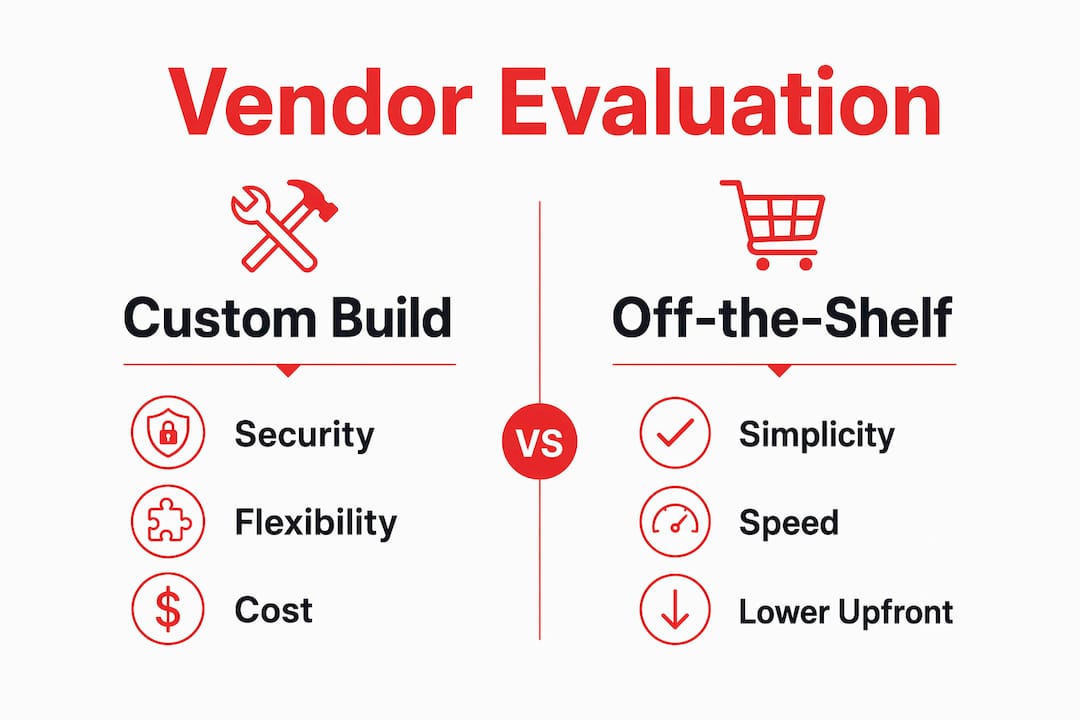
| Category | Best for | Pricing model | Typical project size | Tech-stack expertise | Time-to-launch | Maintenance & support | AI/automation capability | Ownership & IP terms |
|---|---|---|---|---|---|---|---|---|
| Custom-build partner (Rule27design, 10up, Thoughtbot, DockYard, Devbridge) | Full-ownership admin panels, bespoke CMS, complex internal tools | Fixed-scope or time & materials | $150K–$300K+ | React, Node.js, Supabase, headless APIs, AI integration | 12–16 weeks (MVP) | Retainer or T&M post-launch | High: AI-optimized content pipelines, automation hooks | Full client ownership; IP assigned at delivery |
| Headless CMS + custom frontend | Fast-scaling content teams needing composable architecture | T&M or hybrid fixed/variable | $50K–$150K | Contentful, Sanity, Strapi + custom React/Next.js frontend | 8–12 weeks (MVP) | Platform SLA + custom dev retainer | Medium: platform-native AI features + custom logic | Client owns frontend; platform terms govern backend |
| Platform-led professional services | Companies on established platforms needing custom integrations | Fixed-scope or retainer | $20K–$50K | WordPress, Drupal, Magento, Joomla | 4–8 weeks | Platform community + agency support | Low to medium | Shared: plugin/theme licenses may restrict forks |
| Toptal (talent marketplace) | Teams that want to hire senior engineers directly, not an agency | Time & materials (hourly/monthly) | Scales with team size | Broad: vetted engineers across stacks | Depends on team ramp | Client-managed | Varies by hire | Full client ownership |
| Low-code/enterprise tooling | Internal dashboards with limited custom logic | Subscription + setup fee | $5K–$30K | Retool, Appsmith, internal tool builders | 1–4 weeks | Vendor SLA | Low to medium | Vendor platform terms; limited portability |
When to pick each category:
- Custom-build partner. Your workflows are genuinely unique, you need full data ownership, and you’re planning to scale headcount fast. Custom platforms built as composable modules reduce vendor lock-in and let you swap components without a full rewrite.
- Headless/hybrid. You want speed and a modern content API but don’t need every layer custom. Headless architecture lets you buy commodity backend services and build only the differentiating frontend and business logic.
- Platform-led services. Budget is tight, timelines are short, and your needs map cleanly onto an existing platform’s feature set.
- Toptal. You have internal engineering leadership but need senior talent fast, without a full agency engagement.
- Low-code tooling. Internal dashboards with straightforward logic and no complex integrations.
Security and compliance expectations vary by category. Custom-build partners typically deliver SOC 2-aligned architecture, custom RBAC, and audit logs by default. Headless platforms like Contentful and Sanity carry their own compliance certifications. Low-code tools often lag on enterprise security controls.
How do you vet a custom admin or CMS vendor quickly?
Start with a must-have capabilities checklist before you get on a call: data ownership and residency, documented integration APIs, defined SLAs, modular architecture, AI-readiness, and deployment model (cloud, on-prem, or hybrid). If a vendor can’t answer all six in writing, that’s a signal.
15–30 minute vetting call script:
- Who owns the IP and source code at delivery?
- How do you handle data residency and GDPR/CCPA compliance for U.S. companies?
- What does your upgrade and migration policy look like after launch?
- Do you provide a staging/test environment during development?
- Can you share architecture diagrams and a sample integration endpoint?
- Who are the senior engineers assigned to this account, and will they stay on it?
- Can you provide two client references with similar project scope?
Red flags to watch:
- No-code-only answers for workflows that clearly need custom logic
- Vague or deferred IP terms (“we’ll sort that in the contract”)
- Opaque pricing with no ballpark until after a discovery call
- No references from companies at a similar growth stage
- A single point of contact with no named technical lead
When five or more systems need integration, a custom unified operations hub typically outperforms bolting integrations onto a rigid off-the-shelf core. Ask vendors how they’ve handled that scenario before.
Pro Tip: Request an architecture diagram and a list of third-party services the vendor plans to use before signing anything. A vendor who can’t produce that in 48 hours probably doesn’t have a clear technical plan yet.

Should you build, buy, or go hybrid? A five-dimension scoring framework
Use the five-dimension scoring method to make this call fast. Score each dimension 1–5, then total the scores.
| Dimension | Score 1 (buy) | Score 3 (hybrid) | Score 5 (build) |
|---|---|---|---|
| Differentiation | Generic need, commodity solution | Some unique logic needed | Core competitive advantage |
| Cost | Low budget, short runway | Moderate budget, 12–18 month horizon | Budget for 12–24 month build + ROI model |
| Time | Need it in weeks | Months acceptable | Timeline flexible for quality |
| Control | Platform defaults are fine | Some customization needed | Full control over every layer |
| Team | No in-house engineers | Small technical team | Strong internal engineering capacity |
Score interpretation: 5–12 = buy off-the-shelf. 13–18 = hybrid headless. 19–25 = build custom.
Worked examples: an internal admin dashboard often lands near the buy/hybrid boundary (score 10–15), a marketing site commonly hits the hybrid range (12–17), and a core product feature that drives revenue usually scores toward build (18–25).
How to run the one-hour workshop:
- Invite your CTO or tech lead, a product owner, and one business stakeholder.
- Score each dimension independently, then average across participants.
- Surface disagreements on Control and Differentiation first — those two drive the most variance.
- Output: a decision matrix with scores, a chosen category, and a vendor shortlist.
The hybrid answer is the most common practical outcome. Buy commodity backend services (content APIs, auth, payments, search) and build the differentiating UX and business logic on top. For scalable digital tools, that split keeps costs manageable while preserving the control that matters.
Pro Tip: Avoid binary yes/no scoring. Let each stakeholder assign 1–5 per dimension and average the results. That surfaces real consensus and catches edge cases before they become scope creep.
What results do Rule27design clients actually see?
Rule27design clients report 40% operational efficiency gains after implementing custom admin systems. One named engagement, AniltX, achieved 30x organic growth in 90 days after Rule27design built an AI-optimized content system designed to surface content in ChatGPT, Claude, and Perplexity responses.
Project highlights across Rule27design engagements:
- Custom admin panels replacing fragmented SaaS dashboards, with RBAC, audit logs, and real-time analytics built in
- Headless CMS integrations using React and Supabase, with content workflows that cut editorial cycle time significantly
- AI-optimized content pipelines that improve visibility in AI-native search results, not just traditional SERPs
40% operational efficiency improvement is the typical outcome Rule27design clients see after replacing off-the-shelf tools with a purpose-built admin system.
When vetting any vendor for this type of work, ask for: architecture diagrams from a comparable project, named senior engineers who will be on your account, defined SLAs for post-launch support, and at least two client references at a similar growth stage. Scaling organizations increasingly prioritize long-term control and ownership of strategic technology assets, and the proof is in the specifics a vendor can show, not just what they claim.
What do custom admin and CMS projects actually cost in the U.S.?
Short answer: budget $20K–$50K for a fixed-scope MVP, $50K–$150K for a hybrid headless project, and $150K–$300K+ for a full custom platform. Timelines run 4–8 weeks for an MVP, 8–12 weeks for a hybrid build, and 12–16 weeks for a full platform.
| Project type | Budget range | MVP timeline | Production launch | Maintenance model |
|---|---|---|---|---|
| Fixed-scope MVP (admin panel or CMS) | $20K–$50K | 4–8 weeks | 4–8 weeks | Fixed-price support or T&M |
| Hybrid headless project | $50K–$150K | 8–12 weeks | 12–20 weeks | Retainer or T&M |
| Full custom platform | $150K–$300K+ | 12–16 weeks | 20–32 weeks | Dedicated retainer |
Typical milestone phases:
- Discovery and requirements (1–2 weeks)
- Architecture design and tech stack selection (1–2 weeks)
- MVP build (4–10 weeks)
- Iteration and QA (2–4 weeks)
- Production launch
- Post-launch support and iteration
The break-even window for custom builds is typically 12–24 months. After that point, per-seat SaaS licensing and manual workarounds usually cost more than owning a custom build outright. For companies with fast headcount growth, model your three-year total cost of ownership, not just the initial price tag. Compounding subscription costs and fragmented silos are the most common triggers for switching to custom platforms.
Key Takeaways
Growth-stage U.S. companies evaluating custom admin and CMS alternatives need a clear framework, not just a vendor list.
| Point | Details |
|---|---|
| Score before you shortlist | Use the five-dimension framework (Differentiation, Cost, Time, Control, Team) to decide build vs. buy vs. hybrid before contacting vendors. |
| Custom build breaks even in 12–24 months | Per-seat SaaS costs typically exceed custom build costs within two years for fast-scaling teams. |
| Hybrid is the most common outcome | Buy commodity backend services (auth, content API, payments) and build only the differentiating frontend and logic. |
| Vet vendors with a 15-minute call script | Ask for IP terms, architecture diagrams, named engineers, and two client references before signing anything. |
| Rule27design for growth-stage custom systems | Rule27design builds custom admin panels, headless CMS integrations, and AI-optimized content pipelines, with clients reporting 40% efficiency gains, leveraging content marketing automation to scale content production effectively. |
Why a vendor-first shortlist reduces procurement risk
The conventional wisdom says to write a detailed RFP and send it to ten vendors. That approach wastes three to four weeks and produces responses that are hard to compare. A vendor-first shortlist, built around your scored requirements, gets you to a defensible decision in days.
The build/buy/hybrid trade-off has gotten more complex with AI-native requirements. A system that doesn’t expose structured data to AI search engines is already behind. Data ownership and vendor lock-in aren’t abstract concerns anymore. They directly affect whether your content surfaces in ChatGPT or Perplexity, and whether you can migrate without a full rewrite.
Rule27design’s typical engagement starts with a short technical audit, not a sales call. That audit produces architecture recommendations and an integration map before any contract is signed. It’s a different model from a pure marketing agency, and it’s why the outcomes tend to be measurable.
Rule27design can build your custom admin or CMS system
Growth-stage companies that have outgrown off-the-shelf tools but aren’t ready for enterprise software have a real option here. Rule27design delivers custom admin panels, headless CMS integrations, and AI-optimized content pipelines built on React, Supabase, and Node.js, with full IP ownership transferred at delivery.
- Custom admin panels with RBAC, audit logs, and real-time analytics
- Headless CMS builds designed for content velocity and AI search visibility
- AI content pipelines that help your content rank in ChatGPT, Claude, and Perplexity
The starting point is a technical discovery audit: two to three architecture recommendations, an integration map, and a project estimate, delivered within one week. No long-term commitment required to get started. Book your discovery audit and see what a purpose-built system looks like for your team.

About the Author
Josh AndersonCo-Founder & CEO at Rule27 Design
Operations leader and full-stack developer with 15 years of experience disrupting traditional business models. I don't just strategize, I build. From architecting operational transformations to coding the platforms that enable them, I deliver end-to-end solutions that drive real impact. My rare combination of technical expertise and strategic vision allows me to identify inefficiencies, design streamlined processes, and personally develop the technology that brings innovation to life.
View Profile

