

Discover why functional prototyping is crucial for product design. Validate, test, and ensure your product works before production. Learn more!
Functional prototyping is how you find out if your product actually works before you spend serious money on tooling. A functional prototype is a physical working model built to replicate the mechanical behavior, assembly structure, and performance of the final product. Not how it looks. How it works. That distinction changes everything about how you build, test, and ship.
Here’s what functional prototypes do that visual mockups can’t:
- Validate mechanical load, fit, tolerance, and motion under real conditions
- Reveal assembly sequence problems and tolerance stack-up before tooling is cut
- Test thermal behavior, sealing, wear, and fatigue life with production-like materials
- Confirm manufacturability so your production process doesn’t surprise you later
- Catch structural failures when fixing them is still cheap
Yes, they cost more. Functional prototypes cost 3 to 10 times more than clickable or visual prototypes. But the engineering data they produce is what prevents the far more expensive disasters that happen after tooling begins.
Why functional prototyping is the engineering team’s best decision
A functional prototype answers a different question than a visual model. Visual prototypes answer “what does it look like?” Functional prototypes answer “does it actually work?” Those are two completely separate decisions, and mixing them up wastes budget.
The specific engineering questions a functional prototype addresses include:
- Mechanical load: Can the bracket hold the target weight under real operating stress?
- Assembly fit: Do all components mate correctly, or does a 0.1mm tolerance error cause failure?
- Motion and sealing: Do moving parts travel through their full range without binding or leaking?
- Thermal behavior: Does heat distort geometry or degrade material properties at operating temperature?
- Fatigue and wear: Will the part survive thousands of cycles without cracking or degrading?
CAD models assume perfect conditions. Real materials don’t behave that way. A functional prototype reveals actual structural and assembly challenges that simulations routinely miss, including tolerance stack-up across multiple components and assembly accessibility problems that only appear when a human hand tries to reach a fastener.
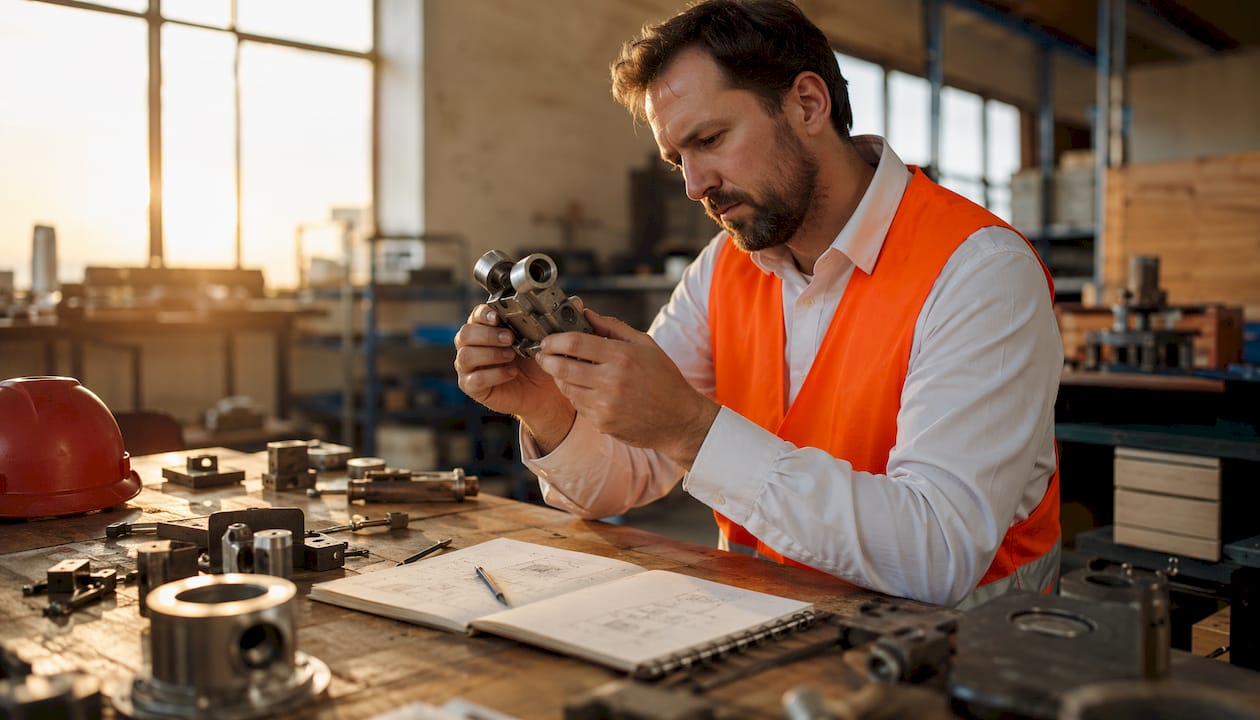
Functional prototypes are typically built using CNC machining, cast urethane, or sheet metal fabrication, chosen specifically because those processes produce geometry and material properties close to production intent. The manufacturing method has to match the validation goal, not just the delivery timeline.
How functional prototypes fit into the product development process
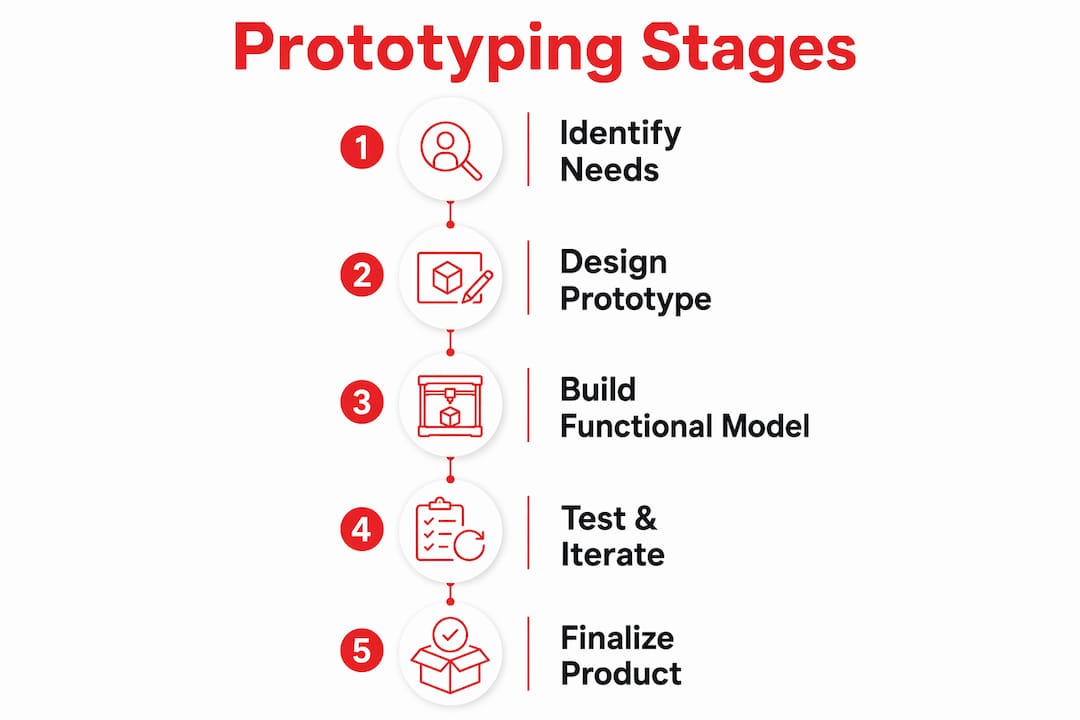
Functional prototype development sits between concept modeling and production tooling release. That position is deliberate. It’s the stage where engineering assumptions get replaced by measured data.
- Define scope. Identify which failure modes carry the most risk. A functional prototype isn’t insurance against every problem. It’s a targeted test of the highest-risk behaviors.
- Select the manufacturing process. Match the process to the validation objective. A 3D-printed prototype tells you about geometry. A CNC-machined metal part tells you about structural behavior and assembly fit.
- Build to production intent. Use materials and tolerances that reflect what production will actually deliver, not just what’s convenient for the prototype shop.
- Test against defined criteria. Apply ASTM or ISO test methods for structural integrity, fatigue, wear, and environmental performance. Informal testing produces informal data.
- Iterate based on results. If the prototype fails, that’s the point. Revise the design, rebuild, and retest before tooling is ever cut.
- Validate manufacturability. A feature that requires production-impossible tolerances to function is a design problem the prototype just revealed. Fix it now.
Problems caught during functional prototype development cost a fraction of what they cost after tooling is committed and supply chains are in place. Engineers who skip this stage to save time reliably spend more total time and money over the full product development cycle.
Common challenges in functional prototyping and how to handle them
Functional prototyping isn’t without friction. Here’s what teams run into most often, and what actually helps:
- Cost and time intensity. Functional prototypes take longer and cost more than visual models. The fix is targeting. Build functional prototypes for high-risk failure modes, not for every design question.
- Material and process gaps. A 3D-printed prototype won’t tell you how an injection-molded part behaves at weld lines or gate vestiges. Choose the process that matches what you actually need to learn.
- Tolerance realism. Achieving production-level tolerances in a prototype shop is hard. Define which tolerances are critical to the test and hold those tightly. Relax the rest.
- Unclear objectives. Prototypes built without defined test criteria produce ambiguous results. Write the acceptance criteria before you build, not after.
- Conflating form and function. Separating looks-like and works-like prototyping tracks leads to faster development and more focused feedback. Don’t try to validate aesthetics and mechanical performance in the same build.
- Skipping iteration. One prototype rarely answers every question. Plan for at least two rounds before treating results as final.
Expert perspectives on functional prototyping from Rule27design and industry leaders
Functional prototypes cost substantially more than clickable or visual prototypes. That differential is a parameter in the economic analysis, not a default toward the cheaper option.
The economic mismatch trap is real. Teams choose prototype types based on cost alone, then miss the critical validation signals that only a working physical model can produce. A clickable prototype generates user experience feedback. A functional prototype generates behavioral and mechanical evidence. Those are not interchangeable.
At Rule27design, the same principle applies to digital infrastructure. Building the wrong system early because it’s cheaper creates rework costs that dwarf the original savings. The discipline is identifying the right validation question first, then choosing the instrument that answers it.

Pro Tip: Match your prototype type to the specific uncertainty you’re testing. If the question is “does the mechanism hold under load,” a visual model wastes your budget. If the question is “does the color read well in context,” a functional prototype wastes it. The economic efficiency comes from precision, not from always choosing the cheaper option.
Functional prototyping also shapes go-to-market strategy. When your product has been physically validated under real operating conditions, your marketing claims are grounded in engineering data, not assumptions. That alignment between what you promise and what you ship is where brand credibility actually gets built. Teams that use prototype results to inform their unique selling proposition go to market with claims they can defend.
The engineers who treat functional prototyping as a targeted experiment rather than a checkbox catch the right failures at the right time. They define which failure modes matter most, build prototypes capable of revealing them, and fix defects while the cost of fixing is still manageable. That’s the discipline that separates products that ship reliably from products that ship and then get recalled.
Key Takeaways
Functional prototyping is the stage where engineering assumptions become engineering data, and skipping it reliably costs more than doing it right.
| Point | Details |
|---|---|
| Cost differential is real | Functional prototypes cost 3 to 10 times more than visual models, but prevent far costlier post-tooling failures. |
| Match prototype to question | Visual prototypes answer appearance questions; functional prototypes answer mechanical and behavioral ones. |
| Target high-risk failure modes | Functional prototyping works best when scoped to specific failure modes, not used as a catch-all. |
| Separate form and function tracks | Running looks-like and works-like prototypes independently produces faster, more focused results. |
| Manufacturability matters | A functional prototype that requires impossible production tolerances is revealing a design flaw, not just a prototype limitation. |

About the Author
Josh AndersonCo-Founder & CEO at Rule27 Design
Operations leader and full-stack developer with 15 years of experience disrupting traditional business models. I don't just strategize, I build. From architecting operational transformations to coding the platforms that enable them, I deliver end-to-end solutions that drive real impact. My rare combination of technical expertise and strategic vision allows me to identify inefficiencies, design streamlined processes, and personally develop the technology that brings innovation to life.
View Profile

