

Content lifecycle management streamlines creation, governance, and optimization. Learn stages, tools, common pitfalls, and benefits for growing teams.
Over 80 percent of American organizations report struggling to keep digital content accurate and up to date as their teams grow. In a fast-paced business world, even small content errors or outdated information can erode trust, impact reputation, and create unnecessary risk. Understanding the essentials of content lifecycle management offers companies a way to turn their digital content into a valuable, adaptive resource that supports long-term growth and audience engagement.
Key Takeaways
| Point | Details |
|---|---|
| Content Lifecycle Management is Strategic | It aligns digital content with organizational goals to enhance audience engagement and operational efficiency. |
| Key Stages are Essential | Understanding the stages from planning to archiving ensures content remains relevant and valuable throughout its lifecycle. |
| Technology is Crucial | Advanced content management systems facilitate workflow automation and improve content management processes. |
| Collaboration is Key | Defining clear roles and fostering cross-functional collaboration enhances content quality and consistency. |
Defining Content Lifecycle Management Essentials
Content Lifecycle Management represents a strategic approach to planning, creating, distributing, managing, and archiving digital content throughout its entire existence. At its core, it transforms content from a static resource into a dynamic, evolving asset that adapts to organizational needs and audience expectations.
The fundamental stages of content lifecycle management include strategic content assessment which encompasses initial planning, creation, review, publication, maintenance, and eventual retirement or archival. Each phase requires specific attention and systematic processes to ensure content remains relevant, accurate, and aligned with business objectives. Organizations that implement robust content lifecycle management can expect significant improvements in operational efficiency, brand consistency, and audience engagement.

Key components of an effective content lifecycle management strategy involve cross-functional collaboration, clear governance frameworks, and adaptive technologies. Teams must establish standardized workflows that enable seamless content production, minimize redundancies, and facilitate continuous improvement. Professional training programs emphasize the importance of integrating content management practices with broader organizational goals, ensuring that every piece of content serves a strategic purpose.
Effective content lifecycle management goes beyond mere documentation management. It represents a holistic approach to transforming content into a strategic organizational asset that drives communication, knowledge sharing, and business value.
Pro Tip: Develop a centralized content repository with clear version control and metadata tagging to streamline your content management processes and enhance team collaboration.
Key Stages From Creation to Archiving
Content creation marks the initial and most critical phase of the content lifecycle, where organizations transform strategic insights into tangible digital assets. This stage involves developing high-quality, targeted content that addresses specific audience needs and aligns with broader organizational objectives. Successful content creation requires deep understanding of user requirements, comprehensive research, and a clear strategic vision.
The continuous improvement framework highlights multiple interconnected stages beyond initial creation. These stages include systematic content capture, rigorous auditing, strategic repurposing, periodic review, and deliberate archiving. Each phase demands meticulous attention, ensuring content remains dynamic, relevant, and valuable throughout its lifecycle. Effective management means treating content as a living resource that evolves with organizational knowledge and audience expectations.
Government guidance, such as comprehensive content lifecycle policies, emphasizes regular content assessment and maintenance. Organizations should implement annual content reviews, establish clear categorization protocols, and develop robust archiving strategies. This approach prevents content decay, maintains information accuracy, and supports efficient knowledge management across complex digital ecosystems.
Technological infrastructure plays a crucial role in supporting these content lifecycle stages. Modern content management systems provide workflow automation, version control, metadata tagging, and analytics capabilities that transform content management from a manual process to a strategic, data-driven function.
The following table summarizes the major stages in content lifecycle management and their primary objectives:
| Stage | Main Objective | Example Activity |
|---|---|---|
| Planning | Define goals and content gaps | Audience research |
| Creation | Develop new digital assets | Writing web articles |
| Review | Ensure quality and consistency | Editorial assessment |
| Publication | Make content accessible to audience | Blog posting |
| Maintenance | Keep content current and relevant | Regular updates |
| Archiving | Retire or store obsolete materials | Moving to long-term storage |
Pro Tip: Implement quarterly content audits to identify outdated materials, reassess relevance, and proactively manage your digital content repository.
Tools and Technologies Shaping the Process
Content management technologies have evolved dramatically, transforming how organizations capture, develop, and maintain digital assets. Modern platforms go beyond simple storage, offering sophisticated capabilities that integrate artificial intelligence, advanced analytics, and seamless workflow automation to support complex content lifecycle strategies.
Enterprise architecture frameworks provide critical insights into understanding technological dependencies and impact across organizational systems. These frameworks enable strategic planning by mapping application statuses, identifying potential upgrade paths, and ensuring technological investments align with broader business objectives. The ability to visualize technological ecosystems helps leaders make informed decisions about content management infrastructure.
Content lifecycle management tools now offer unprecedented customization and testing capabilities. Organizations can clone existing content channels, modify them in controlled environments, and assign them to specific test clients before full deployment. This approach minimizes risks, ensures quality, and provides a structured method for iterative content development and management.
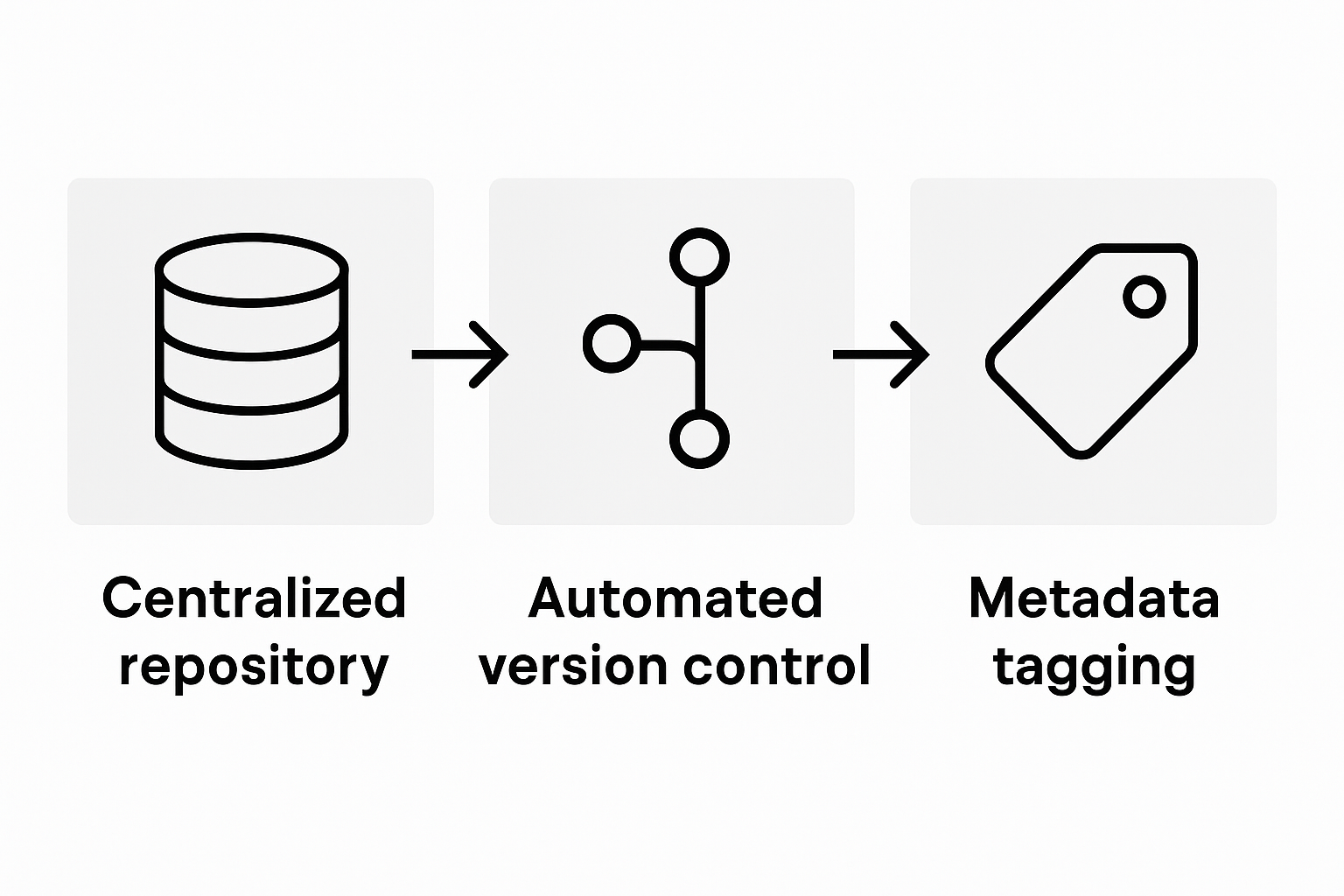
Key technological capabilities now include intelligent metadata tagging, automated version control, real-time collaboration features, and advanced content personalization algorithms. These technologies enable dynamic content adaptation, ensuring that digital assets remain relevant, accessible, and aligned with evolving organizational and audience requirements.
Pro Tip: Select content management technologies that offer robust integration capabilities, allowing seamless connections between your existing software ecosystems and new content management platforms.
Role-Based Responsibilities and Collaboration
Role-based content management transforms organizational content strategies by defining clear responsibilities, accountability, and collaborative pathways. Each team member plays a critical part in maintaining the content ecosystem, with specific permissions and expectations that align with their expertise and organizational objectives.
Content lifecycle collaboration requires implementing structured processes that foster transparent communication and systematic workflow management. This approach involves scheduling regular check-ins, establishing version control mechanisms, and creating a robust feedback culture that enables continuous improvement. Successful implementation demands breaking down traditional organizational silos and promoting cross-functional engagement.
Role lifecycle management emphasizes the importance of periodic role reviews and stakeholder involvement. Organizations must develop dynamic processes for role creation, modification, review, and potential deprecation. This ensures that content management responsibilities remain aligned with evolving business needs, technological capabilities, and strategic objectives.
Typical role-based responsibilities often include content creators, editors, subject matter experts, compliance reviewers, and strategic managers. Each role contributes unique perspectives and skills, creating a holistic approach to content development, validation, and maintenance. Advanced content management systems now provide granular permission settings, enabling precise control over who can view, edit, approve, and publish different types of content.
Here’s a comparison of roles involved in content management and their unique responsibilities:
| Role | Responsibility Focus | Typical Actions |
|---|---|---|
| Content Creator | Content generation | Drafting articles, sourcing media |
| Editor | Content improvement | Refining language, correcting errors |
| Subject Matter Expert | Accuracy assurance | Validating facts, updating details |
| Compliance Reviewer | Policy and legal checks | Ensuring regulations are met |
| Strategic Manager | Alignment with goals | Overseeing strategy and direction |
Pro Tip: Conduct quarterly role audits to reassess team members’ content management responsibilities and ensure alignment with current organizational goals and individual skill sets.
Common Pitfalls and Best-Practice Solutions
Content lifecycle management presents numerous challenges that can derail organizational effectiveness if not carefully navigated. Understanding these potential obstacles is crucial for developing robust, resilient content strategies that minimize risks and maximize operational efficiency.
Implementation challenges frequently emerge from security vulnerabilities and inadequate access controls. Organizations must prioritize tools with comprehensive security features, including advanced encryption, multi-factor authentication, and granular role-based permissions. Weak security infrastructure can expose sensitive content to potential data breaches, compromising both organizational integrity and confidential information.
Stakeholder communication and alignment represent another critical area where organizations often encounter significant challenges. Successful content lifecycle management requires early and comprehensive stakeholder mapping, establishing clear communication protocols, and creating shared understanding of workflow expectations. Misalignment between teams can lead to redundant efforts, content inconsistencies, and diminished overall productivity.
Common pitfalls also include inadequate version control, lack of standardized metadata practices, insufficient content governance frameworks, and minimal cross-functional collaboration. Organizations must develop systematic approaches that include regular content audits, continuous training programs, and adaptive technological infrastructure that can evolve with changing business requirements. Implementing flexible yet structured content management processes allows teams to maintain quality, relevance, and strategic alignment.
Pro Tip: Develop a comprehensive content risk assessment framework that identifies potential vulnerabilities, establishes mitigation strategies, and includes periodic review mechanisms to maintain system resilience.
Unlock Seamless Content Lifecycle Management with Custom Solutions
The article highlights the critical challenges organizations face in managing their content lifecycle—from planning and creation through to archiving. Key pain points include maintaining content relevance, ensuring cross-functional collaboration, and navigating technological complexities such as version control and metadata management. If your team struggles with outdated content strategies, inefficient workflows, or the need for role-based permissions that actually fit your operations, it is time for a tailored approach. Concepts like dynamic content adaptation, clear governance frameworks, and intelligent automation are essential to scale operations effectively.
At Rule27 Design, we specialize in building custom content management systems and administrative platforms that align perfectly with how your team works. Our expertise combines business insight and advanced technology to create systems that improve operational efficiency by up to 40% while enhancing content visibility and AI-optimized search performance. We deliver solutions that integrate intuitive interfaces with backend robustness supported by modern tools like React, Supabase, and AI enhancements, addressing the exact challenges highlighted in the article—including role lifecycle management and continuous content improvement.
Explore how our custom admin panels and digital infrastructure can transform your content lifecycle management today.

Don’t let outdated content management hold your business back. Visit Rule27 Design now to start building your scalable content solution and experience a new level of operational excellence.
Frequently Asked Questions
What is content lifecycle management?
Content lifecycle management is a strategic approach to planning, creating, distributing, managing, and archiving digital content throughout its existence, transforming it into a dynamic asset that meets organizational needs and audience expectations.
What are the key stages of content lifecycle management?
The key stages include planning, creation, review, publication, maintenance, and archiving. Each stage focuses on specific objectives to ensure content remains relevant and aligned with business goals.
How can organizations improve their content management processes?
Organizations can improve their content management processes by establishing standardized workflows, conducting regular content audits, integrating advanced technologies, and encouraging cross-functional collaboration among teams.
What technological tools are essential for effective content lifecycle management?
Essential technological tools for effective content lifecycle management include modern content management systems that offer features like workflow automation, version control, metadata tagging, and analytics capabilities to support strategic content initiatives.

About the Author
Josh AndersonCo-Founder & CEO at Rule27 Design
Operations leader and full-stack developer with 15 years of experience disrupting traditional business models. I don't just strategize, I build. From architecting operational transformations to coding the platforms that enable them, I deliver end-to-end solutions that drive real impact. My rare combination of technical expertise and strategic vision allows me to identify inefficiencies, design streamlined processes, and personally develop the technology that brings innovation to life.
View Profile

