

Discover expert tactics to boost SaaS content visibility in 2025. Learn AI search optimization, content clustering, schema markup, and brand citation strategies for marketing leaders.
Content visibility remains one of the biggest challenges facing SaaS marketers in 2025. Despite widespread adoption of content strategies, only 28% of enterprise marketers rate their approach as highly effective. The landscape has shifted dramatically with AI-powered search platforms like ChatGPT, Claude, and Perplexity reshaping how audiences discover content. This article delivers expert-backed tactics specifically designed for marketing leaders at growth-stage SaaS companies and digital agencies who need to enhance visibility and optimize for AI search performance.
Key Takeaways
| Point | Details |
|---|---|
| AI search adaptation | Adapt content visibility to AI search and measure beyond traditional SEO metrics. |
| Content clusters and schema | Organize content into topic clusters and apply schema markup to improve AI comprehension and discoverability. |
| Continuous AI optimization | Continuously optimize using AI feedback and track brand citations across AI responses. |
| Monitor AI platforms | Monitor multiple AI platforms to navigate model updates and variability. |
| Digital PR for entities | Strengthen entity recognition through digital PR to boost AI search relevance. |
Evaluating content visibility criteria for SaaS marketers
The metrics that mattered in 2023 no longer tell the complete story. Traditional SEO measurements like keyword rankings and organic traffic remain important, but they miss a crucial dimension: how AI models surface and recommend your content. You need a dual-lens approach that captures both search engine performance and AI platform visibility.
Start by establishing baseline measurements across multiple dimensions. Track your traditional metrics through content analytics tools while simultaneously monitoring brand mentions in AI responses. The gap between these two data sets reveals opportunities most competitors miss.
Consider geo-specific citation strategies for regional content influence. AI models often prioritize locally relevant sources when answering location-based queries. This creates opportunities for SaaS companies targeting specific markets to gain disproportionate visibility through strategic content positioning.
The reality check: 96% of technology marketers have a content strategy, but only 29% call it highly effective. The difference between these groups often comes down to measurement sophistication. Effective marketers track:
- Brand citation frequency across AI platforms
- Response accuracy when AI models reference their content
- Prompt variation testing to understand trigger phrases
- Competitive visibility benchmarks in AI responses
- Entity recognition strength in knowledge graphs
Pro Tip: Set up systematic monitoring of brand mentions in AI responses to capture visibility beyond search rankings. Use a spreadsheet to track weekly queries across ChatGPT, Claude, and Perplexity, noting when your brand appears and in what context.
Model variability creates another layer of complexity. The same query can produce dramatically different results across platforms or even within the same platform after updates. This inconsistency demands ongoing attention rather than set-it-and-forget-it optimization.
Your evaluation framework should account for content maturity stages. Early-stage content needs different metrics than established pillar pages. New content requires traffic and engagement tracking, while mature content demands citation frequency and AI recommendation rates. Following a comprehensive content optimization guide helps structure this multi-phase approach.
Top content visibility tactics for AI-optimized SaaS marketing
Implementing content clusters organized by topic signals relevance to AI models more effectively than isolated articles. Think of clusters as interconnected knowledge hubs where a pillar page covers a broad topic while supporting articles dive deep into specific subtopics. This architecture helps AI understand your expertise depth.

Schema markup provides the structural foundation AI models need to comprehend your content accurately. FAQ schema particularly boosts both AI understanding and featured snippet eligibility. When you mark up questions and answers with proper schema, you create machine-readable signals that improve discoverability.
Craft content using natural language that answers specific user intents explicitly. AI models excel at matching conversational queries to clear, direct answers. Structure your content around actual questions your audience asks, then provide concise responses before expanding with supporting detail.
Here’s your implementation sequence:
- Audit existing content to identify natural cluster opportunities around core topics
- Create or designate pillar pages that provide comprehensive topic overviews
- Build supporting articles that explore specific angles in depth
- Implement schema markup across all content, prioritizing FAQ and article schemas
- Add internal links connecting cluster content bidirectionally
- Test content performance by querying AI platforms with relevant prompts
- Analyze which content gets cited and refine based on patterns
- Update content regularly as AI models evolve and user intent shifts
Continuous optimization using AI feedback loops separates effective strategies from mediocre ones. Analyze AI response performance and adjust content accordingly. This means regularly querying AI platforms with your target keywords and questions, documenting when your content appears, and identifying gaps where competitors get cited instead.
The optimization cycle never stops. AI models update frequently, shifting which signals they prioritize. Content that ranked well in AI responses last month might disappear after a model update. Your content optimization steps should include monthly AI visibility audits.
Pro Tip: Regularly update content clusters as AI models evolve to maintain high visibility. Set calendar reminders for quarterly cluster reviews where you refresh statistics, add new supporting articles, and verify schema markup remains current.
Natural language optimization requires understanding how people actually phrase questions. Voice search and conversational AI queries differ significantly from typed keywords. Someone might search “SaaS content strategy” but ask an AI “how should a SaaS company approach content marketing in 2025?” Your content needs to address both formats.
Comparing content visibility approaches in the evolving AI search landscape
Different approaches to content visibility offer distinct advantages depending on your resources and goals. Manual SEO remains foundational but increasingly insufficient alone. AI-centric optimization tools provide automation and scale but require careful oversight to avoid generic output.
| Approach | Best for | Limitations | Investment level |
|---|---|---|---|
| Manual SEO | Established sites with existing authority | Time-intensive, misses AI signals | Medium |
| AI optimization tools | Scaling content production efficiently | Can produce generic content | Medium-High |
| Brand citation monitoring | Understanding AI visibility patterns | Requires consistent tracking | Low-Medium |
| Digital PR campaigns | Building entity recognition quickly | Needs ongoing relationship management | High |
| Schema implementation | Technical foundation for AI comprehension | One-time setup, ongoing maintenance | Low |
Brand citation monitoring tools vary widely in sophistication. Basic approaches involve manual querying of AI platforms, while advanced solutions automate tracking across multiple models. The key differentiator is consistency. Sporadic monitoring misses important trends that systematic tracking reveals.
Digital PR builds entity recognition that directly impacts AI search relevance. When authoritative sources mention your brand, AI models incorporate those signals into their knowledge graphs. This creates a compounding effect where increased recognition leads to more citations, which further strengthens recognition.
LLM responses vary by query phrasing and model updates, making multi-platform monitoring essential. What works for ChatGPT might not work for Claude or Gemini. Each platform has different training data, update schedules, and algorithmic priorities.
The challenges posed by large language model updates require agile content strategies. A major model update can shift visibility patterns overnight. Companies that monitor closely and adapt quickly maintain better overall visibility than those using static optimization approaches.
Integrating multiple approaches typically delivers better results than relying on a single tactic. Combining content clusters with schema markup, backed by digital PR and systematic AI monitoring, creates redundancy that protects against algorithm changes. When one signal weakens, others maintain visibility.
Consider these integration points:
- Use AI-powered content checklists to ensure consistency across tactics
- Coordinate digital PR timing with content launches for maximum impact
- Implement schema markup before running paid promotion to maximize technical foundation
- Track AI citations to identify which PR mentions drive actual visibility improvements
The ranking factors in AI search differ from traditional SEO in important ways. While backlinks and domain authority still matter, content structure, entity recognition, and answer relevance carry more weight in AI recommendations.
Selecting the best content visibility strategy for your SaaS or digital agency
Your organizational capacity for continuous AI-driven optimization determines which tactics to prioritize. Small teams should focus on foundational elements like content clusters and schema markup before attempting advanced AI monitoring. Large teams can pursue multiple strategies simultaneously.
Balance investments between content creation, digital PR, and technical SEO implementation based on your current strengths. If you already produce high-quality content but lack technical optimization, schema markup delivers quick wins. If your technical foundation is solid but content quality lags, invest in better creation processes.
Start with foundational tactics before adopting advanced tools. Content clusters and schema markup provide the infrastructure that makes advanced optimization effective. Skipping foundations to chase sophisticated monitoring tools wastes resources because you lack the content quality to capitalize on insights.
Leverage CMS features for SaaS content teams to streamline content governance and optimization. The right CMS automates schema implementation, tracks content relationships for clustering, and provides analytics that reveal optimization opportunities.
Decision criteria by company profile:
- Early-stage startups: Focus on content clusters and basic schema. Manual AI monitoring monthly. Limited digital PR through founder networking.
- Growth-stage companies: Implement comprehensive schema, systematic AI tracking, and targeted digital PR campaigns. Invest in CMS features that support scaling.
- Enterprise organizations: Deploy advanced AI monitoring tools, aggressive digital PR, dedicated optimization teams, and custom CMS integrations.
- Digital agencies: Build repeatable processes for clients across all tactics. Create templates for schema, cluster structures, and monitoring protocols.
- Budget-conscious teams: Prioritize schema markup and content clustering with manual AI monitoring. These deliver strong ROI with minimal investment.
- Resource-rich teams: Pursue all tactics simultaneously with dedicated personnel for each area. Test emerging platforms early.
Content maturity stage matters as much as company size. If you’re starting from scratch, rushing into advanced tactics wastes money. Build your content library first, then layer on optimization. Only 28% of enterprise marketers rate their strategy as highly effective, often because they skipped foundational work.
The sweet spot for most growth-stage SaaS companies combines content clustering, comprehensive schema markup, monthly AI visibility audits, and quarterly digital PR pushes. This balance provides consistent improvement without overwhelming teams or budgets.
Enhance your SaaS content visibility with Rule27 Design
Navigating the complexity of AI-optimized content visibility requires both strategic thinking and technical execution. Rule27 Design specializes in building custom content management systems that streamline optimization for growth-stage SaaS companies and digital agencies.
Our clients typically see 40% improvement in operational efficiency and significant gains in content performance after implementing our systems. We’ve developed AI-optimized content systems that help companies rank better in ChatGPT, Claude, and Perplexity responses.
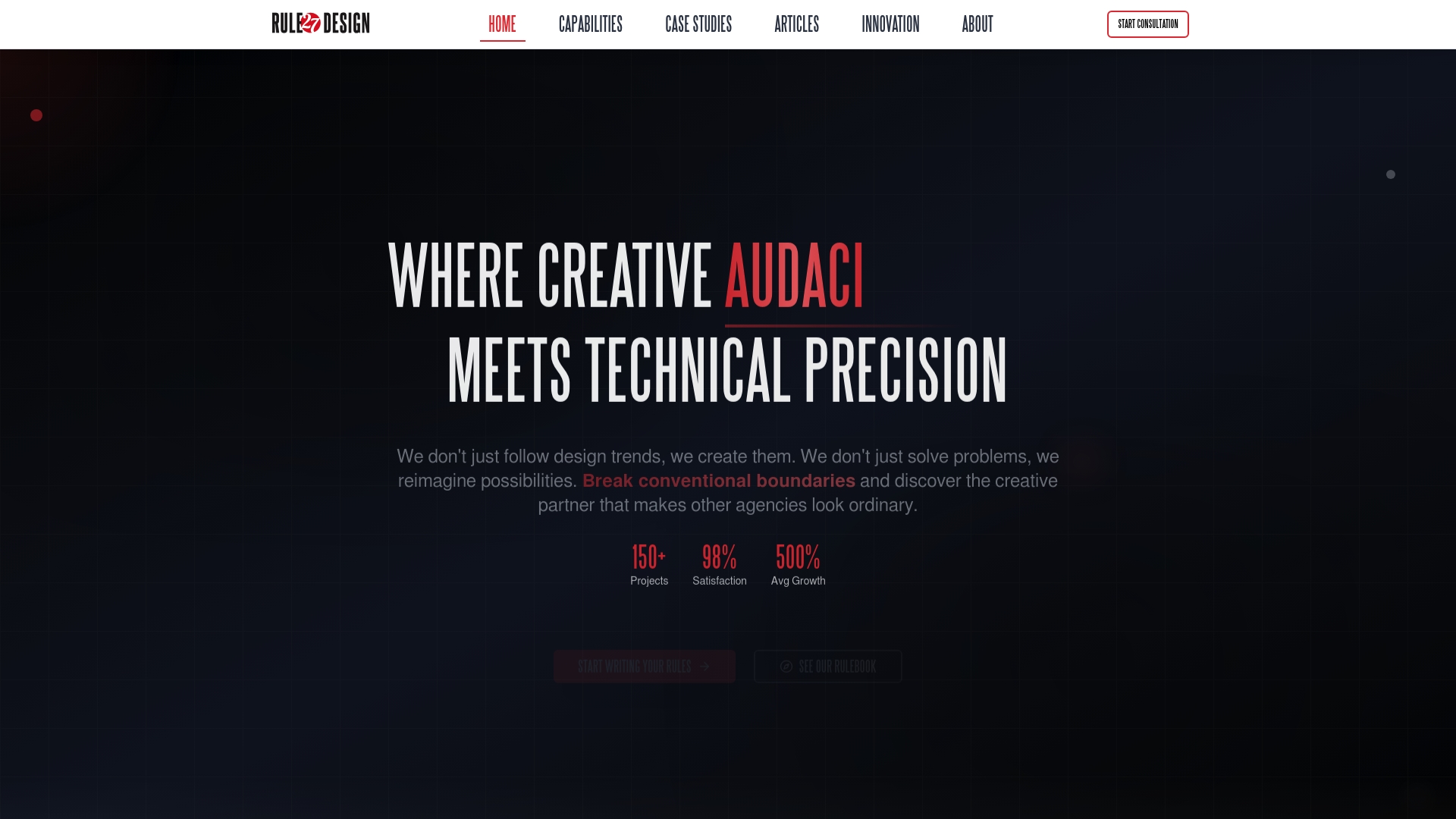
We combine clean, intuitive interfaces with robust backend architecture designed specifically for content teams. Our systems automate schema implementation, track content clusters, and provide analytics that reveal optimization opportunities you’re currently missing. Explore our detailed content optimization steps and AI content checklists to see our approach in action.
Frequently asked questions
What are the key factors improving content visibility in AI search?
Content clusters, schema markup, natural language answering user intent, and brand citation monitoring form the foundation. These elements help AI models understand your expertise and match your content to relevant queries. Continuous optimization based on AI feedback ensures your content adapts as models evolve.
How does content clustering benefit SaaS companies in 2025?
Clusters organize related content, improving AI comprehension and ranking by demonstrating topic expertise depth. They enable better user experience by grouping answers around topic focus, making it easier for both humans and AI to navigate your knowledge base. This structure signals authority to AI models more effectively than isolated articles.
Why is monitoring AI platform variability important for content strategy?
LLM responses change with model updates and query phrasing, directly affecting content reach across platforms. Monitoring different AI platforms ensures a comprehensive visibility picture rather than optimizing for a single model. What works for ChatGPT may not work for Claude, requiring platform-specific adjustments.
What role does digital PR play in AI-driven content visibility?
Digital PR builds entity recognition essential for AI understanding and ranking. It increases authoritative mentions that AI models use to surface content in responses. Strong entity recognition creates a compounding effect where visibility improvements lead to more citations, further strengthening your position in AI knowledge graphs.

About the Author
Josh AndersonCo-Founder & CEO at Rule27 Design
Operations leader and full-stack developer with 15 years of experience disrupting traditional business models. I don't just strategize, I build. From architecting operational transformations to coding the platforms that enable them, I deliver end-to-end solutions that drive real impact. My rare combination of technical expertise and strategic vision allows me to identify inefficiencies, design streamlined processes, and personally develop the technology that brings innovation to life.
View Profile

