

Business analytics integration explained: benefits, tools, real-world use cases, challenges, and how it drives growth. Your comprehensive guide in 2024.
Almost every american business today depends on data, yet only about 30 percent consistently use analytics to drive decision making. As companies collect more information from every corner of their operations, the challenge becomes how to turn that raw data into real business value. Understanding business analytics integration offers a path forward, helping leaders convert scattered statistics into insights that spark growth and give their organizations an edge.
Key Takeaways
| Point | Details |
|---|---|
| Business Analytics Integration | It enables organizations to convert raw data into actionable insights, enhancing decision-making and operational efficiency. |
| Types of Analytics Tools | Key platforms include reporting, predictive analytics, and integrated business intelligence solutions, each tailored to different organizational needs. |
| Benefits of Analytics Integration | This integration improves operational performance, strategic insights, and financial optimization, driving organizational growth and competitiveness. |
| Overcoming Integration Challenges | Address common challenges like data quality and organizational resistance by investing in training, technology, and data governance frameworks. |
Defining Business Analytics Integration
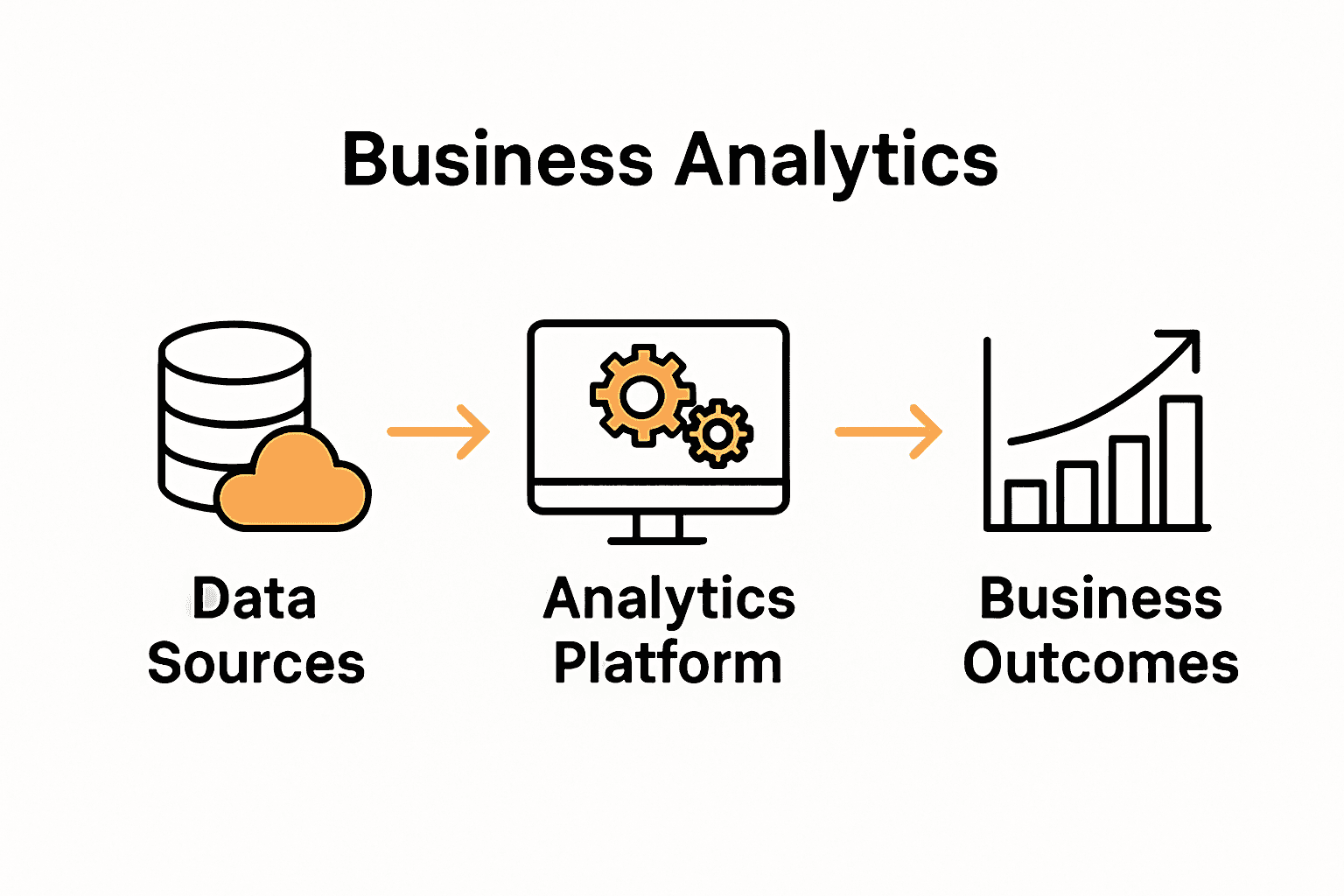
Business analytics integration represents a strategic approach to transforming raw organizational data into actionable insights through systematic collection, processing, and interpretation of business information. According to research from arxiv.org, this process involves developing comprehensive analytical information processing capabilities that enable digital business transformation.
At its core, business analytics integration connects multiple data sources, technologies, and organizational processes to generate meaningful intelligence. The BADIR framework highlights this approach by emphasizing a structured data science methodology designed to enhance data-driven decision making. Key components of effective business analytics integration typically include:
- Comprehensive data collection across organizational systems
- Advanced statistical modeling and predictive techniques
- Real-time dashboard visualization
- Cross-functional performance tracking
- Automated reporting mechanisms
Successful business analytics integration requires a holistic strategy that aligns technological infrastructure with strategic business objectives. Organizations must invest in robust data management platforms, skilled analytical talent, and a cultural commitment to evidence-based decision making. By transforming complex data streams into clear, actionable insights, businesses can unlock unprecedented opportunities for operational efficiency, competitive advantage, and sustainable growth.
Types of Business Analytics Tools and Platforms
Business analytics platforms represent sophisticated technological ecosystems designed to transform complex organizational data into strategic insights. IJERT research highlights several key platforms that enable advanced data processing and visualization capabilities across different business domains.
The landscape of business analytics tools can be categorized into several primary types:
-
Reporting and Visualization Tools
- Dashboard creation platforms
- Interactive data visualization software
- Real-time reporting systems
-
Predictive Analytics Platforms
- Statistical modeling environments
- Machine learning integration systems
- Forecasting and trend analysis tools
-
Integrated Business Intelligence Solutions
- Enterprise-wide analytics platforms
- Cross-functional data management systems
- Comprehensive performance tracking frameworks
According to Vintti’s comparative analysis, leading platforms like Microsoft Power BI, Tableau, and Qlik Sense offer unique capabilities for business intelligence professionals. These tools distinguish themselves through user-friendly interfaces, advanced statistical analysis features, and robust data integration capabilities. The most effective platforms provide scalable solutions that can adapt to an organization’s evolving analytical requirements, enabling businesses to transform raw data into actionable strategic intelligence.
Key Benefits of Integrating Analytics
Business analytics integration transforms raw data into strategic organizational power, enabling companies to make precision-driven decisions with unprecedented clarity. arxiv.org research demonstrates how DataOps-driven analytics can dramatically improve operational efficiency and create innovative business models that fundamentally reshape competitive positioning.
The key benefits of comprehensive analytics integration span multiple critical organizational dimensions:
-
Operational Performance
- Enhanced decision-making accuracy
- Reduced operational inefficiencies
- Real-time performance monitoring
- Predictive maintenance capabilities
-
Strategic Insights
- Deeper market understanding
- Identification of emerging trends
- Competitive intelligence generation
- Risk mitigation strategies
-
Financial Optimization
- Cost reduction through data-driven insights
- Revenue growth prediction
- Resource allocation optimization
- Improved budget planning
Additionally, automated machine learning research indicates that analytics integration accelerates AI-driven decision-making, dramatically shortening development and deployment cycles. By embracing advanced analytics, organizations can transform complex data streams into actionable intelligence, creating a dynamic, responsive business environment that adapts quickly to changing market conditions. The most successful companies view analytics not just as a technological tool, but as a strategic asset that drives continuous innovation and competitive differentiation.
Real-World Applications for Growing Companies
Business analytics has emerged as a transformative force for growing companies seeking to leverage data-driven insights across multiple operational domains. Arxiv research highlights the potential of automated machine learning in bridging critical expertise gaps and supporting rapid prototyping of innovative solutions.
Growing companies can implement business analytics across diverse strategic application areas:
-
Customer Experience Management
- Predictive customer behavior modeling
- Personalized marketing segmentation
- Churn prediction and retention strategies
- Real-time customer sentiment analysis
-
Supply Chain Optimization
- Demand forecasting
- Inventory management
- Logistics route optimization
- Vendor performance tracking
-
Financial Performance
- Revenue growth projection
- Cost structure analysis
- Risk assessment modeling
- Cash flow prediction
As demonstrated by Wikipedia’s analysis of JMP software, advanced analytics platforms enable companies to conduct sophisticated predictive modeling across multiple industries. This capability allows organizations to transform complex data streams into actionable intelligence, creating competitive advantages through precision-driven decision making. By implementing robust analytics frameworks, growing companies can develop adaptive strategies that respond dynamically to market changes, optimize resource allocation, and unlock new pathways for sustainable growth.

Common Integration Challenges and How to Overcome Them
Business analytics integration presents complex technological and organizational challenges that require strategic, multifaceted approaches. Arxiv research emphasizes the critical role of DataOps as a disciplined method for understanding and developing analytical information processing capabilities across digital business environments.
Companies typically encounter several fundamental integration challenges:
-
Data Quality and Consistency
- Inconsistent data formats
- Incomplete or missing information
- Siloed data across different departments
- Lack of standardized data collection processes
-
Technological Compatibility
- Incompatible legacy systems
- Limited interoperability between platforms
- Complex data migration requirements
- Scalability constraints
-
Organizational Resistance
- Cultural barriers to data-driven decision making
- Limited technical expertise
- Fear of change and disruption
- Insufficient training and support
Arxiv’s automated machine learning research suggests that while advanced frameworks offer powerful solutions, manual refinement remains crucial. Organizations must adopt a holistic approach that combines technological innovation with strategic change management.
By implementing robust data governance frameworks, investing in continuous employee training, and selecting flexible, interoperable analytics platforms, businesses can successfully navigate the complex landscape of analytics integration and transform potential challenges into opportunities for organizational growth and innovation.
Unlock the Full Potential of Your Business Analytics Integration
Integrating business analytics effectively demands more than just technology—it requires systems that align perfectly with your unique workflows and strategic goals. This guide highlights common challenges like data inconsistency, technological incompatibility, and organizational resistance that slow down analytics success. If your company feels stuck between generic off-the-shelf tools and overly complex enterprise software, you are not alone. At Rule27 Design, we specialize in crafting custom admin panels and internal tools that solve these exact pain points with a perfect balance of technical sophistication and business insight.
Experience a custom-built analytics infrastructure that enhances operational efficiency by up to 40 percent, improves actionable insights, and supports scalable growth. Don[NULL]t settle for temporary fixes or forced compromises—explore how our tailored solutions empower your team to harness real-time data, predictive modeling, and integrated reporting seamlessly. Take the next step now by visiting Rule27 Design and discover how we bridge the gap to build systems that truly fit your business needs.
Frequently Asked Questions
What is business analytics integration?
Business analytics integration is the strategic approach of transforming raw organizational data into actionable insights through systematic collection, processing, and interpretation of business information.
What are the key components of effective business analytics integration?
Key components typically include comprehensive data collection, advanced statistical modeling, real-time dashboard visualization, cross-functional performance tracking, and automated reporting mechanisms.
What are the benefits of integrating business analytics?
Integrating business analytics enhances operational performance, provides strategic insights, and optimizes financial outcomes by enabling accurate decision-making, market understanding, and efficient resource allocation.
What challenges do organizations face when integrating analytics?
Organizations may face challenges such as data quality and consistency issues, technological compatibility concerns, and organizational resistance to change. Addressing these involves robust data governance and ongoing employee training.

About the Author
Josh AndersonCo-Founder & CEO at Rule27 Design
Operations leader and full-stack developer with 15 years of experience disrupting traditional business models. I don't just strategize, I build. From architecting operational transformations to coding the platforms that enable them, I deliver end-to-end solutions that drive real impact. My rare combination of technical expertise and strategic vision allows me to identify inefficiencies, design streamlined processes, and personally develop the technology that brings innovation to life.
View Profile

