

Content personalization transforms SaaS user engagement. Learn core definitions, personalization types, real-world strategies, and data privacy risks.
What sets successful American SaaS teams apart often comes down to how well they can tailor content for each user. When your product’s interface adapts to individual workflows and preferences, engagement rises and sales grow. Machine learning-powered personalization has been shown to drive significant improvements in user satisfaction and product adoption in competitive SaaS markets. Discover how defining and applying effective content personalization strategies can transform your platform from generic to genuinely indispensable.
Key Takeaways
| Point | Details |
|---|---|
| Importance of Personalization | Personalized experiences are essential for SaaS platforms to enhance user engagement and reduce churn rates. |
| Types of Personalization | Key strategies include Content-Based, Behavioral-Based, and Contextual-Based personalization to cater to unique user needs. |
| Implementation Strategies | Successful implementation requires effective data collection, privacy management, and leveraging advanced machine learning technologies. |
| Compliance Considerations | Adhering to data privacy regulations like GDPR and CCPA is crucial for maintaining user trust and avoiding significant penalties. |
Content Personalization Defined for SaaS Teams
Content personalization in SaaS represents a strategic approach to tailoring digital experiences by dynamically adapting interfaces, recommendations, and interactions based on individual user data, preferences, and behavioral patterns. Unlike generic software platforms, personalized solutions recognize that every user brings unique workflows, expectations, and context to their digital experience.
At its core, content personalization leverages advanced technologies like machine learning to analyze user behavior and preferences. This involves collecting and processing granular data points such as:
- User role and job function
- Interaction frequency
- Feature usage patterns
- Session duration
- Specific interface clicks and navigation
The goal is transforming raw data into intelligent, adaptive experiences that feel intuitive and efficient. AI personalization techniques enable software platforms to predict user needs before they emerge, creating interfaces that seem to understand individual working styles.

Modern SaaS teams recognize personalization isn’t just a nice-to-have feature but a competitive necessity. By creating experiences that feel custom-built for each user, companies can significantly reduce churn, accelerate user adoption, and create deeper engagement. Personalization transforms software from a generic tool into a tailored productivity partner.
Pro tip: Start tracking user behavioral data early and invest in machine learning models that can translate those insights into meaningful interface adaptations.
Types of Personalization and Their Impact
Content personalization in SaaS is not a monolithic strategy but a nuanced approach with multiple distinct methodologies. Personalization strategies range from basic interface customizations to advanced predictive experiences that anticipate user needs before they even arise.
Three primary types of personalization emerge as critical for modern SaaS platforms:
- Content-Based Personalization
- Tailors recommendations and resources
- Uses historical user interaction data
- Suggests relevant documents, features, or learning paths
- Behavioral-Based Personalization
- Adapts interface based on specific usage patterns
- Tracks clicks, navigation, and feature engagement
- Dynamically adjusts dashboard layouts and priority views
- Contextual-Based Personalization
- Considers external factors like user role, industry, and time of day
- Provides role-specific dashboards and workflows
- Adjusts complexity and information density
Hyper-personalization techniques represent the cutting edge of these strategies. By leveraging artificial intelligence and machine learning, SaaS platforms can create experiences that feel uniquely crafted for each individual user. This approach goes beyond static customization, creating dynamic interfaces that evolve with user needs.
The impact of sophisticated personalization is profound. Companies implementing advanced personalization strategies see significant improvements in user engagement, reduced churn rates, and accelerated product adoption. What was once considered a luxury is now becoming an essential competitive differentiator in the SaaS marketplace.
Here is a comparison of primary personalization approaches and their typical business outcomes:
| Personalization Type | Core Focus | Example Platform Behavior | Business Impact |
|---|---|---|---|
| Content-Based | Historical user activity | Suggests relevant articles | Drives deeper product use |
| Behavioral-Based | Real-time interaction patterns | Adjusts dashboard layout | Improves user satisfaction |
| Contextual-Based | User context and environment | Adapts complexity and workflow | Increases retention rates |
Pro tip: Implement progressive personalization by starting with basic behavioral tracking and gradually introducing more complex, context-aware adaptations.
How Personalized Content Systems Function
Personalized content systems represent sophisticated technological architectures designed to transform raw user data into intelligent, adaptive experiences. Adaptive learning systems utilize complex algorithmic frameworks that continuously analyze and interpret user interactions, creating dynamic content pathways tailored to individual preferences and behavioral patterns.
The core functioning of these systems relies on several critical components:
-
Data Collection Mechanisms
- Tracking user clicks and navigation
- Monitoring session duration
- Analyzing feature engagement
- Capturing user role and context
-
Machine Learning Algorithms
- Pattern recognition
- Predictive modeling
- Real-time recommendation generation
- Behavioral segmentation
Content personalization platforms operate through intricate feedback loops that enable continuous refinement of user experiences. These systems don’t just collect data passively; they actively interpret complex behavioral signals, transforming raw information into meaningful, context-aware interactions.
The technical infrastructure behind personalized content systems involves multiple layers of data processing. Machine learning models continuously analyze historical and real-time user data, creating sophisticated predictive models that anticipate user needs with remarkable accuracy. By understanding individual workflows, preferences, and challenges, these systems can dynamically adjust interface elements, recommend relevant content, and streamline user interactions.
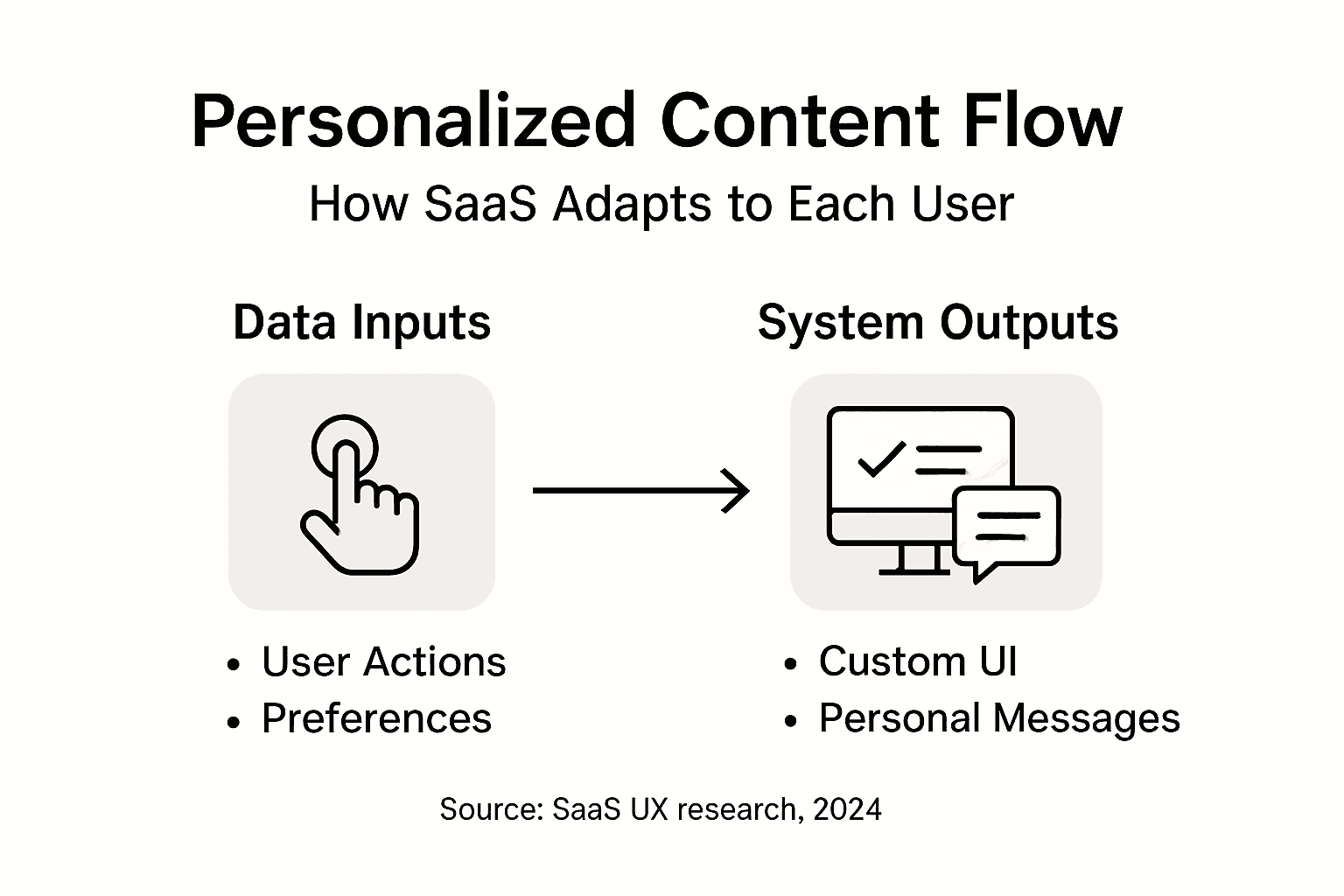
Ultimately, personalized content systems represent a paradigm shift from static, one-size-fits-all software to intelligent, adaptive digital experiences that feel uniquely crafted for each user. The technology bridges the gap between generic functionality and personalized productivity.
Pro tip: Implement a phased approach to personalization, starting with basic behavioral tracking and gradually introducing more sophisticated machine learning models.
Strategies for Effective Personalization Implementation
Personalization implementation requires a strategic, multifaceted approach that goes beyond simple data collection. Adaptive learning strategies demand a comprehensive framework that balances technological sophistication with user privacy and experience design.
Key strategies for successful personalization include:
- Data Collection and Segmentation
- Develop granular user profiling
- Create meaningful user segments
- Map distinct user journey variations
- Identify unique workflow patterns
- Privacy and Consent Management
- Implement transparent data usage policies
- Provide clear opt-in/opt-out mechanisms
- Build trust through user control
- Ensure compliance with data protection regulations
- Technology Infrastructure
- Select scalable machine learning platforms
- Design flexible data integration architectures
- Enable real-time personalization capabilities
- Support cross-platform personalization
AI-powered personalization techniques represent the cutting edge of user experience design. By leveraging sophisticated machine learning algorithms, SaaS platforms can create dynamic experiences that adapt instantaneously to individual user behaviors, preferences, and contextual requirements.
Successful personalization is not about overwhelming users with data but creating intuitive, seamless experiences that feel natural and effortless. The most effective systems anticipate user needs before they become explicit, transforming software from a generic tool into an intelligent productivity partner.
Pro tip: Start with small, measurable personalization experiments and progressively expand complexity based on user feedback and engagement metrics.
Risks, Data Privacy, and Compliance Essentials
Data privacy represents a complex landscape of technological, legal, and ethical challenges for SaaS platforms implementing personalization strategies. Global data security protocols require comprehensive approaches that protect user information while maintaining the flexibility of adaptive digital experiences.
Key compliance considerations include:
- Regulatory Frameworks
- General Data Protection Regulation (GDPR)
- California Consumer Privacy Act (CCPA)
- Health Insurance Portability and Accountability Act (HIPAA)
- Industry-specific data protection standards
- User Consent Mechanisms
- Transparent data collection policies
- Clear opt-in/opt-out procedures
- Granular permission controls
- Regular consent renewal processes
- Technical Security Infrastructure
- End-to-end data encryption
- Robust access control systems
- Anonymization of personal identifiers
- Regular security audits and penetration testing
The risks associated with personalization extend beyond regulatory compliance. Mishandling user data can result in significant financial penalties, reputation damage, and loss of user trust. Successful SaaS platforms recognize that data privacy is not a technical checkbox but a fundamental commitment to user respect and digital ethics.
Below is a summary of key compliance areas and their business significance for SaaS personalization:
| Compliance Area | Description | Business Significance |
|---|---|---|
| Regulatory Frameworks | Covers laws like GDPR, CCPA, HIPAA | Prevents major fines and lawsuits |
| User Consent Mechanisms | Transparency in data collection | Builds user trust |
| Security Infrastructure | Encryption and access controls | Protects sensitive information |
| Privacy Impact Assessments | Regular evaluation of data practices | Ensures ongoing compliance |
Understanding the nuanced balance between personalization capabilities and privacy protection requires a holistic approach. Sophisticated systems must integrate advanced security protocols with intelligent data management strategies that prioritize user agency and transparent communication.
Pro tip: Implement a privacy-first design approach by conducting regular privacy impact assessments and maintaining clear, accessible documentation of data usage practices.
Unlock True SaaS Engagement with Tailored Content Systems
The article highlights the challenge SaaS teams face when generic platforms fail to deliver personalized, adaptive experiences that truly match unique user workflows, leading to low engagement and high churn. If your team struggles with transforming raw behavioral data into intuitive interfaces that anticipate user needs, then it is time to explore solutions focused on content personalization, behavioral tracking, and contextual adaptation.
At Rule27 Design, we specialize in building custom administrative systems designed exactly for those challenges. Our expertise bridges the gap between inflexible off-the-shelf software and overly complex enterprise solutions. We create personalized content management systems and internal tools that enhance workflow efficiency and scale with your team’s growth, all powered by modern AI integrations.
Discover how our AI-optimized content systems can help your SaaS platform reduce churn, accelerate adoption, and deliver dynamic, engaging user experiences. Take the first step toward realizing your product’s true potential by visiting Rule27 Design today. Let us help you design a system that feels custom-built for your users’ unique needs.
Explore our tailored digital infrastructure solutions at Rule27 Design and start transforming your SaaS engagement now.
Frequently Asked Questions
What is content personalization in SaaS?
Content personalization in SaaS involves tailoring digital experiences by adapting interfaces, recommendations, and interactions based on individual user data, preferences, and behaviors. This approach enhances user engagement and satisfaction by recognizing the unique workflows and contexts of each user.
How does content personalization impact user engagement?
By providing tailored experiences that align with users’ individual needs and preferences, content personalization can significantly improve user engagement, reduce churn rates, and increase product adoption. It transforms software from a generic tool into a customized productivity partner.
What types of personalization strategies are commonly used in SaaS?
SaaS platforms often utilize three main types of personalization strategies: content-based personalization (tailoring recommendations), behavioral-based personalization (adapting interfaces based on usage patterns), and contextual-based personalization (considering external factors like user role and time of day).
What are the key components of personalized content systems in SaaS?
Personalized content systems rely on data collection mechanisms, machine learning algorithms for predictive modeling, and continuous feedback loops that interpret user interactions. These systems dynamically adjust interface elements and recommendations based on real-time user behavior and preferences.

About the Author
Josh AndersonCo-Founder & CEO at Rule27 Design
Operations leader and full-stack developer with 15 years of experience disrupting traditional business models. I don't just strategize, I build. From architecting operational transformations to coding the platforms that enable them, I deliver end-to-end solutions that drive real impact. My rare combination of technical expertise and strategic vision allows me to identify inefficiencies, design streamlined processes, and personally develop the technology that brings innovation to life.
View Profile

