

Explore defining content optimization to enhance your business strategy with comprehensive insights and clear explanations for effective digital presence.
Content optimization is rewriting the rules for online communication. Companies that consistently optimize their content see up to 66 percent more qualified leads and higher conversion rates compared to those that do not. Most assume it is all about stuffing a few keywords or tweaking headlines. That barely scratches the surface. The real difference comes from quality and strategy—where creativity, audience psychology, and technical details work together behind every word.
What is Content Optimization and Why It Matters?
Content optimization represents a strategic approach to transforming digital content into powerful communication tools that resonate with both human audiences and search algorithms. At its core, this process involves systematically refining and enhancing content to maximize its visibility, engagement, and performance across digital platforms.
Understanding the Fundamental Concept
Content optimization goes beyond simple keyword insertion. It is a comprehensive strategy that integrates multiple elements to create high-quality, discoverable content. According to SEMrush, effective content optimization involves carefully aligning content with audience needs, search intent, and technical requirements of digital platforms.
Key aspects of content optimization include:
- Relevance: Creating content that directly addresses user questions and needs
- Readability: Structuring content for easy comprehension and engagement
- Technical Performance: Ensuring content loads quickly and displays correctly across devices
Strategic Importance for Digital Success
For growth-stage companies and digital marketing teams, content optimization is not just a technical exercise but a critical business strategy. By systematically improving content quality, organizations can:
- Increase organic search visibility
- Improve user engagement and retention
- Generate more qualified leads
- Establish thought leadership in their industry
Successful content optimization requires a holistic approach that balances creative storytelling with technical precision. It demands understanding audience psychology, search engine algorithms, and emerging digital communication trends.
Beyond traditional SEO tactics, modern content optimization integrates AI-driven insights, user experience design, and data-driven content strategies. This approach ensures that content not only attracts attention but also delivers genuine value to the target audience.
The Importance of Content Quality in Optimization
Content quality sits at the heart of successful digital communication strategies, serving as the fundamental driver that transforms ordinary information into compelling, impactful narratives. While technical optimization strategies provide the infrastructure, content quality determines whether audiences truly engage, learn, and take action.
Defining Content Quality Standards
High-quality content transcends mere information delivery. According to Content Marketing Institute, exceptional content demonstrates several critical characteristics that distinguish it from average digital material. These characteristics create a measurable framework for evaluating content effectiveness.
To clarify the features that define high-quality content, the following table summarizes the critical content quality indicators discussed in the article.
| Quality Indicator | Description |
|---|---|
| Originality | Presents unique perspectives or insights not found elsewhere |
| Depth | Provides comprehensive exploration of topics |
| Accuracy | Ensures factual correctness and up-to-date information |
| Relevance | Directly addresses audience needs and interests |
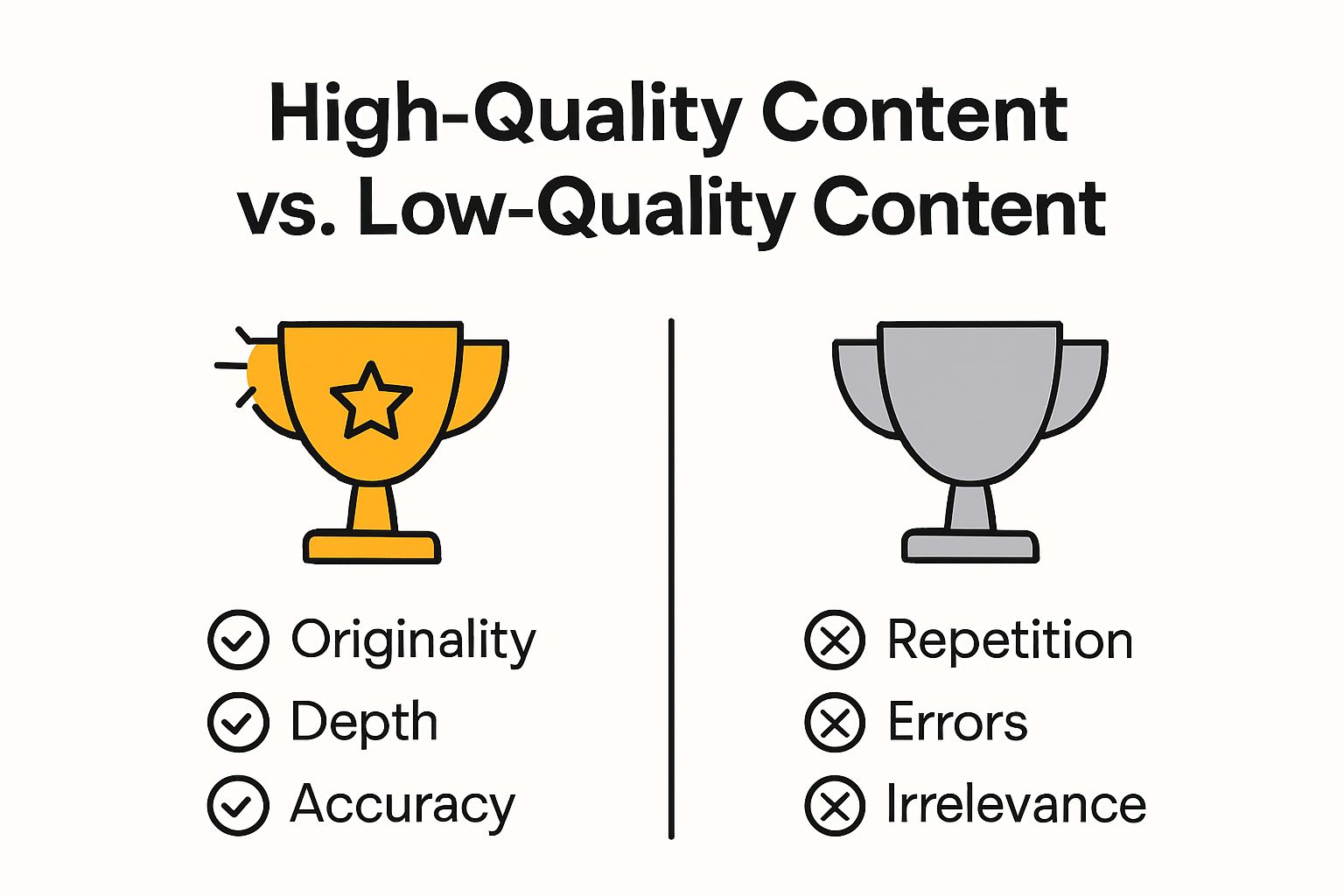
Key quality indicators include:
- Originality: Presenting unique perspectives or insights
- Depth: Providing comprehensive exploration of topics
- Accuracy: Ensuring factual correctness and current information
- Relevance: Directly addressing audience needs and interests
Psychological Impact of Quality Content
Quality content operates on a deeper psychological level, establishing trust and credibility with audiences. When content consistently meets high standards, it transforms from a simple communication tool into a relationship-building mechanism. Organizations that prioritize content quality signal their commitment to audience value and expertise.
The psychological dimensions of quality content involve:
- Creating emotional connections
- Demonstrating professional competence
- Building audience confidence
- Encouraging long-term engagement
Strategic Content Quality Framework
Successful content optimization requires a systematic approach to maintaining and elevating quality. This involves continuous refinement, audience feedback integration, and a commitment to evolving communication standards. Technical optimization provides the platform, but content quality determines the actual impact and effectiveness of digital communication strategies.
By focusing on creating substantive, thoughtful, and audience-centric content, organizations can distinguish themselves in increasingly crowded digital landscapes. Quality becomes the primary differentiator, transforming content from mere information delivery to a powerful strategic asset.

Key Elements of Effective Content Optimization
Content optimization requires a strategic approach that integrates multiple technical and creative components. Successfully transforming digital content demands a comprehensive understanding of how various elements work together to enhance visibility, engagement, and overall performance.
Technical Optimization Fundamentals
According to Moz, effective content optimization involves a nuanced blend of technical precision and user-focused design. Technical elements serve as the critical infrastructure that enables content to perform optimally across different digital platforms and search environments.
Key technical optimization elements include:
- Keyword Integration: Strategically incorporating relevant search terms
- Metadata Optimization: Crafting compelling titles and descriptions
- Structural HTML Formatting: Using headers and semantic markup effectively
- Page Speed Performance: Ensuring rapid content loading across devices
Content Structure and Readability
Beyond technical considerations, content optimization demands a sophisticated approach to information architecture. Successful content must balance technical requirements with human-centric communication principles. This means creating content that is not just discoverable but genuinely engaging and accessible.
Critical readability factors include:
This table presents a comparison of key technical optimization elements and readability factors for effective content optimization as outlined in the article.
| Element Type | Key Features |
|---|---|
| Technical | Keyword integration, metadata optimization, structural HTML formatting, page speed performance |
| Readability | Clear content flow, appropriate paragraph length, subheadings, conversational yet authoritative tone |
- Clear and logical content flow
- Appropriate paragraph length
- Use of subheadings and visual breaks
- Conversational yet authoritative tone
Advanced Optimization Strategies
Modern content optimization transcends traditional SEO tactics. It requires a holistic approach that considers user experience, search algorithm complexity, and evolving digital communication standards. Organizations must develop adaptive strategies that respond to changing technological landscapes and audience expectations.
This involves continuous learning, data-driven refinement, and a commitment to creating content that delivers genuine value. By integrating technical optimization with high-quality, audience-focused content, digital teams can develop powerful communication tools that perform exceptionally across multiple platforms.
How SEO and User Experience Influence Content Optimization
Content optimization represents a sophisticated intersection where search engine strategies and user experience design converge. Understanding the dynamic relationship between SEO principles and audience engagement is crucial for creating digital content that performs exceptionally across multiple platforms.
The Symbiotic Relationship Between SEO and User Experience
According to Google Developers, modern content optimization demands a holistic approach that balances technical search requirements with genuine user value. Search algorithms have evolved to prioritize content that delivers meaningful, user-centric experiences rather than merely satisfying mechanical ranking criteria.
Key interconnected elements include:
- Search Intent Alignment: Matching content precisely with user queries
- Engagement Metrics: Creating content that encourages interaction
- Technical Accessibility: Ensuring content is easily discoverable and consumable
- Contextual Relevance: Providing comprehensive, nuanced information
Performance Metrics and User Satisfaction
Successful content optimization goes beyond traditional keyword strategies. It requires a deep understanding of how users interact with digital content, interpreting complex behavioral signals that indicate genuine value and relevance.
Critical performance indicators encompass:
- Time spent on page
- Scroll depth and interaction rates
- Bounce rate and return visitor frequency
- Social sharing and external link generation
Strategic Content Design Principles
Effective content optimization emerges from a strategic approach that views SEO and user experience as complementary rather than competing objectives. This means designing content that simultaneously satisfies search algorithm requirements and delivers authentic, meaningful user experiences.
By integrating technical optimization with empathetic, user-focused content design, digital teams can create powerful communication tools that resonate across different platforms and audience segments. The most successful content strategies recognize that true optimization occurs at the intersection of technical precision and human-centered communication.
Real-World Applications of Content Optimization Strategies
Content optimization strategies transcend theoretical concepts, delivering tangible benefits across diverse industry sectors. Organizations are discovering that strategic content refinement can dramatically transform digital communication effectiveness, driving meaningful engagement and measurable business outcomes.
Healthcare Communication Transformation
According to the National Center for Biotechnology Information, content optimization plays a critical role in improving patient understanding and healthcare communication. By tailoring digital content to specific audience needs, healthcare providers can enhance patient comprehension, treatment adherence, and overall engagement with medical information.
Key optimization strategies in healthcare include:
- Simplified Medical Terminology: Making complex medical information accessible
- Patient-Centric Language: Addressing patient concerns directly
- Multimedia Content Integration: Using visual aids to explain medical concepts
- Personalized Information Delivery: Matching content to specific patient demographics
E-commerce and Digital Marketing Applications
In the competitive digital marketplace, content optimization becomes a powerful differentiator. Businesses leverage sophisticated content strategies to attract, engage, and convert potential customers. By understanding and implementing precise optimization techniques, organizations can create more compelling digital experiences that drive consumer action.
Critical optimization approaches include:
- Developing targeted product descriptions
- Creating solution-oriented content
- Implementing dynamic pricing and availability information
- Generating trust through transparent, detailed content
Technology and Innovation Sector Implementations
Technology companies are at the forefront of advanced content optimization strategies. These organizations recognize that high-quality, technically precise content serves multiple purposes: attracting potential clients, demonstrating expertise, and establishing thought leadership.
By integrating comprehensive content optimization approaches, businesses across sectors can transform digital communication from a passive information delivery mechanism into an active, strategic tool for growth and engagement. The most successful organizations view content not as a static asset, but as a dynamic, continuously evolving communication strategy.
Frequently Asked Questions
What is content optimization and why is it important for growth?
Content optimization is the process of refining digital content to enhance its visibility, engagement, and performance. To drive growth, focus on creating high-quality content that aligns with audience needs and improves organic search visibility, leading to more qualified leads and better user retention.
How can I assess the quality of my content for optimization?
To assess content quality, evaluate it based on originality, depth, accuracy, and relevance to your audience. Conduct regular audits every 30 days to identify areas for improvement and ensure your content effectively addresses user needs.
What key elements should I focus on for effective content optimization?
Focus on technical performance, including keyword integration, metadata optimization, and ensuring fast page load times. Implement changes systematically, aiming for noticeable improvements in user engagement metrics, such as a 20% increase in time spent on your pages over the next few months.
How do SEO strategies integrate with content optimization?
SEO strategies and content optimization work together to ensure your content is both discoverable by search engines and valuable to users. Align your content with search intent and user engagement metrics, and monitor performance regularly to refine your strategies.
What steps can I take to improve the readability of my content?
To enhance readability, structure your content using clear headers, concise paragraphs, and visual breaks. Aim to create a piece that is easily digestible, which can help reduce bounce rates and improve overall user satisfaction within the next month.
How often should I update my content for optimal performance?
Regularly update your content to maintain its relevance and accuracy, ideally reviewing and refreshing it every 3-6 months. This proactive approach can help keep your content competitive, ensuring you meet evolving audience needs and search trends.

About the Author
Josh AndersonCo-Founder & CEO at Rule27 Design
Operations leader and full-stack developer with 15 years of experience disrupting traditional business models. I don't just strategize, I build. From architecting operational transformations to coding the platforms that enable them, I deliver end-to-end solutions that drive real impact. My rare combination of technical expertise and strategic vision allows me to identify inefficiencies, design streamlined processes, and personally develop the technology that brings innovation to life.
View Profile


