

Enterprise content strategy explained: discover key components, types, workflow optimization, critical risks, and best practices in this comprehensive guide.
Most american companies underestimate how much effective content strategy can impact business results. In fact, research shows that strong enterprise content strategies drive up to 76 percent higher audience engagement compared to ad hoc efforts. With digital channels getting more crowded every year, understanding the fundamentals of content planning, governance, and measurement has become vital. This guide unpacks the core pillars behind successful enterprise content strategy so organizations can achieve meaningful impact across all their communications.
Key Takeaways
| Point | Details |
|---|---|
| Core Principles of Enterprise Content Strategy | Successful content strategies rely on understanding the audience, aligning with strategic goals, and managing content systematically. |
| Pillars of Effective Workflow | Establishing clear governance, collaborative processes, and performance tracking is crucial for creating high-quality content ecosystems. |
| Types of Strategies | Organizations can leverage various strategies, such as omnichannel and AI-driven approaches, to maximize content impact and adaptability. |
| Navigating Challenges | To achieve success, companies must proactively address risks such as technological inflexibility and inadequate collaboration among teams. |
Defining Enterprise Content Strategy Fundamentals
Enterprise content strategy represents a comprehensive approach to planning, developing, and managing content that drives meaningful business outcomes. At its core, this strategy transforms content from a simple communication tool into a strategic asset that supports organizational goals and engages target audiences with precision and purpose.
The fundamental framework of enterprise content strategy centers on three critical pillars: audience understanding, strategic alignment, and systematic content management. Coursera’s content strategy insights underscore the importance of deeply understanding your target audience’s needs, preferences, and pain points before creating any content. This audience-centric approach ensures that every piece of content serves a specific purpose and delivers tangible value.
Key Components of Enterprise Content Strategy include:
- Comprehensive audience persona development
- Clear content governance and workflow processes
- Consistent brand messaging across multiple channels
- Data-driven content performance measurement
- Scalable content creation and distribution frameworks
Successful enterprise content strategies go beyond simple content creation. Strategic planning principles emphasize developing modular, adaptable content architectures that can seamlessly integrate across platforms while maintaining brand consistency. This approach allows organizations to create more efficient, responsive content ecosystems that can quickly adapt to changing market dynamics and audience expectations.
The ultimate goal of an enterprise content strategy is not just to produce content, but to create a dynamic, intelligent system that continuously learns, improves, and drives measurable business results. By treating content as a strategic asset rather than a tactical output, companies can transform their communication approach from reactive to proactive, generating meaningful engagement and tangible value.
Key Components and Workflow Processes
Enterprise content strategy requires a robust framework of interconnected components and systematic workflow processes that enable organizations to manage content with precision and strategic intent. The architecture of these processes goes far beyond simple content creation, focusing instead on creating a holistic ecosystem that supports consistent, high-quality content delivery.

Enterprise content management systems emphasize the critical need for separating content from presentation, which allows for greater flexibility and scalability across multiple platforms and channels. This approach enables teams to develop modular content frameworks that can be quickly adapted and repurposed without extensive redesign.
Essential Workflow Components include:
- Content planning and strategic alignment
- Collaborative creation and editing processes
- Rigorous quality assurance and compliance checks
- Multichannel distribution strategies
- Performance tracking and continuous optimization
Content audit methodologies provide a structured approach to managing content inventory, helping organizations establish clear goals and systematically evaluate existing content assets. These methodologies support creating comprehensive content strategies by identifying gaps, redundancies, and opportunities for improvement.
Successful workflow processes require continuous iteration and refinement. By implementing flexible governance models that balance creativity with strategic oversight, organizations can develop content ecosystems that are both dynamic and disciplined. The ultimate objective is creating a repeatable, scalable system that transforms content from a tactical output into a strategic business asset.
Types of Enterprise Content Strategies
Enterprise content strategies are not one-size-fits-all solutions but rather complex, adaptive frameworks designed to meet unique organizational needs and technological landscapes. These strategies encompass multiple approaches that enable businesses to create, manage, and distribute content with unprecedented flexibility and strategic precision.
Composable content architectures represent a cutting-edge approach that fundamentally transforms how organizations conceptualize content management. By separating content from presentation, these strategies allow teams to develop modular content ecosystems that can seamlessly adapt to emerging platforms and rapidly evolving digital environments.
Primary Enterprise Content Strategy Types include:
- Omnichannel Content Strategy
- Personalization-driven Strategy
- Localization and Global Content Strategy
- AI-augmented Content Management
- Performance-based Content Framework
Advanced content strategies are increasingly focused on emerging technological platforms, emphasizing automation, artificial intelligence integration, and sophisticated user-generated content moderation. These approaches enable organizations to create dynamic, responsive content systems that can handle complex, multilayered digital interactions across diverse channels.
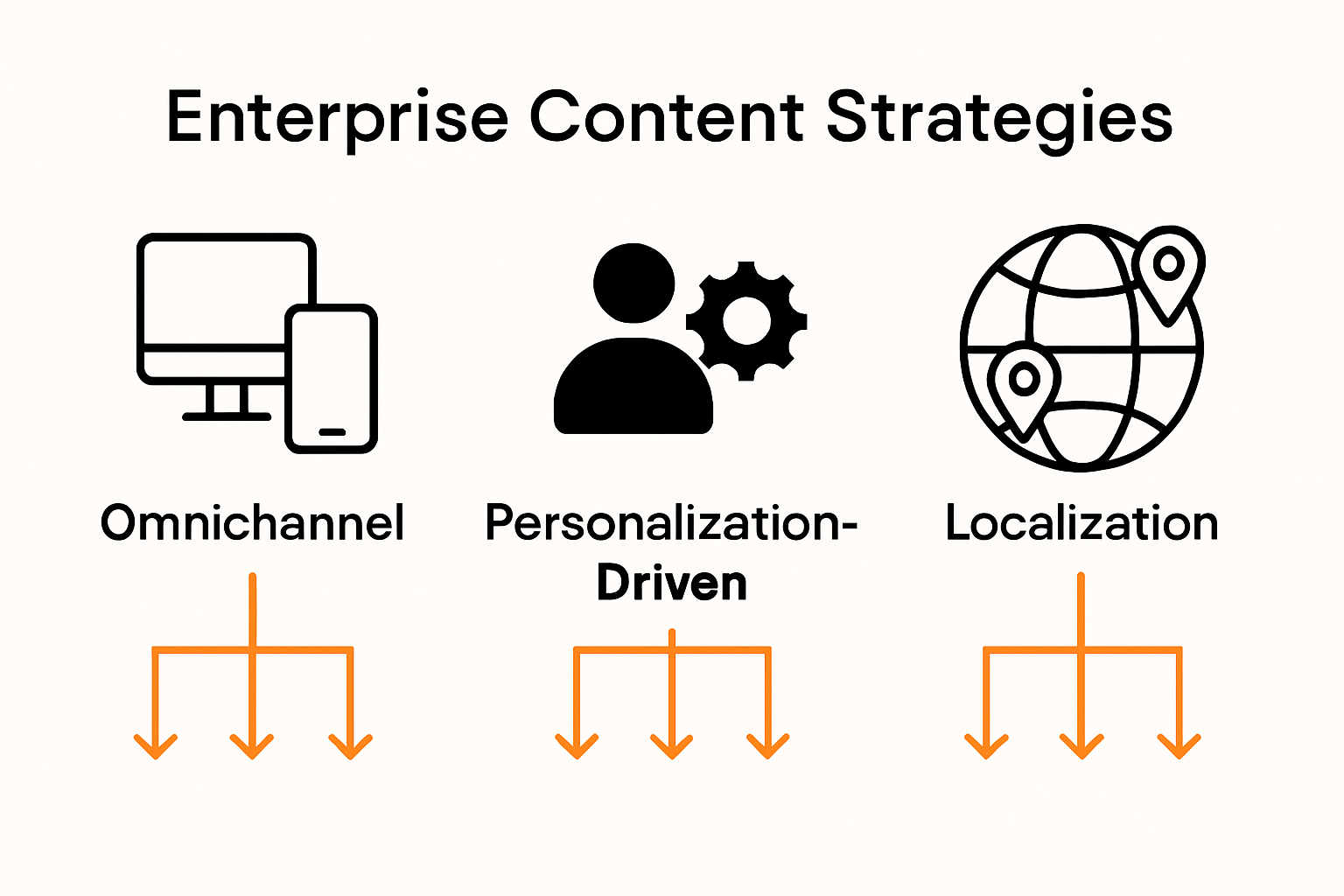
The most effective enterprise content strategies transcend traditional boundaries, creating interconnected systems that can rapidly evolve with technological and market changes. By embracing flexible, intelligent content frameworks, organizations can transform content from a static communication tool into a strategic, adaptive business asset that drives meaningful engagement and delivers measurable value.
Benefits and Real-World Applications
Enterprise content strategies have emerged as transformative tools that enable organizations to unlock unprecedented levels of strategic communication and business performance. By reimagining content as a dynamic, intelligent asset, companies can achieve remarkable outcomes that extend far beyond traditional marketing approaches.
B2B marketing research reveals compelling benefits of a well-executed content strategy, demonstrating significant improvements in brand visibility, audience engagement, and conversion rates. These strategies provide organizations with a systematic framework for creating targeted, meaningful content that resonates deeply with specific audience segments.
Key Tangible Benefits include:
- Enhanced brand positioning and thought leadership
- Improved customer acquisition and retention
- More efficient resource allocation
- Data-driven content optimization
- Increased cross-departmental collaboration
Unified content marketing strategies emphasize the critical importance of aligning content initiatives with broader organizational goals. By establishing robust editorial governance and implementing sophisticated feedback mechanisms, enterprises can create cohesive content ecosystems that drive meaningful business impact across multiple channels and stakeholder groups.
Real-world applications demonstrate that enterprise content strategies are not theoretical constructs but powerful operational tools. Organizations that successfully implement these strategies can transform their communication approach from fragmented and reactive to strategic and proactive, generating substantial competitive advantages in increasingly complex digital landscapes.
Risks, Challenges, and Common Pitfalls
Enterprise content strategies, while powerful, are not immune to complex challenges that can derail even the most well-intentioned initiatives. Organizations must navigate a nuanced landscape of technological, operational, and strategic obstacles that can significantly impact content effectiveness and organizational performance.
Enterprise content versioning strategies highlight critical risks associated with traditional content management systems that inadvertently mix schema, content, and presentation layers. These legacy approaches create significant technical debt, making it challenging to evolve content architectures and adapt to changing business requirements.
Primary Risks and Challenges include:
- Technological inflexibility and legacy system constraints
- Inconsistent content governance models
- Inadequate cross-departmental collaboration
- Complex integration challenges
- Scalability limitations
Enterprise CMS implementation research reveals that many organizations struggle with fundamental structural issues, such as poorly defined team roles and insufficient feedback mechanisms. These operational gaps can create significant barriers to creating cohesive, adaptable content ecosystems.
Successful enterprise content strategies require a proactive approach to risk management. By anticipating potential challenges, establishing clear governance frameworks, and maintaining technological flexibility, organizations can transform potential pitfalls into opportunities for innovation and strategic advancement. The key lies in developing resilient, adaptable systems that can evolve alongside business needs and technological transformations.
Build an Enterprise Content Strategy That Works for Your Team
Enterprise content strategy is about more than just content creation. It requires overcoming challenges like inconsistent governance, technological inflexibility, and scaling workflows to meet evolving business needs. If your organization struggles with managing modular content frameworks or aligning content with strategic goals, Rule27 Design can help you transform these pain points into scalable solutions.

Unlock the power of custom-built content management systems and admin panels tailored specifically for your business operations. With expertise in AI-optimized content visibility and seamless team collaboration tools, we help you create intelligent content ecosystems that improve workflow efficiency and boost content performance significantly. Don’t let legacy systems hold you back—visit Rule27 Design today to start building your future-proof enterprise content strategy that scales as you grow.
Frequently Asked Questions
What is enterprise content strategy?
Enterprise content strategy is a comprehensive approach to planning, developing, and managing content that aligns with business goals and engages target audiences effectively.
What are the key components of an enterprise content strategy?
Key components include audience persona development, content governance processes, consistent brand messaging, data-driven performance measurement, and scalable content creation frameworks.
What types of enterprise content strategies exist?
Types of enterprise content strategies include omnichannel content strategy, personalization-driven strategies, localization and global content strategy, AI-augmented content management, and performance-based content frameworks.
What are the benefits of implementing an enterprise content strategy?
Benefits include enhanced brand positioning, improved customer acquisition and retention, efficient resource allocation, data-driven content optimization, and increased collaboration across departments.

About the Author
Josh AndersonCo-Founder & CEO at Rule27 Design
Operations leader and full-stack developer with 15 years of experience disrupting traditional business models. I don't just strategize, I build. From architecting operational transformations to coding the platforms that enable them, I deliver end-to-end solutions that drive real impact. My rare combination of technical expertise and strategic vision allows me to identify inefficiencies, design streamlined processes, and personally develop the technology that brings innovation to life.
View Profile

