

Unlock business growth with a data-driven content strategy. Follow clear, step-by-step actions to plan, optimize, and measure high-impact content for your team.
More than 80 percent of american companies admit they struggle to connect content goals with real business results. Setting a clear strategy becomes vital when your team depends on measurable progress, not guesswork. When you define specific objectives, map audience needs, organize workflows, use smart tools, and track results, you transform good intentions into a reliable content engine built for growth.
Quick Overview
| Main Insight | Clarification |
|---|---|
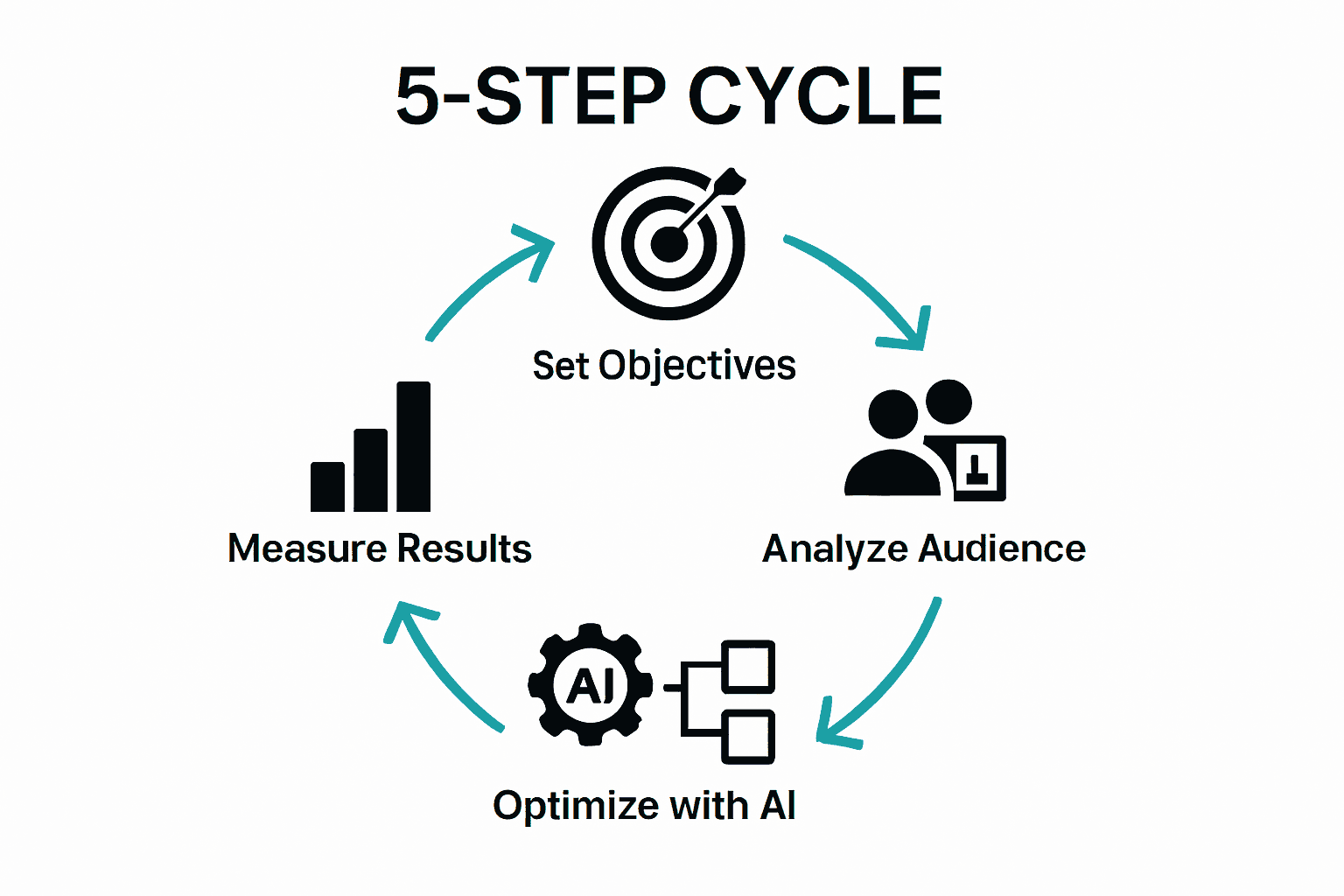
| 1. Establish clear content objectives | Utilize the SMART framework for specific and measurable content goals to enhance effectiveness. |
| 2. Analyze audience behavior with data | Leverage website and social media analytics to understand engagement patterns and tailor content accordingly. |
| 3. Create an organized content workflow | Develop a structured content production process to streamline collaboration and consistency across teams. |
| 4. Incorporate AI for content optimization | Use AI tools to analyze and enhance content performance while maintaining brand identity and voice. |
| 5. Measure results with meaningful metrics | Focus on metrics that reflect true business impact to refine future content strategies and decisions. |
 |
|
Step 1: Define measurable content objectives
Crafting precise content objectives is your strategic roadmap for transforming abstract goals into actionable results. According to aacom, effective objectives follow the SMART framework: Specific, Measurable, Achievable, Realistic, and Time-bound.
To develop robust content objectives, start by identifying your core business goals. Are you aiming to increase website traffic, generate more qualified leads, or boost engagement? Translate these broad ambitions into quantifiable targets. For instance, instead of saying “increase blog readership,” specify “grow monthly blog traffic by 35% within the next quarter” or “increase average time on page from 1.5 to 3 minutes.”
One critical warning: avoid vague language. As niu emphasizes, your objectives must be observable and trackable. This means including specific metrics, clear timelines, and precise benchmarks that allow you to definitively measure progress. By creating laser-focused objectives, you transform your content strategy from a guessing game into a data-driven performance engine.
Step 2: Map target audience needs with analytics
Understanding your target audience is the foundation of any successful content strategy. According to arxiv, mapping audience behavior requires a comprehensive approach that goes beyond simple demographic data and focuses on actual interaction patterns.
Start by diving into your website and social media analytics to uncover critical insights. Look for key metrics that reveal audience engagement depth: average time on page, bounce rates, scroll depth, and content interaction points. Pay special attention to which topics generate the most engagement, what time of day your audience is most active, and which content formats resonate most strongly. For instance, if your blog posts about technical solutions generate 50% more comments and shares compared to general industry updates, that tells you exactly where to focus your content creation efforts.
One powerful tip comes from arxiv, which highlights the importance of visualization in understanding audience data. Create visual dashboards that transform raw numbers into clear, actionable insights. This approach helps you quickly identify trends, audience segments, and content opportunities that might otherwise remain hidden in spreadsheet columns. By translating complex data into digestible visual formats, you make audience insights accessible to your entire content team.

Step 3: Build a scalable content workflow system
Creating a robust content workflow system transforms your content production from chaotic to strategic. According to en, developing an effective framework requires clear objectives, goals, strategies, and measurable outcomes that align your entire content team.
Start by mapping out each stage of your content creation process. This means defining clear roles and responsibilities for every team member from ideation to publication. Break down your workflow into distinct phases: research, drafting, editing, design, review, optimization, and distribution. Implement standardized templates and checklists that ensure consistency across all content pieces. For example, create a universal content brief that includes target audience, key messaging, SEO requirements, and specific performance metrics for each piece.
As en suggests, think modularly about your content. Develop reusable content components that can be quickly adapted across different platforms and formats. This approach allows you to create a flexible system where individual content assets can be easily repurposed, saving time and maintaining brand consistency. Your workflow should be a living document that evolves with your team’s capabilities and your organization’s changing content strategy.
Step 4: Deploy AI-powered content optimization
AI is revolutionizing content strategy by transforming how we understand and engage our audiences. According to arxiv, artificial intelligence offers unprecedented capabilities in designing content that precisely meets audience expectations and preferences.
Begin by selecting AI tools that integrate seamlessly with your existing content management workflow. Focus on platforms that provide real-time content analysis, predictive performance metrics, and intelligent recommendations. These tools can help you optimize everything from headline effectiveness to semantic content structure. For example, use AI-powered platforms that analyze your existing content performance and suggest improvements in readability, keyword targeting, and audience engagement potential. Look for solutions that can automatically identify content gaps, recommend topic clusters, and predict which content formats will resonate most with your specific audience segments.
As arxiv emphasizes, the true power of AI lies in its ability to map complex user behaviors and translate those insights into actionable content strategies. Warning: while AI is incredibly powerful, it should augment human creativity rather than replace it. Always review and refine AI recommendations through your unique brand lens, ensuring that the content maintains your distinctive voice and strategic objectives.
Step 5: Verify results with actionable performance metrics
Transforming raw data into meaningful insights is the cornerstone of a powerful content strategy. According to aacom, effective performance verification requires objectives that are specific, measurable, achievable, realistic, and time-bound.
Design a comprehensive performance dashboard that tracks key metrics directly aligned with your original content objectives. Focus on metrics that demonstrate genuine impact beyond surface level engagement. This means moving beyond simple pageviews to analyze metrics like conversion rates, average session duration, content sharing frequency, and qualified lead generation. For instance, track how specific content pieces influence bottom line results such as sales qualified leads, customer acquisition costs, and revenue attribution directly connected to your content efforts.
As niu emphasizes, your performance metrics must be observable and quantifiable. One critical warning: avoid vanity metrics that look impressive but don’t reflect real business growth. Instead, build a reporting system that provides clear, actionable insights your team can use to continuously refine and improve your content strategy. Your metrics should tell a story about your content performance that guides future decision making and resource allocation.
Unlock Growth with a Data-Driven Content System Tailored to Your Team
Struggling to turn your content goals into measurable success? The article on Data-Driven Content Strategy reveals the challenges of setting precise objectives, understanding audience behavior, and building scalable workflows that deliver real results. If vague metrics and chaotic processes are holding you back from growing your audience and boosting engagement it is time to move beyond one-size-fits-all tools.
At Rule27 Design, we specialize in creating custom content management systems and internal tools that fit exactly how your team works. Our solutions integrate AI-powered content optimization and actionable performance analytics so you can track real growth, avoid vanity metrics, and continuously refine your strategy. We help ambitious companies bridge the gap between off-the-shelf software and expensive enterprise systems to increase operational efficiency and amplify content impact.
Explore our proven approach to building scalable content workflows designed to improve team collaboration and deliver measurable growth.

Get the competitive advantage you need now. Visit Rule27 Design to discover how tailored systems can transform your content strategy into a results-driven growth engine.
Frequently Asked Questions
How do I set measurable content objectives for my strategy?
To set measurable content objectives, begin by defining what you want to achieve, such as increasing website traffic or generating leads. Specify your goals using metrics like “increase monthly blog traffic by 35% within the next quarter” to make them actionable.
What analytics should I use to understand my target audience’s needs?
To understand your target audience’s needs, analyze metrics like average time on page, bounce rates, and content interaction points. Focus on identifying which topics get the most engagement, and use these insights to guide your content creation efforts.
How can I create an efficient content workflow system?
To create an efficient content workflow system, map out each stage of your content process, from ideation to publication. Define clear roles and responsibilities for your team and implement standardized templates to maintain consistency across all content outputs.
What role does AI play in optimizing content for my audience?
AI plays a crucial role in content optimization by analyzing user behavior and suggesting improvements. Use AI tools to assess headline effectiveness, keyword targeting, and readability to enhance audience engagement and meet their preferences.
How do I track the performance of my content strategy?
To track the performance of your content strategy, build a comprehensive dashboard that monitors key metrics like conversion rates and average session duration. Focus on actionable metrics to assess real business impact and adjust your strategy based on the insights you gather.
Topics

About the Author
Josh AndersonCo-Founder & CEO at Rule27 Design
Operations leader and full-stack developer with 15 years of experience disrupting traditional business models. I don't just strategize, I build. From architecting operational transformations to coding the platforms that enable them, I deliver end-to-end solutions that drive real impact. My rare combination of technical expertise and strategic vision allows me to identify inefficiencies, design streamlined processes, and personally develop the technology that brings innovation to life.
View Profile

