

Custom analytics dashboards empower SaaS teams with tailored insights, streamline collaboration, and boost operational efficiency—key must-knows explored.
More than half of American product managers say that outdated reporting slows down decision-making and hinders team collaboration. As fast growth puts pressure on every SaaS workflow, choosing the right analytics dashboard becomes a mission-critical priority. This guide separates myth from reality about custom analytics dashboards and reveals how American SaaS product leaders can drive real operational efficiency with smarter, more interactive data tools.
Key Takeaways
| Point | Details |
|---|---|
| Custom Analytics Dashboards Transform Data | These dashboards provide dynamic insights by integrating data from multiple sources, enabling organizations to make informed decisions swiftly. |
| Dynamic, User-Centric Design is Crucial | Effective dashboards prioritize user experience and design principles that facilitate interaction and data interpretation. |
| Choosing the Right Analytics Solution Matters | Selecting between cloud-native, on-premises, or hybrid solutions depends on an organization’s specific needs for security, scalability, and data management. |
| Avoid Common Implementation Mistakes | Focus on user feedback and clear design to prevent pitfalls that can undermine dashboard effectiveness and overall organizational value. |
Custom Analytics Dashboards Defined and Debunked
Custom analytics dashboards represent sophisticated digital tools designed to transform raw business data into actionable visual insights. Unlike traditional static reporting methods, these dynamic interfaces consolidate critical information across multiple sources into a single, intuitive screen. Organizations leverage these tools to make faster, more informed decisions by presenting complex data systematically.
At their core, custom analytics dashboards go beyond generic reporting platforms by offering tailored visualization experiences that align precisely with specific organizational goals. They integrate data from diverse sources like customer relationship management systems, financial platforms, marketing channels, and operational databases. This integration enables product managers to track key performance indicators, monitor real-time metrics, and identify emerging trends with unprecedented clarity and speed.
Misconceptions about analytics dashboards persist, particularly around their actual utility and design complexity. Many professionals mistakenly view these tools as mere reporting mechanisms, when in reality they represent dynamic, interactive decision-support systems. Research demonstrates significant variations in dashboard effectiveness depending on user-centered design principles and the specific communication models employed.
Pro tip: When evaluating custom analytics dashboards, prioritize platforms that offer flexible data integration, real-time updating capabilities, and intuitive user interfaces that match your team’s specific workflow requirements.
Core Features for SaaS Team Efficiency
SaaS product managers require analytics dashboards that transcend traditional reporting by delivering dynamic, actionable insights across multiple operational dimensions. Customizable real-time data visualization stands as the foundational feature enabling teams to quickly interpret complex business metrics and make strategic decisions with confidence. Modern dashboards integrate seamlessly across disparate systems, transforming raw data into comprehensible visual narratives that drive organizational performance.
The most effective custom analytics dashboards incorporate several core features critical for SaaS team efficiency. These include comprehensive data integration capabilities, interactive visualization tools, and adaptive reporting mechanisms. Key functionalities typically encompass:
- Real-time performance tracking
- Customizable widget configurations
- Cross-platform data aggregation
- Predictive analytics support
- Intuitive user interface design
- Granular access control and permissions
Understanding these features requires recognizing that modern dashboards are not static reporting tools, but dynamic decision-support systems. Advanced learning analytics platforms demonstrate how intelligent interfaces can translate complex data sets into actionable strategic insights, enabling product teams to anticipate trends, identify potential bottlenecks, and optimize operational workflows with unprecedented precision.

Pro tip: When selecting a custom analytics dashboard, prioritize solutions that offer API flexibility, support multiple data source integrations, and provide granular customization options tailored to your specific team workflow requirements.
Here’s how core features of custom analytics dashboards benefit SaaS product teams:
| Core Feature | Business Impact | Example Value |
|---|---|---|
| Real-time data visualization | Enables instant strategic adjustments | Faster campaign optimization |
| Cross-platform integration | Consolidates all metrics for clarity | Unified view of customer data |
| Granular access control | Ensures secure team collaboration | Role-based dashboard views |
| Predictive analytics | Anticipates market or user trends | Early warning for customer churn |
Types of Custom Analytics Solutions Compared
Custom analytics solutions have evolved dramatically, offering SaaS teams multiple deployment approaches to meet diverse organizational requirements. Hybrid SaaS models represent a sophisticated strategy that bridges traditional on-premises infrastructure with cloud-based flexibility, enabling companies to optimize their data management and reporting capabilities.
The primary types of custom analytics solutions can be categorized into three distinct architectural models:
- Cloud-Native Solutions
- Fully cloud-hosted platforms
- Maximum scalability
- Instant global accessibility
- Lower initial infrastructure costs
- On-Premises Solutions
- Complete data control
- Maximum security configurations
- Direct hardware management
- Higher initial investment
- Hybrid Solutions
- Flexible deployment options
- Balanced security and accessibility
- Customizable data sovereignty controls
- Phased digital transformation approach
Each analytics solution type presents unique advantages and challenges, requiring careful evaluation based on specific organizational needs. The optimal approach depends on factors like data sensitivity, compliance requirements, scalability objectives, and existing technological infrastructure. Strategic selection involves understanding your team’s precise operational dynamics and long-term digital transformation goals.
Pro tip: Conduct a comprehensive internal audit of your data management requirements before selecting an analytics solution, focusing on integration capabilities, security protocols, and potential future scalability needs.
Compare architectural models for custom analytics solutions:
| Model | Strength | Common Limitation |
|---|---|---|
| Cloud-Native | Scales rapidly | May raise data privacy issues |
| On-Premises | Maximum control and security | Higher upfront costs |
| Hybrid | Balanced approach | More complex setup |
Use Cases in Growth-Stage SaaS Companies
Growth-stage SaaS companies leverage custom analytics dashboards as critical strategic tools for navigating complex operational landscapes. Interactive dashboards transform decision-making processes, enabling leadership teams to consolidate diverse data streams and generate actionable insights that drive scalable growth strategies.
The most compelling use cases for custom analytics dashboards span multiple organizational dimensions:
- Sales Performance Tracking
- Real-time revenue monitoring
- Conversion rate analysis
- Pipeline velocity measurements
- Territory and representative performance comparisons
- Customer Success Management
- User engagement metrics
- Churn prediction modeling
- Onboarding effectiveness tracking
- Support ticket resolution rates
- Product Development Insights
- Feature adoption rates
- User experience performance
- Development cycle efficiency
- Performance bottleneck identification
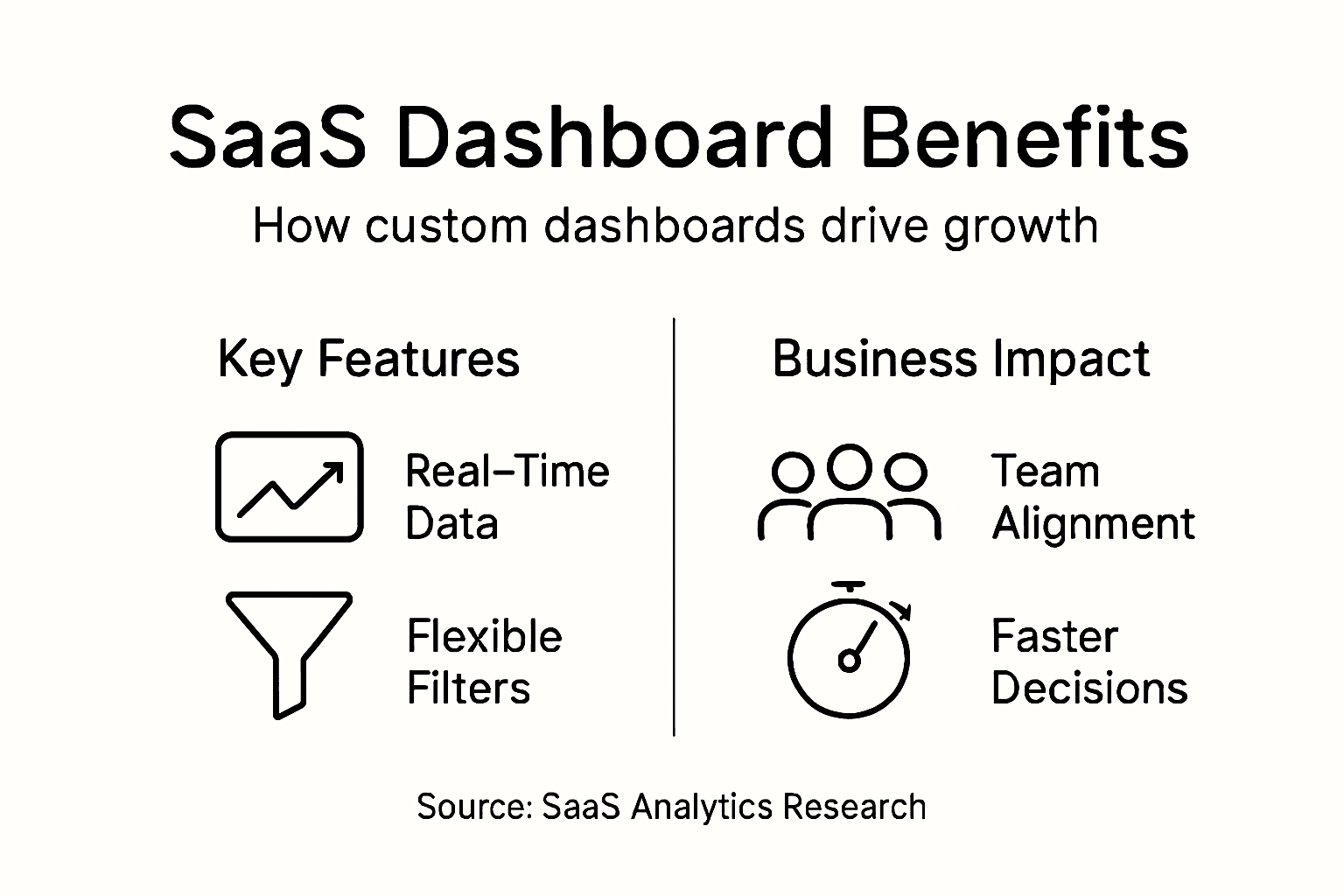
Business Intelligence dashboards enable comprehensive cross-departmental alignment, transforming raw data into strategic narratives that accelerate organizational decision-making. By providing a unified view of critical metrics, these dashboards break down traditional operational silos and create a shared understanding of company performance.
Pro tip: Design your custom analytics dashboard with input from multiple departments to ensure it captures nuanced performance indicators that drive meaningful strategic conversations.
Cost, Scalability, and Integration Risks
Custom analytics dashboards represent significant strategic investments that require careful evaluation of potential financial and technical challenges. Dashboard implementation challenges impact 20% of organizations, highlighting the critical need for comprehensive planning and risk mitigation strategies during development and deployment.
The primary risks associated with custom analytics dashboard implementations can be categorized into three critical dimensions:
- Cost Considerations
- Initial development expenses
- Ongoing maintenance investments
- Training and adoption costs
- Potential infrastructure upgrades
- Scalability Challenges
- Data volume processing limitations
- System performance degradation
- Computational resource requirements
- Adaptive architecture needs
- Integration Complexity
- Legacy system compatibility
- Data source heterogeneity
- Security protocol alignment
- API interconnectivity challenges
Scalable dashboard architectures demand modular design approaches that anticipate future technological shifts and organizational growth. Successful implementations balance technical flexibility with strategic foresight, ensuring the dashboard ecosystem can evolve alongside business requirements without requiring complete system reconstruction.
Pro tip: Conduct a comprehensive technical and financial assessment that includes projected scaling costs, potential integration expenses, and a detailed roadmap for future dashboard evolution.
Avoiding Common Implementation Mistakes
Custom analytics dashboards require strategic planning to prevent common pitfalls that can undermine their effectiveness. Intelligent dashboard design demands comprehensive evaluation, addressing critical challenges that often derail implementation efforts and reduce overall organizational value.
The most prevalent implementation mistakes can be categorized into three fundamental areas:
- Information Design Failures
- Excessive data visualization
- Unclear performance metrics
- Lack of contextual insights
- Overwhelming visual complexity
- User Experience Challenges
- Insufficient stakeholder input
- Poor usability testing
- Complex navigation structures
- Limited interactive capabilities
- Ethical and Operational Risks
- Neglecting predictive model transparency
- Inadequate data privacy controls
- Overlooking potential algorithmic biases
- Failing to establish clear accountability frameworks
Dashboard implementation requires careful user-centric design approaches that prioritize clarity, interactivity, and meaningful insights. Successful dashboards transform complex data streams into digestible, actionable narratives that empower decision-makers across organizational levels.
Pro tip: Conduct multiple rounds of user testing with diverse stakeholders, gathering granular feedback to refine dashboard design and ensure alignment with actual operational needs.
Unlock SaaS Growth with Tailored Analytics Dashboards
Struggling with dashboards that don’t fit your team’s unique workflows or overwhelm you with complexity? The article highlights key challenges like integration complexity, scalability, and ineffective information design that stall SaaS growth. Your team deserves custom analytics dashboards that offer real-time insights, seamless data integration, and intuitive interfaces crafted specifically for your operational needs.
At Rule27 Design, we specialize in building powerful, custom admin panels and business intelligence tools that solve these exact pain points. Our solutions bridge the gap between off-the-shelf products and costly enterprise software by delivering systems that improve workflow efficiency, enhance collaboration, and provide actionable analytics tailored to how you work.
Transform your SaaS decision-making with dashboards designed to scale as you grow. Don’t settle for generic platforms when you can have a system built precisely for your team’s needs. Explore how we create tools that boost operational efficiency by 40% and empower smarter growth. Ready to align your analytics with your business goals? Visit Rule27 Design and discover the possibilities. Learn more about our custom admin panels and start your journey toward data-driven success today.
Frequently Asked Questions
What are custom analytics dashboards?
Custom analytics dashboards are dynamic tools that transform raw business data into actionable visual insights, allowing organizations to make informed decisions by consolidating information from multiple sources into one interface.
How do custom analytics dashboards benefit SaaS teams?
Custom analytics dashboards benefit SaaS teams by providing real-time performance tracking, customizable data visualization, and predictive analytics, enabling teams to interpret complex data rapidly and make strategic decisions that drive growth.
What are the different types of custom analytics solutions?
The primary types of custom analytics solutions include cloud-native solutions, on-premises solutions, and hybrid solutions, each offering unique advantages and limitations based on factors like security, scalability, and deployment flexibility.
What common mistakes should be avoided when implementing custom analytics dashboards?
Common mistakes to avoid include excessive data visualization, poor user experience design, and neglecting data privacy and accountability measures, all of which can undermine the effectiveness of the dashboard and its adoption across the organization.

About the Author
Josh AndersonCo-Founder & CEO at Rule27 Design
Operations leader and full-stack developer with 15 years of experience disrupting traditional business models. I don't just strategize, I build. From architecting operational transformations to coding the platforms that enable them, I deliver end-to-end solutions that drive real impact. My rare combination of technical expertise and strategic vision allows me to identify inefficiencies, design streamlined processes, and personally develop the technology that brings innovation to life.
View Profile

