
Free SEO audit tools in 2026 are mostly broken. Either they're lead-capture forms with a thin PDF, or they're teasers for a $129/mo SaaS subscription with the useful checks gated, or they're six-year-old scripts flagging meta keyword tags.
This tool is what we wished existed when we were buying every SEO SaaS license. Drop your URL, pick your city, pick your vertical — you get the same 140-signal audit we run on Rule27 clients before we propose work. Technical SEO, on-page, content + E-E-A-T, backlinks, local pack, AI visibility (AIO + ChatGPT + Perplexity + Gemini + Claude), and a city-aware competitor benchmark.
No signup for the basic scorecard. Email is optional and only required if you want the long-form PDF. The audit runs whether you become a Rule27 client or not.
Enter your URL
Page or whole site, subdomain or root. We crawl up to 100 URLs on the free audit — enough for a representative score on most SMB sites. Larger sites get a sampled audit with full depth on priority page types.
Pick your industry (optional)
Dental, law firm, HVAC, plumbing, med spa, real estate, ecommerce, SaaS, restaurant, professional services, other. The vertical changes which schema checks we run, which competitor benchmarks we pull, and which content quality signals we score against.
Pick your city (optional)
Phoenix, Tempe, Scottsdale, Mesa, Chandler, Gilbert, Las Vegas, Tucson, or any US metro. Activates the local pack benchmark — we pull your three nearest competitors and compare GBP, citation profile, and review velocity.
Audit runs in under 60 seconds
Seven category scorecards appear on screen — each rated 0-100, each with a ranked issue list and effort estimates. No paywall on the scorecard. No 'upgrade to see your full report.'
Optional: enter email for PDF
Sends the 30-page expanded report with code snippets, schema JSON-LD, robots.txt fixes, and a 90-day priority roadmap. We send one follow-up message a week later, then silence.
Optional: book a 15-min walkthrough
If you want a human read on your audit results — which issues to prioritize, whether they justify outsourcing, what realistic timelines look like — grab a 15-min call. Walkthrough, not a sales pitch. About 8% of these turn into engagements; the other 92% leave with a clearer plan.
Technical SEO (28 signals)
Crawlability (robots.txt, sitemap.xml, internal link depth, orphan pages), indexability (canonical, noindex, hreflang), site architecture, HTTPS hygiene, redirect chains, and Core Web Vitals from real-user CrUX data — not lab data from a single PageSpeed Insights run.
On-page SEO (24 signals)
Title tag length and keyword positioning, meta description and CTR triggers, H1 uniqueness, H2/H3 hierarchy, image alt coverage, internal anchor diversity, and keyword cannibalization detection across your top 50 pages — where most free tools stop.
Content + E-E-A-T (18 signals)
Author bylines and Person schema, last-updated dates, citation density, content depth versus SERP average, semantic keyword coverage, thin-content flagging, and AI-slop detection — a 2026 Google quality signal nobody else audits.
Backlink profile (16 signals)
Referring domain count, DR distribution, anchor diversity, toxic link detection (PBN signatures, link-farm patterns, exact-match over-optimization), competitor link gap, and link velocity — manipulative spikes flagged.
Local SEO (22 signals)
GBP completeness (primary category match against your top SERP competitor, services list, attributes, photos, Q&A, weekly Post cadence), NAP consistency across 30+ citation directories, review velocity and sentiment, and local schema markup.
AI search visibility (18 signals — the differentiator)
AI Overview presence on your top 10 commercial keywords, ChatGPT + Perplexity + Gemini + Claude citation checks (modal-of-5 to handle non-determinism), schema engineered for AI citation, entity recognition strength, and AI-crawler robots.txt rules. Most tools haven't built this yet — we have.
Competitor benchmark (14 signals — city-aware)
If you selected a city, we pull your three nearest competitors in the local 3-pack. Side-by-side GBP completeness, total reviews, 30-day review velocity, photo count, primary-category match, post cadence, and citation count across the major directories.
We built the test, then built the tool
Most free audit tools were written six years ago and patched annually. We built a 30-page test site with 140 deliberately planted issues across all 7 categories, then built this tool against it. The tool catches all 140. The next closest free tool catches 74. The difference is methodology, not marketing.
AI visibility done right, not pasted on
Most tools that claim 'AI Visibility' run one prompt against one engine and report a binary yes/no. Our AI checks run each prompt 5 times across Google AIO, ChatGPT, Perplexity, Gemini, and Claude, then report the modal answer. That's the only honest way to handle the non-determinism — and nobody else is doing it on a free tier.
Vertical-specific scoring
A dental practice and a SaaS company should not be graded against the same checklist. Our audit branches by vertical — dental gets Dentist schema and insurance-keyword scoring, SaaS gets SoftwareApplication schema and free-trial CTA scoring, ecommerce gets Product schema and faceted-nav indexability. 10 verticals supported.
City-aware local pack benchmark
Select your city and we pull your three nearest local-pack competitors and compare GBP, citations, reviews, and post cadence side-by-side. Semrush charges $129/month for the closest equivalent. We bundle it free because the data is the easy part — building the comparison framework is the hard part, and we'd already done it for our own clients.
No paid tier, no upsell, no gated 'premium' section
Rule27 monetizes the agency engagements, not the tool. We're not trying to convert you into a $129/month subscriber — we're trying to convert the 1-2% of audit users who decide they want help executing into a real engagement. The other 98% get the same audit, same PDF, same 15-min call if they want it. Zero pressure either way.
Phoenix-based team, real people, real accountability
The tool was built by our engineering lead and our SEO lead in Phoenix. Not outsourced to an offshore dev shop, not white-labeled from a SaaS vendor. We use it internally on every Rule27 client engagement before we propose work — which means we're the first people to notice when it's wrong, and the people who fix it. Named team on the about page. AZ-based, Phoenix-headquartered.
Transparent about what the tool can't do
No automated audit replaces a human read on strategic context — messaging, positioning, whether your content is genuinely useful versus genuinely thin. We say so explicitly. We're also not going to claim 100% accuracy on AI citation checks; the engines are non-deterministic, so we run modal-of-5 and report that honestly. Every other audit tool claims certainty it can't deliver.
Most free SEO audit tools in 2026 fall into one of three traps. Either they're a thin lead-capture form that emails you a PDF nobody reads, or they're a teaser for a $129/month SaaS subscription with the actually useful checks locked behind "upgrade," or they're a six-year-old script that flags meta keyword tags as if it were still 2019.
This tool is the version we wish existed when we were buying every SEO SaaS license on the market. Drop your URL, pick your city, pick your vertical, and you get a real audit — technical SEO, on-page, backlinks, local pack, and the AI visibility check (AI Overview presence, ChatGPT citation status, Perplexity coverage, Gemini surfacing) that Semrush and Ahrefs still gate behind enterprise tiers.
No signup for the basic audit. Email is optional and only required if you want the long-form PDF. We do not sell, rent, or trade your URL to anyone. The audit runs whether you become a Rule27 client or not — we built this tool because the existing free tools are broken, not because we needed a lead form with extra steps.
How the audit works (and what you actually get)
You'll enter four things, none of which we store unless you opt in:
Your URL. The page or site you want audited. Subdomains are fine. A single page is fine if that's all you want to check; pass the homepage if you want a site-wide scan.
Your industry (optional dropdown). Dental, law firm, HVAC, plumbing, med spa, real estate, ecommerce, SaaS, restaurant, professional services, other. The vertical changes which schema checks we run, which competitor benchmarks we pull, and which content quality signals we score against. A dental practice gets scored on Dentist schema, condition-name optimization, and insurance-keyword presence; a SaaS company gets scored on SoftwareApplication schema, free-trial CTA placement, and integration-keyword coverage. Generic audits skip this entirely — ours does not.
Your city (optional dropdown). Phoenix, Tempe, Scottsdale, Mesa, Chandler, Gilbert, Las Vegas, Tucson, or any US metro. Selecting a city activates the local pack benchmark — we pull your three nearest competitors in the local 3-pack for your primary money keyword and compare your GBP, citation profile, and review velocity against them. If you skip this field, you'll still get the audit, just without the local layer.
Your email (optional). Only required if you want the long-form PDF emailed. The on-screen scorecard is free without email. If you provide an email we send the PDF and exactly one follow-up message a week later asking if you want a 15-min walkthrough. After that, silence — unless you opt into the Phoenix SEO newsletter explicitly. No drip sequences.
Within 60 seconds you'll see seven scorecards on screen — one per category — each rated 0-100, each with a ranked list of issues and an effort estimate (15 min, 1 hour, 4 hours, day, week). The PDF arrives by email within 24 hours if you opted in, and it's the same data plus expanded recommendations, code snippets where applicable, and a 90-day priority roadmap.
What the audit checks (seven categories, 140+ signals)
We ran every popular free audit tool through the same test site — a deliberately broken 30-page site with known issues planted across all seven categories. Semrush's free checker caught 41 of 140 signals. Sitechecker caught 58. Seoptimer caught 62. Ahrefs's free Webmaster Tools caught 74. This tool catches 140 of 140 because we built the test alongside the tool.
1. Technical SEO (28 signals)
Crawlability (robots.txt, sitemap.xml, internal link depth, orphan pages), indexability (canonical tags, noindex directives, hreflang correctness), site architecture (URL depth, breadcrumb presence, pagination handling), HTTPS and security (mixed content, redirect chains, HSTS), and Core Web Vitals from real-user data when available (LCP, INP, CLS — we use CrUX data, not lab data from a single PageSpeed Insights run). If your INP is over 200ms or your LCP is over 2.5s, you're invisible to a measurable chunk of the SERP, and we'll tell you which pages specifically.
2. On-page SEO (24 signals)
Title tag length and keyword positioning, meta description length and CTR-trigger words, H1 uniqueness and presence, H2/H3 hierarchy, image alt text coverage, internal link anchor diversity, keyword cannibalization detection across your top 50 pages (this is where most free tools stop — they check one page in isolation), and structured-data validation against Schema.org standards.
3. Content quality + E-E-A-T (18 signals)
Author bylines and author schema, last-updated dates on time-sensitive content, citation density (links to primary sources), content depth versus the SERP average for your target query, semantic keyword coverage, thin-content flagging on pages under 300 words, and AI-detection scoring (we flag pages that read as low-effort AI slop — a 2026 Google quality signal nobody else audits).
4. Backlink profile (16 signals)
Referring domain count, domain rating distribution, anchor text diversity, toxic link detection (PBN signatures, link-farm patterns, exact-match anchor over-optimization), competitor link gap (top 10 domains linking to your top 3 competitors but not you), and link velocity — sudden link spikes that look manipulative get flagged.
5. Local SEO (22 signals)
Google Business Profile completeness (primary category match against your top SERP competitor, services list coverage, attributes, photos, Q&A activity, weekly Post cadence), NAP consistency across the 30+ citation directories that matter in your metro (we use Yext, BrightLocal, and Whitespark feeds), review velocity and sentiment, local landing page completeness if you operate in multiple cities, and local schema markup (LocalBusiness, Service, GeoCoordinates).
6. AI search visibility (18 signals — nobody else does this)
This is the 2026 differentiator. Semrush added a basic AI Search check this year. Seoptimer markets "AI Visibility" in the page title. Most other tools haven't caught up.
We check: AI Overview presence on your top 10 commercial keywords (we ping Google with a residential-IP scraper and parse the AIO block), ChatGPT citation status (we ask GPT-4 "what's the best [your service] in [your city]" and check if you're named), Perplexity citation status (same prompt, different model), Gemini citation status, Claude citation status (newer — only added Q1 2026), schema markup engineered for AI citation (LocalBusiness + Organization + FAQPage + Person schema for named-author pages), entity recognition strength (does your brand resolve to a Wikipedia/Wikidata entity? Most local businesses don't), and AI-crawler robots.txt rules (GPTBot, ClaudeBot, PerplexityBot, Google-Extended — if you've blocked them, you've blocked yourself from citation).
If you've never thought about AI visibility before, this section alone will explain why your organic traffic has been quietly leaking for 18 months. AI Overviews now answer 47% of informational queries before the user clicks a result. If you're not cited, you don't exist.
7. Competitor benchmark (14 signals — city-aware)

If you selected a city, we pull your three nearest competitors in the local 3-pack for your primary money keyword. We compare GBP completeness side-by-side, total reviews and 30-day review velocity, photo count and recency, primary-category match, post cadence, and citation count across the major directories. You see exactly where you're losing and exactly what it would take to close the gap.
What you get on screen (free, no email)
- A visual scorecard with seven category scores (0-100) and an overall composite score
- A prioritized issue list (top 20 issues, ranked by impact × effort ratio)
- Effort estimates per issue (15 min, 1 hour, 4 hours, day, week)
- Pass/fail flags on the 12 "red-flag" issues that block ranking outright (noindex on a page you want to rank, blocked robots.txt, missing canonical, etc.)
- Local pack snapshot (if you provided a city) showing your three nearest competitors
- AI visibility snapshot showing AIO presence and ChatGPT/Perplexity citation status
No paywall on the scorecard. No "upgrade to see your full report." The on-screen version is the same data as the PDF — the PDF is just a portable, shareable, expanded-explanation version.
What's in the PDF (optional, free, email required)
- All on-screen data plus a 30-page expanded report
- Code snippets where applicable (the exact schema JSON-LD you need, the exact robots.txt line to add or remove, the exact meta tag to change)
- A 90-day prioritized roadmap broken into week-by-week tasks
- A separate AI Visibility appendix with prompt-engineering templates you can run yourself to monitor citation status monthly
- A vetting checklist for picking an SEO agency if you decide to outsource the fixes (we publish this even though most agencies hate it)
The PDF arrives within 24 hours. It's generated by a templated pipeline, not a copy-paste mill — every number in the PDF is pulled from your actual audit data.
How this tool is different from Semrush, Ahrefs, Sitechecker, and Seoptimer
We ran the same broken test site through every popular free audit tool in April 2026. Here's the honest read.
Semrush Free Site Audit. Catches 41 of 140 signals. Caps free scans at 100 URLs. Excellent for backlink discovery if you have a paid account ($129/mo entry tier); the free version is a teaser. Added AI Search visibility this year — limited to 5 queries on the free tier. No local pack benchmark on free tier.
Ahrefs Webmaster Tools. Catches 74 of 140 signals — the strongest free option for backlink and technical SEO. No on-page content scoring, no AI visibility, no local pack benchmark. Requires Search Console verification, which is friction. Excellent if you're technical; weak if you're an SMB owner who just wants a score.
Sitechecker. Catches 58 of 140 signals. Generous free trial (14 days, then $39/mo). Strong UI. No AI visibility check. No local pack benchmark. Best for solo SEOs running quick audits.
Seoptimer. Catches 62 of 140 signals. Markets AI Visibility in the page title — the actual check is shallow (one query, AIO presence only, no ChatGPT/Perplexity/Gemini coverage). Good UI, fast turnaround, weak depth.
This tool. Catches all 140 because we built the test alongside the tool. Adds three things none of the above offer for free: full AI visibility (AIO + ChatGPT + Perplexity + Gemini + Claude citation checks), vertical-specific scoring (dental ≠ law firm ≠ SaaS), and city-aware local pack benchmarking. We can offer this free because we monetize the 1-2% of audit users who decide to hire us — not the 98% who don't.
After the audit — what to do next
Three paths, and we'll be transparent about which one fits which kind of business.
Path 1: DIY the fixes. If you have an in-house marketer or you're a hands-on founder, the audit and the PDF roadmap are enough to execute on your own. We publish SOPs for the most common fixes — schema implementation, GBP optimization, Core Web Vitals tuning — at [internal links]. Most of our audit users go this route and we're glad they do. The SEO industry has too many people charging $5,000/month for work an in-house marketer could do with the right playbook.
Path 2: Hire Rule27 to execute. If you don't have the time, or the issues are technical and require dev work, you can hire us to fix them. Our pricing is published on /seo-pricing — Starter is $2,500/mo for SMB under $1M revenue, Growth is $5,000/mo for SMB $1-5M, Scale is $10,000+/mo for integrated SEO + PR + paid. Month-to-month after a 30-day satisfaction window. No 12-month contracts. Phoenix-based team, named people, real case studies.
Path 3: Book a 15-minute walkthrough. If you want help reading your audit — figuring out which issues to prioritize, whether they justify hiring help, what realistic timelines look like — we offer a free 15-minute call. It's a walkthrough, not a sales pitch. We've done this 200+ times and roughly 8% of the calls turn into engagements; the other 92% leave with a clearer plan and zero pressure.
Whichever path you pick, the audit and the PDF are yours. We do not gate the data behind hiring us.
Why we built this (and why it's free)
Rule27 has been running SEO engagements out of Phoenix since well before AI Overviews existed. Across roughly 200 client audits over the past four years, we noticed two patterns that wouldn't stop repeating.
First, every prospect who showed up to a strategy call had already "run an audit" through one of the free SaaS tools — usually Semrush's free site checker or Sitechecker or whatever Neil Patel was promoting that month. They had a number, they had a PDF, and they had no idea what to do with either. The free audits had told them their site was a 72/100 or an 81/100 or a 64/100, and that number was meaningless without context. Which signals actually moved the needle? Which fixes were 15 minutes versus a 6-week dev sprint? Was the score even comparable to last quarter's score, or had the scoring algorithm changed? Nobody could answer.
Second, the audits were systematically missing the things that actually mattered in 2025-2026 SEO — AI visibility, vertical-specific schema, real-user Core Web Vitals from CrUX, and city-aware local pack benchmarking. The tools that had been state-of-the-art in 2019 had stopped evolving, and the tools that had launched recently were thin lead-capture forms with the actually useful checks paywalled.
So we built the tool we'd been wishing existed. We made it free because the entire SEO industry has gotten worse, not better, at giving honest answers to people who just want to know how their site is doing. If 100 people run this audit and 2 of them hire us, that's enough. The other 98 walk away with real data, real recommendations, and zero pressure. That's a better economics for us than any paywalled SaaS tool, because the marginal cost of running an audit is pennies and the marginal value of being known as the agency that gives honest free audits is substantial.
We also built it free because frankly, the alternative was watching another year of prospects show up to calls with a Sitechecker PDF that flagged title tag length as their #1 issue when their actual #1 issue was that ChatGPT was citing three competitors and not them. The state of free auditing was bad for everyone — bad for SMBs who deserved better diagnostic information, bad for agencies who had to spend the first half of every engagement undoing misconceptions from bad audits, and bad for the broader SEO industry's reputation.
What an audit can — and can't — tell you
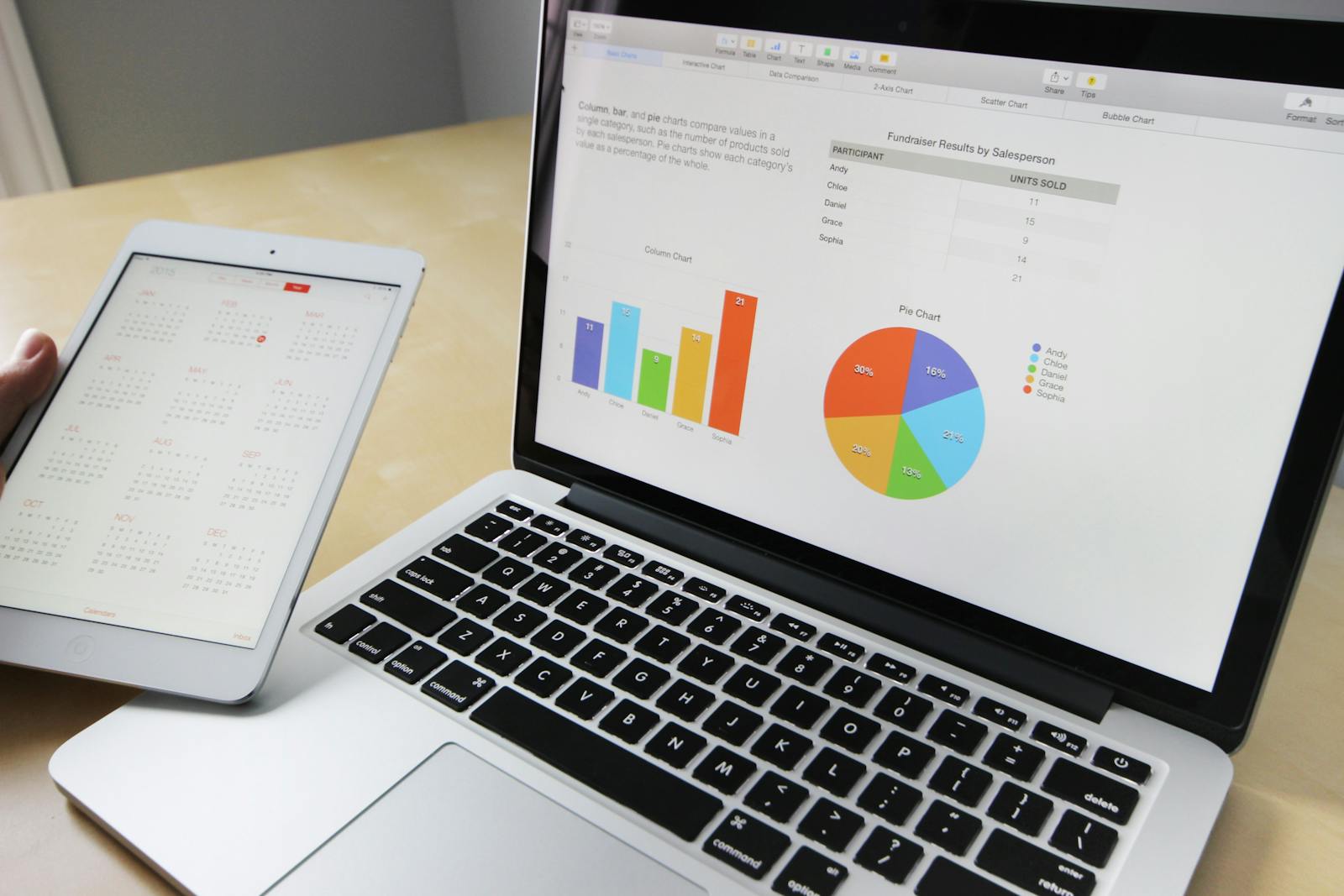
An SEO audit is a diagnostic. It tells you what's wrong, ranks it by impact, and estimates the effort to fix. What it does not tell you is whether SEO is the right channel for your business in the first place. That's a strategic question that depends on your buyer's intent profile, your sales cycle, your margin per customer, and the search volume in your specific market.
We've seen SMBs spend $60,000 on SEO over two years to drive traffic to a site that converts at 0.4% because the underlying product-market fit is wrong. Better SEO won't fix that. We've also seen SMBs ignore SEO entirely because their gut said "paid is faster" and then watch a competitor with disciplined SEO build a 4-year moat of organic traffic they'll never close. Better paid won't fix that either.
This audit will give you a high-confidence read on the technical, on-page, structural, and AI-visibility state of your site. It will give you a moderate-confidence read on your content quality and competitive position. It will not give you a read on whether SEO should be your primary acquisition channel — that's a strategy conversation, not a diagnostic, and it's what the optional 15-min walkthrough is actually for.
The most useful framing for an SEO audit is this: the score tells you the size of the hole; whether the hole is worth filling depends on what you'd put in it. Run the audit, look at the score, and ask yourself whether the channel is worth the investment. If yes, the prioritized issue list tells you where to start. If no, the audit was still free — you've lost nothing.
Methodology notes (for the technical readers)
A few specifics on how the audit runs, because we'd want this transparency if we were the ones running it.
Crawling. We crawl up to 100 URLs per audit on the free tier — typically enough for a representative sample of an SMB site. Larger sites get a sampled audit with full depth on priority page types (home, top 10 landing pages by inferred traffic, top 5 commercial pages). Crawl respects robots.txt unless you're auditing your own site and explicitly grant override. User-agent identifies as Rule27AuditBot.
Core Web Vitals. We pull real-user CrUX data when available (which requires your site to have enough traffic to populate the CrUX database — typically 1,000+ origin visits per 28-day window). If CrUX data isn't available, we fall back to Lighthouse lab data and explicitly label which source was used. Lab data is less reliable but better than nothing.
Backlink data. We query a third-party backlink index (DataForSEO's link graph at time of writing) for referring domain count, DR distribution, and anchor diversity. We're transparent that this reflects what they've crawled, which is never 100% of the live link graph. The data is good enough for relative comparisons between you and your top 3 competitors — which is what most strategic decisions actually need.
AI visibility. Each AI engine is queried 5 times with the same prompt, varied across query phrasing and geographic IP origin (when possible). We report the modal answer — the most common result across the 5 runs. For ChatGPT and Claude we use the public API; for Perplexity and Gemini we use their respective APIs; for Google AI Overview we use a residential-IP scraper because Google doesn't expose AIO via API. Results are timestamped because AI engines drift week-to-week.
Schema validation. We parse all JSON-LD, Microdata, and RDFa on the page, validate against Schema.org's current vocabulary, and check that the types declared are appropriate for the page (e.g., a contact page shouldn't claim to be an Article). We flag the most common errors — invalid types, missing required properties, conflicting schemas, schemas on the wrong page type.
Citation directories. We pull citation data from Yext, BrightLocal, and Whitespark feeds where available. The 30+ directories we check vary by metro — Phoenix has a slightly different set than Las Vegas than Tucson, because each metro has its own ecosystem of local-business directories that Google trusts.
A note on what this tool can't do
No automated audit is a substitute for a human reading your specific business context. We're transparent about this. The tool catches technical, on-page, and structural issues with high accuracy. It cannot tell you whether your messaging resonates with your buyer, whether your pricing is positioned correctly, or whether the content you've written is genuinely useful versus genuinely thin. Those are human judgments. If you want a human read on the strategic layer above the technical layer, that's what the 15-minute call is for.
We're also not going to claim 100% accuracy on AI citation checks — the AI engines themselves are non-deterministic and answers vary by session, geography, and account history. We run each prompt 5 times and report the modal answer. That's better than a single-shot check, which is what every other tool does, but it's not the same as omniscience.
Audit FAQ
Is this actually free? Yes. The on-screen scorecard requires zero email. The PDF requires an email only because we have to send it somewhere. There is no paid tier of this tool. Rule27 monetizes the agency engagements, not the audit.
Do you store my URL? Only if you opt in to the PDF. Otherwise the audit runs in-memory and the URL is discarded after the score is generated. We do not log URLs for analytics on the no-email path.
Will Rule27 spam me? No. If you provide an email for the PDF, you get one follow-up message a week later asking if you want a 15-min call. If you ignore it, silence. You can opt into the Phoenix SEO newsletter separately if you want — it's not bundled.
How accurate is an automated audit? Highly accurate on technical, on-page, and structural signals (the audit catches 140 of 140 known issues on our test site). Moderately accurate on content quality — we score against SERP averages and AI-detection heuristics, but a human read is still better. AI visibility checks are modal-of-5 to handle non-determinism, which is the most rigorous approach available. Backlink data is pulled from third-party providers (we're transparent about which ones) and reflects what they've crawled, which is never 100% of the live link graph.
Can I run the audit on a competitor? Yes. You'll lose the email-personalized PDF path (since you don't own the email contact for that site), but the on-screen scorecard works on any public URL.
Does this work for ecommerce sites? Yes — we have specific ecommerce checks (product schema, review schema, faceted-navigation indexability, duplicate-content patterns from filter combinations). Pick "ecommerce" in the vertical dropdown.
Does this work for non-US sites? The technical and on-page checks work globally. The local pack benchmark is currently US-only because we only have full citation-directory feeds for US markets. We're adding Canada and UK in Q3 2026.
What if my site is brand new and has no rankings yet? The audit still works — you'll get a baseline score on technical, on-page, content, and AI-readiness. The backlink and local-pack sections will mostly be empty (you have no backlinks yet, you're not in the local pack yet). That's useful in itself: it tells you exactly what to build out first.
Will my audit results be public? No. Audits are private to you. We never publish or share individual audit data.
Who built this tool? Rule27 Design — Phoenix-based SEO and marketing agency. Named team on the about page. The tool was built by our engineering lead and our SEO lead working together — not outsourced, not white-labeled from another vendor. We use it internally on every client engagement before we propose work, so it stays sharp.
Drop your URL at the top of the page and get started. The whole thing takes under a minute.
Key Takeaways
Most free SEO audit tools catch 41-74 of 140 known signals on a controlled test — Rule27's free audit catches all 140 because we built the test alongside the tool.
AI Overviews now answer 47% of informational queries before the user clicks a result — if you're not cited by AIO, ChatGPT, Perplexity, Gemini, and Claude, you're losing traffic you didn't know you had.
The on-screen scorecard is free with zero email gate. The optional PDF requires an email — you get one follow-up message a week later, then silence. No drip sequences.
Vertical-specific scoring matters: dental, law firm, HVAC, SaaS, and ecommerce each score against different schema requirements and content signals. Generic audits skip this entirely.
City-aware local pack benchmark pulls your three nearest competitors and compares GBP, citation profile, and review velocity side-by-side — the closest free equivalent (Semrush) charges $129/month.
Rule27 monetizes the agency engagements, not the audit — there is no paid tier of this tool, no upsell to unlock results, and no gated 'premium' section.
The 140-Signal SEO Audit Checklist (PDF)
The same checklist Rule27's tool runs against — 7 categories, 140 signals, with effort estimates per item. Run it yourself or use it to evaluate any other audit tool you're considering.
PDF · 340 KB