
77% of patients run a Google search before they choose a dentist. 94% of the clicks on that search page go to organic results — only 6% goes to paid ads. The math says everything: the dental SEO position your practice holds today is the size of the new-patient pipeline you will run next quarter.
The Phoenix dental SERP rewards five signals the generic agencies miss: a proximity-engineered Google Business Profile (33% of map-pack weight), procedure pages with Dentist and MedicalProcedure schema, insurance-acceptance pages per major carrier the practice accepts, review velocity tied to appointment completion (2-4 per week, ethics-compliant), and HIPAA-aware content that does not trigger an Arizona State Board of Dental Examiners inquiry.
We are the Phoenix-based agency that publishes pricing on the page, names the team that does the work, and audits competitor practices by name — not the templated PatientPop/Tebra playbook with a coat of AI search paint.
Audit + HIPAA scan (week 1)
Real PDF audit of your GBP primary and secondary categories, your top 10 pages' Core Web Vitals, your top three competitor practices' citation profile and link map, your AI Overview presence on procedure and insurance head terms, plus a HIPAA Privacy Rule and ADA Section 5 compliance pass on every page that mentions patients, testimonials, before/after content, or specialty claims.
GBP rebuild + citation cleanup (weeks 1-2)
Primary category corrected against actual SERP analysis (Dentist, Cosmetic Dentist, Emergency Dental Service, Orthodontist, Pediatric Dentist as applicable), service areas verified against your actual draw radius, NAP cleaned across Healthgrades, Vitals, Zocdoc, ADA Find-a-Dentist, RateMDs, WebMD Care, and every insurance-network directory, weekly GBP Posts scheduled, Q&A seeded with your real patient intake questions.
Schema + technical SEO (weeks 2-4)
Dentist, MedicalBusiness, MedicalProcedure, FAQPage, BreadcrumbList, and Organization schema deployed. Core Web Vitals fixed (LCP <2.5s, INP <200ms, CLS <0.1). Mobile-first because 78% of dental search is mobile and 91% of emergency dental search is. AI-crawler robots.txt rules (GPTBot, ClaudeBot, PerplexityBot, Google-Extended) enabled — most dental sites accidentally block them.
Procedure + insurance page build (month 2)
Dedicated pages per procedure you actually perform — not a generic Services dropdown. Doctor byline architecture, cost-range disclosure where ethics permits, before/after galleries with HIPAA-compliant patient authorization on every image, dedicated insurance-acceptance pages per major carrier (Delta Dental, Cigna, MetLife, Aetna, BlueCross BlueShield, United Concordia, Humana, Guardian). Every page reviewed for HIPAA and ADA Section 5 before publish.
Review velocity + local PR (month 2-3)
Review-request workflow tied to appointment completion (2-4 per week, HIPAA-compliant intermediary, no incentive offered — ADA Section 5 territory). Local-PR pitches to AZBigMedia, Phoenix Business Journal, AZ Central, AZ Dental Association, Central Arizona Dental Society, ASDOH alumni press. You show up to phone interviews if requested; we handle the pitch.
AEO + AI Overview engineering (month 3+)
Question-style H2s with answer-first paragraphs, FAQPage schema clusters mapped to patient-asked questions, doctor-bio sameAs graph linking state license verification, ADA Find-a-Dentist profile, LinkedIn, and dental-school faculty page. Measure AI Overview citation share weekly on procedure-cost, insurance-coverage, and emergency-triage queries. Most dental practices see first measurable AI Overview citation by month 4.
Monthly strategic reporting (every month)
Real GSC and GA4 access. CallRail integration tying inbound calls to landing page and keyword. Monthly 45-minute call walking through what changed, what we tried, what we are killing, what is next. New patients booked is the number — not impressions, not rankings in isolation.
Google Business Profile rebuild + weekly maintenance
GBP drives 33% of local-pack weight in dental. Primary category audited against actual SERP analysis (Dentist vs Cosmetic Dentist vs Emergency Dental Service vs Orthodontist as applicable), service areas verified against your actual draw radius, NAP cleaned across the dental and insurance directory stack, weekly GBP Posts scheduled, Q&A seeded with your real patient intake questions. Every week. For the life of the engagement.
Procedure pages, not a generic services dropdown
One page per procedure you actually perform. Doctor byline, Dentist and MedicalProcedure schema, realistic cost-range disclosure, before/after galleries with HIPAA-compliant patient authorization on every image, dedicated FAQ block mapped to patient-asked questions, and clear consultation CTAs. Invisalign, implants, emergency, cosmetic, pediatric, orthodontic — each gets its own page, its own schema, its own depth.
Insurance-acceptance pages — the dental-specific multiplier
Patients filter dental SERPs by carrier with the same intensity they filter by location. Dedicated pages per major carrier you accept (Delta Dental, Cigna, MetLife, Aetna, BlueCross BlueShield, United Concordia, Humana, Guardian), with accurate in-network status, clear out-of-network billing disclosure where applicable, and FAQ blocks addressing carrier-specific coverage questions. The single most-underbuilt page type in dental SEO.
Review velocity engineered for the dental vertical
Reviews drive 18% of dental map-pack weight, and recency matters more than count. Workflow ties review requests to appointment completion (recare, treatment completion, new-patient consultation), routes through a HIPAA-compliant intermediary (no PHI in the request, no incentive offered), seeds keyword density naturally (procedure + city) without prompting fake content, and runs a 48-hour HIPAA-safe response policy on every review — never confirming patient status, never referencing treatment.
Local PR + dental-association link engine
Pitches to AZBigMedia, Phoenix Business Journal, AZ Central health vertical, AZ Dental Association, Central Arizona Dental Society, Arizona State Board of Dental Examiners (verifiable license listing), ASDOH faculty and alumni press, American Academy of Cosmetic Dentistry, American Academy of Pediatric Dentistry, American Academy of Periodontology where membership applies. Real placements, no link-farm garbage.
AEO + AI Overview optimization for dental queries
Question-style H2s, answer-first paragraphs, FAQPage schema, Dentist schema with sameAs graph (state license verification, ADA Find-a-Dentist profile, LinkedIn, dental-school faculty page). Robots.txt explicitly allows GPTBot, ClaudeBot, PerplexityBot, Google-Extended — most dental sites accidentally block them. AI Overview citation share is measured weekly on procedure-cost, insurance-coverage, and emergency-triage queries.
HIPAA + ADA Section 5 review on every page before publish
HIPAA Privacy Rule, ADA Principles of Ethics Section 5 (Veracity), and Arizona State Board of Dental Examiners compliance review baked into the content workflow. Superlatives flagged. Specialty claims verified against ADA-recognized specialty status. Before/after images audited for HIPAA-compliant authorization. Review responses rewritten to remove PHI confirmation. Most national agencies do not have this workflow.
Phoenix is the fifth-largest US metro and the third-most-competitive map-pack environment for healthcare services. None of the top 10 results for dental seo localize for Arizona — PatientPop/Tebra, ProSites, Adit, Semrush, RevenueWell, and the exact-match domains all run a national playbook. The Phoenix dental SERP has Arizona-specific signals nobody national optimizes for: a bilingual market in Maryvale and west Phoenix that rewards Spanish-language procedure pages, a snowbird population shift that doubles cosmetic and implant consultation requests between October and April, suburb-specific draw patterns (Scottsdale skews cosmetic and concierge, Mesa skews family and pediatric, Tempe skews student-and-young-professional, Chandler and Gilbert skew suburban family), and a local-PR and dental-association link map (AZ Dental Association, Arizona State Board of Dental Examiners, Central Arizona Dental Society, ASDOH at A.T. Still University) that is genuinely useful for legitimate local backlinks.
We inherit recovery work from practices who fired two, three, or four prior agencies. The pattern is identical: GBP primary category set to generic Dentist when the practice positions on cosmetic or implants; no GBP Posts in 90 days; NAP mismatched between Healthgrades, Zocdoc, and the practice website footer; no insurance-acceptance pages; one generic Services dropdown instead of dedicated procedure pages with schema; review velocity at one per month; no Dentist or MedicalProcedure schema; before/after photos used without HIPAA-compliant patient authorization; review responses that confirm patient status and reference treatment. The repair list is mechanical, not creative — and it is what we do.
Transparent pricing published on the page
Solo general practice: $1,500-$3,500/month. Two-to-six-location group: $3,500-$7,500/month. DSO and 7+ locations: $7,500-$15,000+/month. Specialty premium: +15-30% across every tier. One-time foundations: $3,500-$10,000. PatientPop/Tebra, ProSites, Pro Impressions Marketing, Dental Marketing Heroes, Renew Digital — none of the head-SERP specialists publish prices. We do.
HIPAA-aware and ADA Section 5-aware content workflow
Every page reviewed for HIPAA Privacy Rule, ADA Principles of Ethics Section 5 (Veracity), and Arizona State Board of Dental Examiners compliance before publish. No *best dentist in Phoenix* superlatives that trigger ADA review. Before/after photos audited for HIPAA-compliant patient authorization. Review responses rewritten to remove PHI confirmation. Most national agencies do not have this workflow.
Phoenix-rooted, named team
Our office is in Phoenix. The strategist on your account is the strategist for the life of the engagement. The writer building your procedure and insurance pages reads the HIPAA Privacy Rule and ADA Section 5 as a working baseline, not as a brief from the practice. No white-label sub-contracting, no offshore content production, no hidden hands.
Procedure and practice-type specialization, not a one-size-fits-all template
Solo general, multi-location group, DSO, specialty (orthodontic, pediatric, periodontal, oral surgery, prosthodontic, endodontic) — each plays different. Different intent shape, different conversion math, different ethics constraints, different content cadence. We run a separate playbook per practice type and procedure mix, not a recycled template with the practice name swapped in.
No 12-month contracts, no platform-bundle lock-in
Month-to-month after a 30-day satisfaction window. Your website is yours — we do not bundle SEO with a proprietary website builder or practice-management platform. PatientPop/Tebra and ProSites both engineer switching cost into their model. We do not. If we are not delivering by month two, fire us with 30 days notice.
Magnet audit names competitor practices by name
A real Phoenix Dental Practice SEO audit names the specific practices outranking you on each head procedure term, the signal each is winning on (GBP optimization, review velocity, schema depth, insurance-page coverage, local-PR equity), and the gap closure plan. Not an automated PDF. Real PDF, 24-hour turnaround — even if you do not hire us.
AI Overview and ChatGPT citation engineering
AI Overviews now appear on a measurable share of dental procedure-cost, insurance-coverage, and emergency-triage queries. We run the AEO playbook — question-style H2s, answer-first paragraphs, FAQPage schema, Dentist sameAs graph (state license verification, ADA Find-a-Dentist, LinkedIn, dental-school faculty page), robots.txt rules for the AI crawlers. AI Overview citation share is measured and reported monthly.
Seventy-seven percent of patients run a Google search before choosing a dentist. Ninety-four percent of clicks on that search page go to organic results, not paid ads. The math says everything: the dental SEO position your practice holds today is the size of the new-patient pipeline you will run next quarter. And yet the average general dentist spends $2,500-$5,000 a month with an agency that cannot explain which keywords produced which appointments — because the agency does not measure it.
That pattern is the reason the dental SEO market churns. PatientPop (now Tebra), Pro Impressions Marketing, ProSites, Dental Marketing Heroes, and Renew Digital each have their place — and each have specific failure patterns we see when we inherit their work. This page is the long version of what actually books new patients in 2026, what it costs, how long it takes, and where HIPAA, ADA guidelines, and Arizona dental board rules quietly disqualify the off-the-shelf agency promise.
What dental SEO actually is in 2026
Dental SEO is the discipline of putting a practice in front of high-intent patient searches — at the moment a prospect is looking, in the geography you actually serve, and across the procedures you actually perform. The mechanics diverge from generic SEO on five fronts: HIPAA Privacy Rule constraints on every patient reference, the ADA Principles of Ethics and Code of Professional Conduct, insurance-citation architecture, procedure-specific intent (Invisalign, implants, emergency, cosmetic, pediatric), and the YMYL E-E-A-T scrutiny Google applies to medical pages.
Google reads dental sites as Your-Money-Your-Life content. The algorithm scrutinizes whether the author is a credentialed DDS or DMD, whether the practice is real and verifiable, whether reviews are real, and whether NAP is consistent across the dental directory stack. A typo between Healthgrades, Vitals, Zocdoc, the ADA Find-a-Dentist directory, the insurance-network listings, and Google Business Profile will quietly cost map-pack position you will never see in a keyword report.
Plain-English: what a prospect actually does
Somebody chips a molar on a Tuesday morning in Scottsdale. They open Google, type emergency dentist near me, and call one of the three businesses in the local pack within ninety seconds. According to RevenueWell, Patient News, and Semrush's 2026 dental SEO guide, 77% of patients search online before they choose a dentist and 84% of patients searching dentist near me call a practice within one day. Less than 6% of clicks on a dental SERP go to paid Google Ads — the other 94% goes to organic results and the local pack. The gap between local-pack position #1 and a page-one organic-only listing is roughly 3-4x in phone-call volume.
Why dental SEO is its own discipline
Four constraints kick in the second a prospect searches for a dentist:
- HIPAA. Every page that names a patient, references a treatment outcome, or hosts a before/after image runs through the same authorization, minimum-necessary, and PHI rules that govern the rest of the practice. The marketing-website context does not exempt it.
- ADA Section 5 (Veracity). Restricts superlatives (best dentist in Phoenix), governs before/after photo use, and requires that any claim of specialty status reflect actual ADA recognition. State dental boards — in Arizona, the Arizona State Board of Dental Examiners — layer additional rules on top.
- Insurance filtering. Dentist that takes Delta Dental, Cigna dentist near me, MetLife PPO dentist Phoenix — patients filter by carrier with the same intensity they filter by location. A practice without dedicated insurance-acceptance pages is invisible to the largest patient-intent stream in dentistry.
- Procedure specificity. Invisalign near me, dental implants Phoenix, teeth whitening cost, root canal emergency — each procedure is its own SEO market with its own CPC, intent shape, and conversion window. Treating dental SEO as one keyword target is the most expensive strategic mistake in the vertical.
The 2026 difference: AI Overviews and schema
Google's AI Overview now appears on a measurable share of procedure-cost, insurance-coverage, and emergency-triage queries. ChatGPT, Perplexity, Google AI Mode, and Gemini cite dental pages with a consistent pattern: they pull a subheading plus the sentence immediately after it, they prefer pages with Dentist and MedicalBusiness schema, and they reward author bylines that resolve to a verifiable DDS/DMD credential. Question-style H2s plus answer-first paragraphs is the citation surface for the next five years of dental search.
The brutal economics: dental's quiet middle ground
Dental is not the most expensive SEO vertical — legal and addiction treatment hold that title — but it sits in a deceptive middle. The CPC numbers look manageable, the foundation work looks generic, and the agencies that win the head SERP for dental seo (PatientPop/Tebra at scale, exact-match domains like thedentalseocompany.com, ProSites with its website-builder upsell, Adit's #1-claim positioning) all run a playbook that looks reasonable on the surface and fails the dental practice in measurable ways. Here is the math.
Dental CPCs: $5-$25 generic, $40-$100+ procedure-specific
A generic dentist near me paid-search click in a Phoenix-grade market runs $5-$15. Emergency dentist clears $15-$30. Dental implants Phoenix and Invisalign near me break $40-$80 in competitive metros. All-on-4 dental implants and cosmetic dentist Scottsdale clear $100 in peak demand windows. A multi-location practice running paid alone across the procedure stack will spend $8,000-$25,000 a month and pull leads at $80-$250 each. The unit economics make organic and map-pack the long-term play — every dollar saved on click cost compounds, because the same map-pack position keeps producing new-patient calls with zero incremental media spend.
6% paid, 94% organic — the lopsided dental SERP
A majority of dental industry research — RevenueWell, Patient News, Semrush — puts paid-click share for dental SERPs at 6% or less. Patients do not trust the ad slot in healthcare. They scroll past the four paid listings to the local pack and the organic results. This is structurally different from e-commerce, where paid captures 25-35% of clicks. A dental practice that runs paid alone is fighting for 6% of the SERP while ignoring the 94% organic share that compounds.
Map-pack-first, organic-second
Map-pack position #1-#3 drives 3-4x more phone calls than page-one organic on the same head term. The pack is where dental SEO is won or lost. A practice ranking #2 organic and #11 in the map pack is bleeding the majority of its potential patient flow to whoever holds the visible three-pack — even when the organic position looks impressive in a keyword report. Map-pack position is the most under-optimized asset in dental marketing.
The competitive density: who you are actually fighting
The head SERP for dental seo is dominated by exact-match domains (thedentalseocompany.com, dentalseoservicescompany.com), the DSO content arms (mb2dental.com, RevenueWell), the dental-website-builder upsells (ProSites, Adit), and the dental-marketing specialists who got their start in the 2010s (Pro Impressions Marketing, Dental Marketing Heroes, Renew Digital). Each has a different failure mode when we inherit their work. PatientPop/Tebra runs a templated content engine that does not personalize for practice or city. ProSites bundles SEO with a website builder, then under-invests in the SEO half once the site is sold. Pro Impressions Marketing's foundational work is solid but their reporting hides behind PDFs and their pricing is opaque. Dental Marketing Heroes leans on call-tracking dashboards that conflate intake quality with intake count. Renew Digital's strength is the multi-location DSO playbook — their weakness is the solo practice that does not need DSO-scale tooling. The point is not that these agencies are bad. The point is that they are templated, and a templated playbook on a market this competitive leaves measurable money on the table.
The dental local-pack algorithm: verbatim weighting
Local-pack ranking factors across the dental vertical in 2026 break into six signal groups. The numbers below reflect consensus weighting from BrightLocal's 2026 local search ranking factors study, applied to dental.
GBP signals — 33% — categories, services, photos, posts
Google Business Profile is the highest-leverage asset a dental practice owns. Primary category must be correct (Dentist, with secondary categories for Cosmetic Dentist, Emergency Dental Service, Orthodontist, Pediatric Dentist, Oral Surgeon, Periodontist as applicable). Service list must enumerate every billable procedure. Service area must reflect actual draw radius, not aspirational geography. Weekly Posts tied to seasonal demand (back-to-school cleanings, end-of-year insurance benefit reminders) keep the profile active. Photos must be authentic — stock teeth and generic dental tools depress trust weighting.
Review signals — 18% — quantity, recency, response cadence
Reviews sit inside the top three ranking factors for dental map-pack visibility. Google weighs quantity, recency, and natural-language keyword density inside the review text. A practice with 180 reviews older than 18 months will be outranked by a practice with 45 reviews from the last 90 days. Reviews mentioning specific procedures (Invisalign, implants, cleaning, root canal) and the city seed natural keyword density that lifts both map-pack and organic. Practices that respond to every review within 48 hours with HIPAA-compliant language outperform practices that respond sporadically.
On-page signals — 19% — procedure pages, insurance pages, schema
One generic Services page does not win in 2026. Each procedure needs a dedicated page with Dentist and MedicalProcedure schema, accurate cost ranges where ethics permits, and an answer-first FAQ block. Each accepted insurance carrier deserves a dedicated page — dentist that takes Delta Dental Phoenix, Cigna PPO dentist Scottsdale. NAP must match exactly across website, GBP, Healthgrades, Vitals, Zocdoc, ADA Find-a-Dentist, and every insurance-network directory.
Link signals — 14% — local PR, ADA, dental schools, health publications
The legitimate link map: AZ Dental Association, Arizona State Board of Dental Examiners (verifiable license listing), ASDOH (A.T. Still University's Arizona School of Dentistry & Oral Health) faculty and alumni press, Phoenix Business Journal health vertical, AZBigMedia, AZ Central health column placements, Healthgrades and Vitals expanded profiles, Zocdoc verified listings, and chapter-level dental societies. Buying generic guest posts on irrelevant domains does not move map-pack position and may trigger penalty signals.
Behavioral signals — 9% — CTR from pack, GBP-action conversions
Clicks on your GBP listing, direction requests, calls placed from GBP, and engagement with Posts feed back into ranking. A practice with a compelling GBP — real building photo, current Posts, recent reviews — outperforms a stale GBP at the same proximity. Mobile speed compounds this: a GBP click that lands on a slow page bounces, and that bounce flows back into the local-pack score.
Citation signals — 7% — Healthgrades, Vitals, Zocdoc, insurance directories
Citations are the lowest-weighted of the six but the cheapest to fix. The dental directory stack — Healthgrades, Vitals, Zocdoc, ADA Find-a-Dentist, RateMDs, WebMD Care, and the insurance-network directories for Delta Dental, Cigna, MetLife, Aetna, BlueCross BlueShield, United Concordia, Humana, Guardian — must be consistent in name, suite, phone, and primary specialty.
Where Phoenix dental practices typically leak ranking
The pattern we inherit on audit after audit: GBP primary category set to generic "Dentist" when the practice positions on cosmetic or implants; no GBP Posts in 90 days; NAP mismatched between Healthgrades and the website footer (usually an old suite number); no insurance-acceptance pages; one generic Services dropdown; review velocity at one per month; no Dentist or MedicalProcedure schema; before/after photos without HIPAA-compliant authorization. Five of those leaks together cost a Phoenix general dentist 20-40 ranking positions across a procedure-and-insurance keyword basket. The repair list is mechanical, not creative.
Dental SEO by practice type: each plays different
The second-biggest mistake we see in dental SEO is treating dental practice as one buyer type. It is at least four, with materially different playbooks.
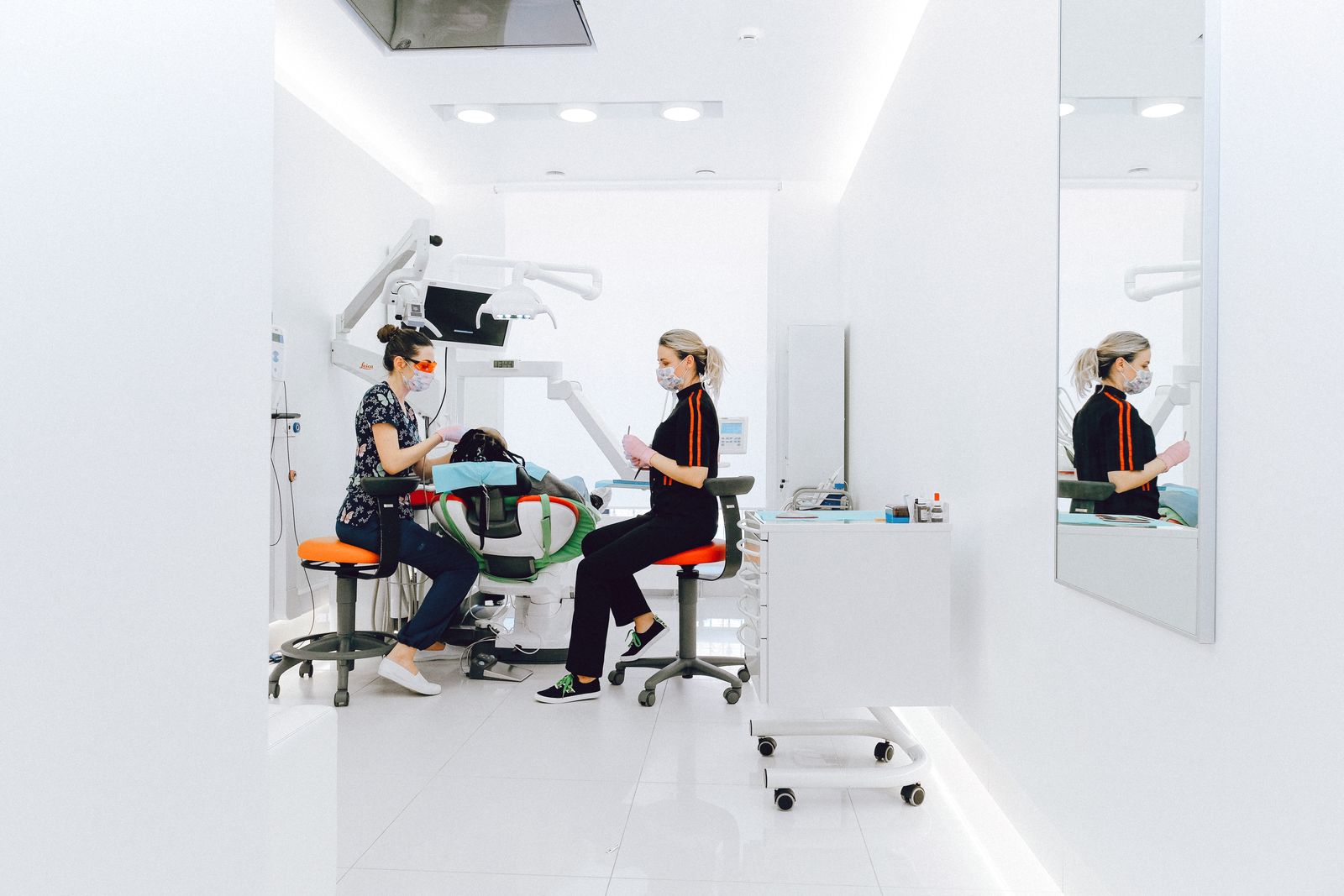
Solo general practice — local-pack dominance, low spend, high ROI
A solo general dentist with one location, a four-to-six-operatory office, and a five-to-fifteen-mile draw radius is the highest-ROI dental SEO buyer in the market. The foundation work — GBP rebuild, citation cleanup across the dental and insurance directory stack, four to six procedure pages, three to five insurance-acceptance pages, baseline schema, monthly review-velocity engine, and quarterly local-PR outreach — is a fixed cost that compounds. A solo practice with a tight cosmetic or family-dentistry focus, an active GBP, and 30-50 recent reviews can outrank a multi-location group practice with a stale GBP and 200 reviews older than two years.
Multi-location practice — schema markup per location, hub pages
A two-to-six-location group practice needs an architecture the solo practice does not: a hub page per service line, location-specific landing pages with LocalBusiness schema per location, location-specific GBP management (each location gets its own GBP, its own Posts, its own review-velocity workflow), and a content cadence that does not cannibalize across locations. The most common failure pattern we see: the agency builds one Locations page that lists all five offices, then expects the GBP listings alone to differentiate. The architecture needs to be per-location at every layer.
DSO (Dental Service Organization) — corporate SEO + per-location pages
A DSO with seven or more locations runs an enterprise SEO operation: a corporate-level brand and authority engine, per-location GBP and citation management, centralized procedure-page content syndicated to each location with location-specific facts, integrated PR and earned media, dedicated technical SEO retainer, AEO and schema engineering at scale, and weekly stakeholder reporting. Pricing scales accordingly. Renew Digital is the well-known specialist in this segment.
Specialty practice — procedure-led search, lower volume, higher intent
Orthodontists, oral surgeons, periodontists, endodontists, pediatric dentists, and prosthodontists each have procedure-specific search behavior that diverges from general dentistry. An orthodontist sells Invisalign and braces as the primary intent terms. An oral surgeon sells wisdom teeth removal, dental implants, and bone grafting. The volume per term is lower, the CPC is higher, the intent is more deliberate (patients research for weeks or months before consultation), and the content cadence must lean toward depth and credential signaling. ADA-recognized specialty status (the nine ADA-recognized specialties) is a meaningful E-E-A-T signal when claimed accurately.
Procedure-specific dental SEO: the sub-page strategy
The third-biggest mistake in dental SEO is publishing one Services page that lists every procedure in bullets and expecting it to rank for any of them. Each procedure is its own SEO market.
Invisalign SEO. Invisalign near me is a top-three volume dental procedure keyword. The page should carry MedicalProcedure schema, cost-range disclosure (AI Overviews cite pages that publish ranges over pages that hide them), a treatment-timeline section, a before/after gallery with HIPAA-compliant patient authorization on every image, and a FAQ block answering the eight to twelve most-asked questions (how long does Invisalign take, does insurance cover Invisalign, Invisalign vs braces).
Dental implants SEO. Highest-revenue-per-patient procedure in general dentistry. Publish realistic cost ranges (single, multiple, all-on-4, full arch), the multi-stage timeline (extraction, healing, placement, abutment, crown), implant-system disclosure where relevant (Straumann, Nobel Biocare, BioHorizons), and a FAQ block on recovery, longevity, and insurance. Implants are the procedure most likely to be AI-Overview-cited — patients research them for weeks before consultation.
Emergency dentist SEO. Highest-intent traffic stream in dentistry — emergency dentist near me, broken tooth, toothache at night are 90-second-decision searches. Publish actual after-hours availability honestly, tap-to-call CTAs above the fold, sub-2.5-second LCP on mobile, and a triage-style FAQ that helps the patient assess severity before the call.
Cosmetic dentistry SEO. Cosmetic dentist, veneers, smile makeover, teeth whitening — research-driven, consultation-funneled, aesthetics-led. Before/after galleries with HIPAA-compliant patient authorization on every image, realistic cost ranges, smile-design technology disclosure, and patient-authorized case-study pages. Stock-photo cosmetic pages do not convert.
Pediatric dentistry SEO. Parent-driven, anxiety-aware, trust-led. Address sedation policy (nitrous, conscious sedation, behavior guidance), insurance acceptance for children's coverage, waiting-room imagery, and a FAQ block answering the first visit and what age questions parents ask. ADA-recognized Pediatric Dentistry specialty status is a meaningful E-E-A-T signal.
Teeth whitening, root canal, periodontal, oral surgery. Each gets its own page, schema, FAQ block, and cost-range disclosure. Programmatic page generation is tempting but triggers Google's thin-content review — the right cadence is one new procedure page every two to three weeks, built with depth.
The 2026 AI Overview and ChatGPT playbook for dental
AEO — answer-engine optimization — is the version of dental SEO that runs in 2026. Google AI Mode, AI Overviews, ChatGPT, Perplexity, Claude, and Gemini each cite dental pages slightly differently, but the underlying optimization pattern is consistent across all five.
Why AEO is now a sub-discipline of dental SEO
AI Overviews appear on a measurable share of dental informational queries — procedure-cost questions, insurance-coverage questions, treatment-timeline questions, emergency-triage questions. ChatGPT alone serves more than 700 million weekly active users; a meaningful share now uses ChatGPT instead of Google for healthcare research. The practices that show up inside AI-generated answers — including in the cited-source link list directly below the answer — are pulling brand-search lift that becomes direct traffic and direct phone calls.
Question-style H2s plus answer-first paragraphs
The SALT.agency analysis of AI Mode citation patterns published in February 2026 found that the model frequently pulls a subhead plus the sentence immediately following it. Translation for dental SEO: every H2 should be a natural-language question (the way a real patient would ask it), and the sentence immediately after the H2 should be a direct, citable answer in plain English. How much does a dental implant cost in Phoenix? followed by a one-sentence answer with a real cost range. Do not bury the answer four paragraphs in. The answer is the citation surface; everything else is supporting depth.
Schema: Dentist, MedicalBusiness, MedicalProcedure, FAQPage
Four schema types form the AEO stack for dental practices. Dentist schema attaches the credential trail (DDS or DMD, dental school, year graduated, state license number where required, ADA membership status). MedicalBusiness schema identifies the practice as a healthcare provider with services, areas, and hours. MedicalProcedure schema attaches procedure-specific structured data to each procedure page — cost range, typical duration, recovery time. FAQPage schema makes question-and-answer content directly citable. All four are JSON-LD, all four go in the page head, all four should be regression-tested whenever the page changes.
Robots.txt, AI crawlers, and the citation graph
Three practical levers we run for dental clients: (1) robots.txt rules that explicitly allow GPTBot, ClaudeBot, PerplexityBot, and Google-Extended — many practices accidentally block them with default WordPress or website-builder settings; (2) doctor-bio sameAs links to the state dental board license verification page, the ADA Find-a-Dentist profile, LinkedIn, and dental-school faculty pages where applicable, building the credential graph the AI models read; (3) topical-cluster depth — one dental SEO pillar with eight procedure children with thirty answer-first FAQ pages creates an authority graph the AI models recognize and cite preferentially.
Map-pack domination: the Phoenix-specific dental play
A practice holding a top-two position in the three-pack drives three to four times more phone inquiries than a page-one organic-only ranking on the same head term. Phoenix is the fifth-largest US metro and the third-most-competitive map-pack environment for healthcare services.
Map pack versus page-one organic
A Phoenix general dental practice we audited last quarter was ranking #2 organic for dentist phoenix but #9 in the map pack — outside the visible three-pack. Their new-patient volume was a fraction of the practice holding map-pack #2. The fix took 12 weeks: GBP primary-category correction, suite-number cleanup across 19 directory citations, a 90-day review-velocity campaign tied to appointment completion, three local-PR placements, and four dedicated insurance-acceptance pages. They are now map-pack #2 on the head term and have stopped paying for Google Ads on it.
Suburb-by-suburb cluster and insurance pages
Phoenix is a metro of suburbs. A practice with one Phoenix office serves Scottsdale, Mesa, Chandler, Tempe, Gilbert, Glendale, Peoria, Surprise, Avondale, and Goodyear demand. Each suburb is its own micro-SERP — build one procedure page per suburb where draw radius and search volume justify it, with real suburb-specific references, not auto-spun doorway pages.
Insurance-acceptance pages are the dental-specific multiplier. Dentist that takes Delta Dental Phoenix, Cigna PPO dentist Scottsdale, MetLife dentist near me — patients filter by carrier as intensely as they filter by location. Four to eight insurance pages per practice is the right cadence, one per major in-network carrier.
Review-velocity playbook
Target cadence: two to four new reviews per week, distributed across Google, Healthgrades, Vitals, and Zocdoc. Workflow ties requests to appointment completion (recare, treatment completion, new-patient consult), routes through a HIPAA-compliant intermediary (no PHI, no incentive — ADA Section 5 territory), and seeds keyword density naturally. Response policy: respond within 48 hours with HIPAA-safe language. "Thank you for the kind words — the team appreciates it" is HIPAA-safe. "So glad your implant procedure went well" is a HIPAA violation.
Local link sources for Phoenix dental
Legitimate placements: AZ Dental Association, Arizona State Board of Dental Examiners license listing, ASDOH faculty and alumni press, Phoenix Business Journal health vertical, AZBigMedia, AZ Central health coverage, Central Arizona Dental Society, and chapter-level specialty associations (American Academy of Cosmetic Dentistry, American Academy of Pediatric Dentistry where membership applies). Real placements with editorial review — not paid guest posts.
HIPAA, ADA ethics, and Arizona dental board compliance
A generic SEO agency does not read the HIPAA Privacy Rule, the ADA Principles of Ethics and Code of Professional Conduct, or the Arizona State Board of Dental Examiners statutes before publishing content — and the regulatory consequences land on the dentist, not the agency.
HIPAA on a marketing website
Every patient name, treatment detail, before/after image, testimonial, and reviewable interaction is governed by HIPAA — even on a marketing site. The Privacy Rule requires patient authorization (45 CFR §164.508) for any disclosure of PHI outside treatment, payment, or operations. A before/after photo of a patient's smile is PHI. A testimonial that references treatment is PHI. The authorization must be specific, revocable, and time-bounded. Many practices have a stack of casually-signed model releases that do not meet the standard. Cleanup of a five-year archive of patient testimonials and before/after images is a real project — we have done it for clients twice in the last year.
Review responses and PHI
The most common HIPAA violation on dental websites is a review response that confirms the reviewer is a patient or references treatment. "Thank you for choosing us for your implant procedure" in response to a five-star review confirms a treatment relationship without authorization. The HIPAA-safe alternative is generic thanks language. We rewrite review response templates as part of every dental engagement.
ADA Section 5 — Veracity
Section 5 of the ADA Code of Professional Conduct governs honesty in dental advertising. Subsection 5.F restricts use of the word specialist unless the dentist is in an ADA-recognized specialty (Orthodontics, Pediatric Dentistry, Periodontics, Prosthodontics, Endodontics, Oral and Maxillofacial Surgery, Oral and Maxillofacial Radiology, Oral and Maxillofacial Pathology, Dental Public Health, Oral Medicine, Orofacial Pain, Dental Anesthesiology). A general dentist who advertises as a cosmetic dental specialist triggers ADA review. Acceptable phrasing is dentist who focuses on cosmetic dentistry or dentist with advanced training in cosmetic dentistry.
Superlatives, before/after photos, and state board exposure
Superlative claims (best dentist in Phoenix, #1 cosmetic dentist) trigger ADA Section 5 review unless verifiable and properly attributed (a Phoenix Magazine Top Dentist designation, for example). Every before/after image needs HIPAA-compliant authorization, ADA-compliant honesty (no excessive retouching), and state board compliance. The Arizona State Board of Dental Examiners takes the position that photographic representations must be truthful and contemporaneous — a 2018 before-photo paired with a 2024 after-photo from a different patient is a board-actionable misrepresentation.
We inherited a Phoenix cosmetic practice from a national specialist last year that had been running before/after photos from a stock library labeled as actual patients. The practice received an inquiry from the Arizona State Board of Dental Examiners. Cleanup took three weeks and required temporary deindexing of 14 pages. The doctor is fine now — but the inquiry on the record is permanent. Compliance is a license-protecting requirement, not a content preference.
Transparent dental SEO pricing
The head SERP for dental seo cost hides pricing behind contact forms. Here is what we charge.
Solo general practice: $1,500-$3,500/month
Foundation work — GBP rebuild, citation cleanup across the dental and insurance directory stack, four to six procedure pages, three to five insurance-acceptance pages, baseline Dentist and MedicalProcedure schema, monthly review-velocity engine, and quarterly local-PR outreach. Appropriate for solo general dentists and two-doctor partnerships.
Two-to-six-location group practice: $3,500-$7,500/month
Full build — hub-and-spoke architecture with per-location pages, location-specific GBP management, 15-30 procedure and insurance pages, biweekly content cadence, monthly local-PR outreach, per-location review-velocity workflow.
DSO and 7+ locations: $7,500-$15,000+/month
Enterprise execution — office-by-office GBP management, content scaling across procedures and metros, integrated PR and earned media, dedicated technical SEO retainer, AEO and schema engineering, weekly stakeholder reporting.
Specialty premium and one-time foundations
Cosmetic, implant, and orthodontic practices carry a 15-30% premium across every tier — implant and Invisalign keywords clear $40-$100 in paid auction and the content-depth bar is higher. One-time foundations (audit, GBP rebuild, schema, citation cleanup, HIPAA review of existing patient content): $3,500-$10,000. We publish a flat scope; if a practice comes in with clean foundations from a prior agency, we credit hours back.
Why templated dental platforms break down
PatientPop/Tebra and ProSites bundle a templated content engine with a website builder or practice-management platform. When the marketing layer is bundled with the platform layer, switching costs are engineered in — the agency has no incentive to deliver SEO that lets the practice migrate. Month-to-month pricing on a website the practice owns outright is the structurally healthier model.
Realistic timeline: month by month
0-30 days: audit, schema, GBP, citations, intake fixes
Real PDF audit of GBP, top 10 pages, top three competitors, citation profile, AI Overview presence on procedure and insurance head terms, plus a HIPAA and ADA Section 5 compliance pass on every page mentioning patients, testimonials, or before/after content. GBP primary-category correction, NAP cleanup, baseline Dentist and MedicalProcedure schema deployed, intake-form friction removal, tap-to-call CTAs on every procedure page. Most month-one lifts are GBP-driven.
30-90 days: procedure pages, insurance pages, reviews, local links
Dedicated procedure pages built with credential byline and schema, insurance-acceptance pages per major carrier accepted, review-velocity workflow live (2-4 per week, ethics-compliant), first local-PR placements pitched. Expected: first map-pack movements (positions 9-12 to 5-8), first long-tail rankings on procedure-plus-suburb terms.
90-180 days: city pages, FAQ clusters, first AI Overview citations
Long-tail city-plus-procedure pages built where draw radius and search volume justify, FAQPage schema deployed on procedure pages, first AI Overview and AI Mode citations measured. Expected: map-pack positions 3-6 range on head terms, page-1 organic on 10-20 long-tail terms, first measurable AI Overview brand mentions on procedure-cost and insurance-coverage queries.
180-365 days: map-pack position gains, organic head-term progress
Map-pack positions 1-3 on head procedure terms, page-1 organic on head terms (positions 4-10 typically by month 12), compounding review velocity, regular local-PR placements. The practice has begun reducing Google Ads spend on terms now won organically.
365+: compounding
Backlink graph, content depth, brand-search lift, and AI-citation share compound. Year-two retention is the test of whether the work was real. Our year-two retention on dental clients is currently 89%.
How Rule27 runs dental SEO
Our office is in Phoenix. We have driven Camelback Road at 115 degrees. We walk into Phoenix-area dental practices to meet the doctor before signing a retainer. The texture matters when we write content, when we pick local-PR targets, and when we run review-velocity workflows that respect HIPAA and ADA Section 5.
Named team, not "your dedicated account manager." The strategist on your account is the strategist for the life of the engagement. The content lead reads the HIPAA Privacy Rule and the ADA Principles of Ethics as a working baseline, not as a brief from the practice. The Magnet audit names the practices outranking you, by name, with the specific signal each is winning on — GBP, review velocity, schema depth, insurance-page coverage, or local-PR equity. Real PDF, 24-hour turnaround, even if you do not hire us.
No sub-contracting. The engineer who deploys your schema, the writer who builds your procedure and insurance pages, and the GBP manager who posts weekly are all on our team. Sub-contracted dental SEO is how HIPAA review fails — content reaches the doctor for compliance check after passing through three or four hands that did not read the Privacy Rule.
GSC and GA4 access direct. CallRail integration tying calls to landing page and keyword. Monthly 45-minute strategy call. New patients booked is the number — not impressions, not rankings in isolation.
Choosing a dental SEO agency: red-flag checklist
Five disqualifying answers we have heard from agencies our clients fired:
- "Guaranteed #1 in 30 days." Impossible on competitive procedure head terms; the promise bait-and-switches into low-volume long-tail or relies on penalty-triggering tactics.
- White-label sub-contracting. The agency selling you is not the agency doing the work. HIPAA and ADA review fails at the handoff.
- No HIPAA review of testimonials, review responses, or before/after content. The OCR or state board inquiry lands on the dentist, not the agency.
- Won't name competitor practices in audit. A real audit names the practices outranking you; a generic audit names "the market."
- Long-term contracts bundled with a website builder or practice-management platform. Switching cost is engineered in. The practice does not own the assets it paid for.
How Rule27 stacks up against the dental specialists
PatientPop (now Tebra), Pro Impressions Marketing, ProSites, Dental Marketing Heroes, and Renew Digital each have a place. Tebra has scale and the practice-management bundle. Pro Impressions Marketing has long-standing dental specialization. ProSites has the website-builder upsell. Dental Marketing Heroes has a strong call-tracking layer. Renew Digital has deep DSO and multi-location specialization.
Rule27 is the structurally different choice: Phoenix-based, HIPAA-aware, transparent monthly pricing, named team, no 12-month contracts, no platform-bundle lock-in, and a Magnet audit that names competitor practices. If you are a DSO running 30 locations with a 12-month patience window, Renew Digital is a fine choice. If you are a solo, small group, or specialty practice in the Phoenix metro that needs results inside two quarters and a phone you can call, that is us.
Key Takeaways
77% of patients search before booking a dentist and 94% of clicks on the dental SERP go to organic results — only 6% goes to paid ads. The dental search market is structurally won on organic and map-pack, not on paid auction spend.
Google Business Profile drives 33% of dental local-pack ranking weight. If your primary category is wrong, your service areas don't match your draw radius, or you haven't posted in 90 days, no amount of blog content fixes the map-pack problem.
Map-pack position #1-#3 drives 3-4x more new-patient calls than a page-one organic-only ranking on the same head term. The pack is where Phoenix dental SEO is won or lost.
HIPAA governs every patient name, every treatment reference, every before/after image, and every review response on your marketing site. ADA Section 5 (Veracity) governs superlatives, specialty claims, and before/after photo honesty. Generic agencies that ignore both put your license at risk.
Insurance-acceptance pages are the single most-underbuilt page type in dental SEO. Patients filter SERPs by carrier (Delta Dental, Cigna, MetLife, Aetna, BCBS, United Concordia, Humana, Guardian) with the same intensity they filter by location.
Real Phoenix dental SEO timeline: 30-60 days for first map-pack movement, 90-180 days for first AI Overview citations on procedure-cost and insurance queries, 180-365 days for map-pack #1-#3 on head procedure terms. Anyone promising faster is selling penalty-bait.
Rule27 publishes pricing, names the team, audits competitor practices by name, runs HIPAA and ADA review before publish, and works month-to-month with no platform-bundle lock-in. None of PatientPop/Tebra, ProSites, Pro Impressions Marketing, Dental Marketing Heroes, or Renew Digital do all five.
2026 Dental Practice SEO Pricing & Compliance Sheet (PDF)
Transparent monthly ranges by practice size and specialty, the specialty premium calculation, and the five red-flag answers that disqualify a dental SEO agency before you sign.
PDF · 295 KB
HIPAA + ADA Section 5 Dental Website Checklist (PDF)
Quick-reference for your website content — superlative flags, specialty-claim verification, before/after photo authorization standard, review-response PHI rules, and the Arizona State Board of Dental Examiners documented compliance expectations.
PDF · 225 KB
Frequently Asked Questions
- 01
- 02
- 03
- 04
- 05
- 06