
Every dental marketing guide on the SERP repeats the same ten tactics — optimize your GBP, ask for reviews, run Facebook ads, send appointment reminders. The ADA, Pankey, Henry Schein, NexHealth, CareCredit, TNT Dental, HelloPearl — all ten top-ranking pages cover roughly the same surface. None of them solves the actual problem.
The practices growing new-patient volume by 30-120% year over year are not running a different version of the same tactics. They are running a coordinated five-lever system — Google search, AI search visibility, systematized referrals, dormant patient reactivation, and community presence — and they are measuring the contribution of each lever independently.
Referrals deliver 40-45% of new patients at 3-4x the lifetime value of cold-acquired ones. Dormant reactivation is 5-10x cheaper than acquisition. AI search citation is the 2026 surface most dental practices are still ignoring. This page is the long version of how the system works and the 90-day plan Rule27 runs for Phoenix-area dental clients.
Foundation audit (week 1)
Real PDF audit of your GBP primary category against actual Phoenix-area dental SERP requirements, top 10 procedure pages' Core Web Vitals on mobile field data, dental-specific citation profile across 30+ directories (HealthGrades, RateMDs, Zocdoc, Vitals, AZ Dental Association, insurance directories), AI Overview presence check on your top procedure queries.
GBP + dental directory rebuild (weeks 1-2)
Primary category corrected (Dentist, not Dental Clinic; sub-types audited per actual SERP), service areas verified for the Phoenix metros you serve, NAP cleaned across 30-50 dental-specific citation directories, weekly Posts scheduled, Q&A seeded with the questions your front desk actually answers, review response protocol established with HIPAA-compliant language.
Procedure page engineering (weeks 2-4)
Dedicated landing page per high-value procedure per geo (Invisalign Tempe, dental implants Scottsdale, emergency dentist Phoenix). Original content, real practice-specific detail, FAQPage and MedicalProcedure schema, author bylines tied to credentialed Person schema, server-rendered JSON-LD engineered for AI Overview citation.
Referral system documentation + training (weeks 3-5)
Four-component referral program — the named ask trained across clinical team, friction-free referral path with QR codes and SMS templates, incentive structure compliance-checked against ADA advertising guidelines, reciprocal-touch protocol with named thank-you-note ownership. Tracked in the practice management system.
Reactivation campaign launch (weeks 5-8)
Dormant patient list pulled from Dentrix / Eaglesoft / Open Dental / Curve, segmented (one missed appointment, 12+ months, 24+ months, incomplete treatment). Multi-touch email + SMS sequence plus single direct-mail postcard for highest-value segments. Timed where possible to insurance year-end for maximum lift.
Community calendar + local PR outreach (ongoing)
School dental health month (February), Phoenix-area health fairs, charity partnerships (Dentistry From The Heart variants, shelter partnerships, food bank), Best Of Phoenix award outreach campaigns. AZBigMedia and Phoenix Business Journal pitches when there is a real story. Real placements, no link-farm garbage.
Monthly measurement + iteration (every month)
Real GSC dashboard you log into anytime. Looker Studio with new patients by source (referral, organic, paid, reactivation, community), referral rate per active patient, GBP impressions, AI citation log. Monthly 45-min call walking through what changed and why. No 50-page PDF nobody reads.
Google Business Profile rebuild + weekly dental-specific maintenance
Primary category audited against the Phoenix-metro dental SERP, service areas verified for the cities your patients actually come from, NAP cleanup across the 30-50 citation directories that matter for dentistry specifically (HealthGrades, RateMDs, Zocdoc, Vitals, AZ Dental Association, insurance network directories), weekly Posts and Q&A seeded with real front-desk questions.
Procedure landing pages engineered for local + AI search
Dedicated page per high-value procedure per Phoenix metro — Invisalign Tempe, dental implants Scottsdale, pediatric dentist Chandler, emergency dentist Phoenix. Original content, MedicalProcedure + FAQPage schema, author bylines tied to credentialed Person schema, server-rendered JSON-LD for AI Overview citation surface.
Systematized referral program (ADA-compliant)
Four-component referral system — the named ask trained across the clinical team, friction-free QR-code referral path, incentive structure that meets ADA advertising guidelines (in-house credit, complimentary whitening, charity donations in the referrer's name), reciprocal thank-you-note protocol owned by the office manager.
Dormant patient reactivation campaigns
List pulled from Dentrix / Eaglesoft / Open Dental / Curve, segmented by recency and engagement state, multi-touch email + SMS + direct-mail sequence. Insurance year-end timing where applicable. Typical recovery rate 15-30% across a 90-day campaign window at acquisition costs measured in dollars per patient.
AI search citation engineering
Schema markup engineered for AI Overview citation — Dentist + MedicalProcedure + FAQPage + Article + Person schema, server-rendered JSON-LD, author bylines as resolvable entities, FAQ content structured for AI extraction. Citation tracking across Google AI Overviews, Bing+ChatGPT, and Perplexity for your top procedure queries.
Community presence + local PR
School dental health month partnerships, Phoenix-area health fair presence, charity partnerships (Dentistry From The Heart variants, shelter restorative work, food bank contributions), Best Of Phoenix award outreach. Pitches to AZBigMedia, Phoenix Business Journal, AZ Dental Association publications. Real placements that build the unlinked brand mention base.
HIPAA + ADA-compliant marketing throughout
Patient testimonials handled with 45 CFR 164.508-compliant written authorization. Before/after photo protocols designed to meet ADA advertising guidelines. Review responses written in HIPAA-compliant language (no acknowledging that a complainant was a patient). Insurance directory accuracy maintained. All marketing copy passed through compliance review before publication.
The Phoenix-metro dental market has roughly 3,500-4,000 active dental practices serving 4.9 million residents. The competitive density is among the top five US metros for dentistry. Generic dental marketing playbooks that work in mid-size markets (Tucson, Albuquerque, Boise) do not survive contact with Phoenix's combination of population growth, demographic diversity, snowbird-driven seasonal demand, and Spanish-language search volume in west Phoenix and Maryvale.
Phoenix-specific patient acquisition realities most agencies miss: snowbird population swells the patient base October through April, then contracts May through September — practices that do not adjust marketing spend and capacity planning to this curve waste budget. The Spanish-language dental search market in Maryvale, west Phoenix, and parts of Mesa is large enough to justify dedicated bilingual landing pages — most national dental marketing agencies skip this entirely. The dental-specific citation ecosystem (AZ Dental Association, AZBigMedia health coverage, Phoenix Magazine's Best Dentists feature, Phoenix New Times Best Of) is distinct from any other US metro and requires local relationships to access. Rule27 is Phoenix-based and has the local relationships and the dental-vertical context to ship the playbook this market actually requires.
Transparent dental marketing pricing on the page
Three tiers, real dollar numbers, month-to-month after a 30-day satisfaction window. Nobody else in the Phoenix dental SEO market does this — TNT Dental, Practice Builders, HelloPearl, Patient Prism all bury pricing behind a sales call. It's the cleanest trust signal we can send before you've talked to anyone.
Named team, not 'your dedicated account manager'
You'll know who runs your GBP weekly. You'll know who writes your procedure pages. You'll know who manages your reactivation campaigns. We don't hide the people doing the work behind a sales layer. Most national dental marketing agencies (Practice Builders, TNT Dental) operate on an account-manager-as-firewall model. We do not.
Anonymized AZ dental case studies with real numbers
We publish case studies with HIPAA-compliant anonymization (Phoenix general dentistry, Scottsdale pediatric, Tempe orthodontics) showing exact new-patient-per-month lift, exact GBP impression deltas, exact reactivation recovery rates. Real numbers. If we can't show the math, we don't claim the win.
No 12-month dental marketing contracts
Month-to-month after the 30-day satisfaction window. If the five levers aren't compounding by month two, fire us with 30 days notice. The agencies that insist on annual dental marketing contracts (HelloPearl, NexHealth's marketing tier, several of the national dental-specific shops) are admitting they can't keep clients voluntarily.
ADA + HIPAA compliance baked in
Patient testimonials handled with 45 CFR 164.508 written authorization. Before/after photo protocols designed against ADA advertising guidelines. Review response language reviewed against HIPAA. Referral incentive structures compliance-checked against the ADA Principles of Ethics. The agencies skipping this expose your practice to malpractice carrier review and state dental board complaints.
AI search citation engineered, not bolted on
Server-rendered JSON-LD on every procedure page. Author bylines tied to credentialed Person schema. FAQ structures designed for AI Overview extraction. Citation tracking across Google AI Overviews, Bing+ChatGPT, and Perplexity. Most dental marketing agencies have not even started this work in 2026. The early movers are accumulating citation advantage that will compound for years.
Phoenix-based people, not a national dental agency with a Phoenix landing page
Our team lives in Phoenix. We have driven Camelback Road on a 115° day. We know which AZBigMedia health editor covers dental practice news. We have seen the inside of the AZ Dental Association annual meeting. National dental marketing agencies (TNT Dental in Texas, Practice Builders in California, HelloPearl in California) ship the same playbook in Houston, Phoenix, and Atlanta. We ship a Phoenix-specific one.
Every dental practice owner has read the same article. Optimize your Google Business Profile. Ask for reviews. Run some Facebook ads. Send appointment reminders. The ten tactics appear in the same order across the ADA's guide, Pankey's eight principles, Henry Schein's 11 easy ways, NexHealth's retention list, and the CareCredit explainer. Every one of those pages ranks in the top ten of the SERP. None of them solves the actual problem.
The actual problem is that getting more dental patients is not a tactic. It is a system. The practices that grow new-patient volume by 30%, 60%, sometimes 120% year over year are not running a different version of the same ten tactics. They are running a coordinated five-lever system — Google search, AI search, systematized referrals, dormant-patient reactivation, and community presence — and they are measuring the contribution of each lever independently.
This page is the long version of how that system actually works, what each lever delivers, and the 90-day sequence we run for Phoenix-area dental practices that hire Rule27 for patient acquisition. The ADA's eight tactics are in here. So are the four tactics no other dental marketing guide covers in 2026.
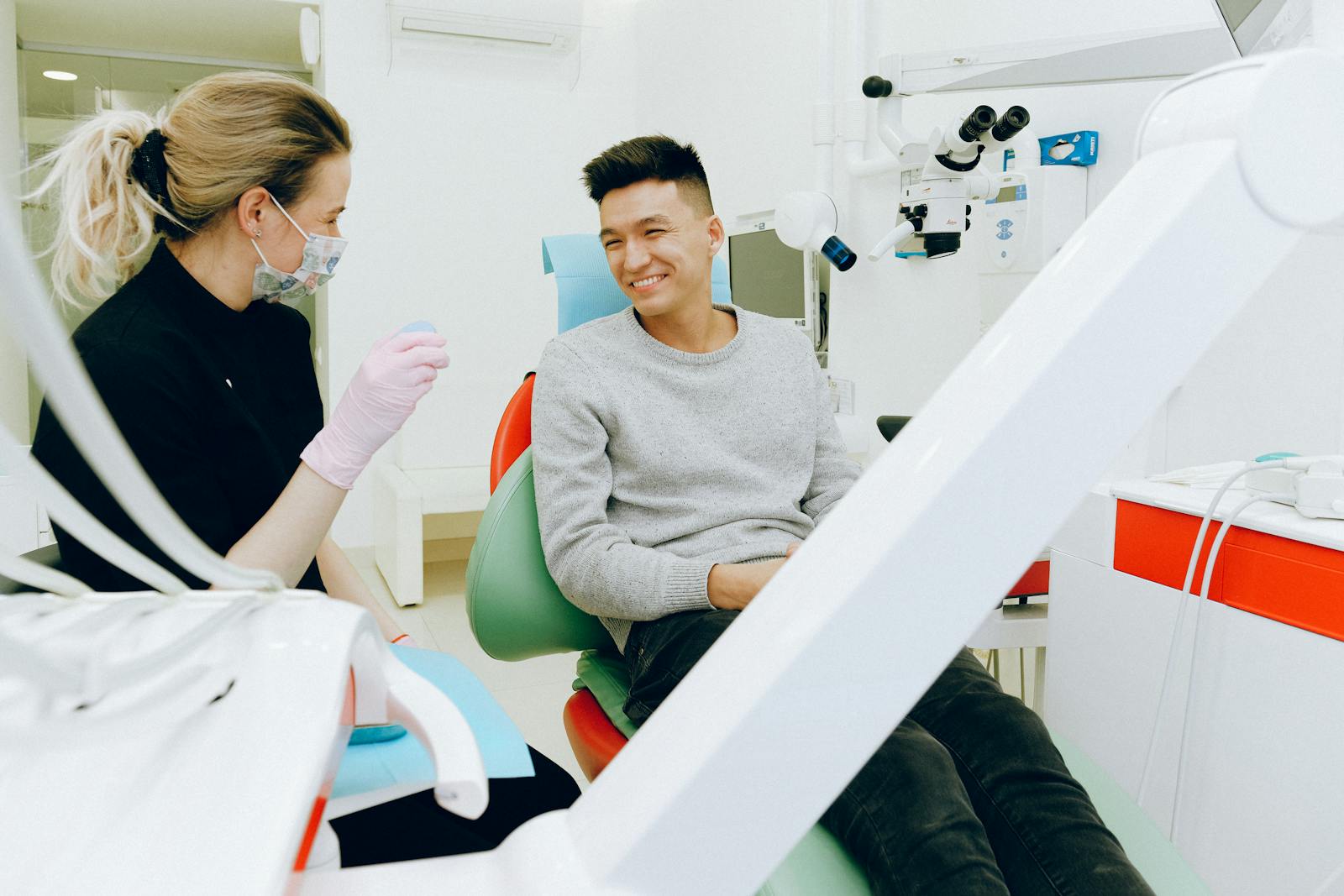
The dental patient acquisition truth
A few numbers before the strategy, because the strategy only makes sense if the numbers do.
77% of patients search Google before booking a dental appointment, per the most recent PatientPop and Healthgrades surveys cross-referenced. The number was 64% in 2020 and 71% in 2023 — the curve is asymptotic but still moving up. For a Phoenix-area solo practice the implication is direct: if your Google Business Profile and top three landing pages are not optimized for the queries your real ICP types, you are invisible to four out of every five patients shopping for a new dentist in your service radius.
40-45% of new patients come via referrals in the average general-dentistry practice, per the ADA's 2025 practice management benchmarks. That number alone reframes the conversation. Referrals are not a nice add-on. Referrals are the largest single channel, and most practices treat them as the residual outcome of being a good dentist rather than as a system with inputs, measurement, and optimization.
Referral patients deliver 3-4x the lifetime value of cold-acquired patients, per the Pankey Institute's longitudinal practice studies. They show up at scheduled appointments more consistently, they accept treatment plans at higher rates, and they refer at higher rates themselves. The math is brutal: a referred patient is worth roughly three to four times the marketing spend it took to acquire a new-patient appointment through paid or organic channels.
Patient retention is 5-10x cheaper than acquisition. The Henry Schein practice consulting team has been publishing this number since 2018 and it has not moved. A reactivated dormant patient costs a fraction of a cold-acquired one and converts faster.
65% of patients consult Google before contacting their existing dentist for a procedure — meaning the SEO problem is not only an acquisition problem. It is a retention problem. The patient in your hygienist chair last quarter is Googling Invisalign Phoenix this quarter, and if a competitor outranks you on that query, you lose the case to the practice down the street even though the patient is technically yours.
These five numbers — 77%, 40%, 3-4x, 5-10x, 65% — are the foundation. Every tactic below derives from them. The dental marketing guides that skip the data and jump to post on Instagram are skipping the part where the strategy gets engineered.
The five levers — and why most practices only pull two
Walk into the average Phoenix-area general dentistry practice and ask the office manager how do you get new patients. The answer will be some combination of (a) word of mouth, (b) we have a website. That is two of the five levers, and one of them — word of mouth — is the unsystematized version of a referral channel that, properly engineered, would triple their new-patient flow.
The five levers are:
Lever 1: Google search. Organic SEO, the Google Business Profile, the local pack, the procedure-specific landing pages, the schema markup. The lever every dental marketing agency sells.
Lever 2: AI search. New for 2026. Patients increasingly query ChatGPT, Gemini, and Perplexity for best dentist in Phoenix for veneers, most affordable Invisalign Scottsdale, emergency dentist near me open Sunday. The citation patterns differ from classical SEO. Almost no dental practice is optimized for this surface and the early movers are already winning.
Lever 3: Systematized referrals. Not we ask sometimes. A real referral system with named asks, reciprocal-touch protocols, simple incentive structure that stays inside ADA advertising guidelines, and measurement. The 3-4x multiplier lever.
Lever 4: Dormant patient reactivation. The 1,200 patients on your file who have not booked an appointment in 12+ months. A reactivation campaign run correctly recovers 15-30% of them at acquisition costs measured in dollars per patient instead of hundreds per patient. The cheapest growth in dentistry.
Lever 5: Community presence and local PR. School sponsorships, health fair appearances, charity partnerships, Best Of award outreach, local TV doctor segments where appropriate. The slowest channel and the most defensible long-term moat.
A practice running only Lever 1 grows at the speed of Google's algorithm. A practice running all five compounds across channels because each channel feeds the next — community presence generates the brand mentions that improve AI search citation; AI search citation drives the awareness that improves referral conversion; referrals fill the schedule that funds the reactivation campaign budget. Each lever pulled independently moves the needle ten percent. Pulled together they reshape the entire patient pipeline.
Lever 1 — Google search (the table stakes)
This is the lever every guide covers, so we will be brief and focus on what most agencies still get wrong in 2026.
Google Business Profile is the highest-leverage asset. For a dental practice in the Phoenix metro, your GBP drives roughly 50-65% of the clicks on [procedure] [city] queries. The primary category must be Dentist, not Dental Clinic or Cosmetic Dentist (Google's category guidance changes; the right primary depends on what you actually do, audited against what the top three competitors rank for in your zip code). Service areas must cover the metros you actually serve — for a Tempe-based practice that draws from Mesa, Chandler, and south Scottsdale, the service areas need to reflect that or the local pack visibility will be confined to one suburb. Weekly Posts. Q&A seeded with the questions your front desk actually answers on the phone. Reviews answered within 48 hours, including the bad ones, in language that does not violate HIPAA (no acknowledging that a complainant was your patient; just we take all feedback seriously and would welcome a direct conversation).
Procedure-specific landing pages. A page for Invisalign in Phoenix, a page for dental implants in Tempe, a page for emergency dentist Scottsdale. Most dental practices have one services page that lists everything. That is one URL competing for thirty different queries. The practices that win local SEO have a dedicated landing page per high-value procedure per geo, with original content, real before-and-after considerations (within ADA advertising compliance — see the next section), and schema markup that flags the page as a Dentist offering a specific MedicalProcedure.
Schema markup for Dentist and MedicalProcedure. This is where most dental SEO falls down. The right schema for a dental practice site is Dentist (a sub-type of LocalBusiness and MedicalBusiness), with address, geo, priceRange, openingHoursSpecification, and per-procedure MedicalProcedure markup on the procedure pages. Most dental sites we audit have either no schema or generic LocalBusiness schema, leaving the practice invisible to Google's medical-vertical ranking signals.
Local pack domination. The three results in the local pack get 44% of total clicks on local-intent queries. Getting into that pack requires the GBP work above plus citation cleanup across 30-50 dental-specific directories (HealthGrades, RateMDs, Zocdoc, Vitals, the AZ Dental Association directory, your insurance-network directories, plus the standard local citation set). Citation inconsistency — your practice listed at three slightly different addresses across the directory ecosystem — is the single most common cause of mid-tier local pack rankings stalling.
Lever 2 — AI search visibility (the 2026 add)
The surface area dental practices are still ignoring.
A prospective patient in Phoenix asks ChatGPT what is the best dentist for veneers in Phoenix under $1500 per tooth. ChatGPT browses the live web, retrieves a small set of sources, synthesizes an answer, and cites three to five practices by name. The patient clicks one. The cited practice gets the consultation booking.
This is happening at measurable volume in 2026. SE Ranking's tracking shows AI Overview appearance rates climbing on dental informational queries (what causes tooth sensitivity, is Invisalign worth it, how much do dental implants cost). Perplexity citation logs show dental practices being cited inline for best [procedure] [city] queries. ChatGPT's search mode is now default for Plus users. The pattern is established.
What earns the citation:
FAQ content that answers the question literally. A page titled How Much Do Dental Implants Cost in Phoenix with a clear answer in the first paragraph and an FAQPage schema wrapper outperforms a 3,000-word complete guide to dental implants every time on AI Overview citation. Specificity beats comprehensiveness for the AI extraction layer.
Schema markup engineered for AI citation. MedicalProcedure for procedure pages, FAQPage for question content, Article with real author, datePublished, and dateModified fields, Dentist schema on the homepage and location pages. Server-rendered JSON-LD, not tag-manager-injected. The AI extraction pipeline reads server-rendered schema more reliably.
Author bylines and dentist credentials as resolvable entities. Your associate dentist's name should link to a real bio page with DDS credentials, school, year graduated, areas of focus, and Person schema. Anonymous content gets cited less because the AI engine cannot resolve the source's authority. This is the dental-specific version of the E-E-A-T signal Google has been emphasizing for medical content for years.
Brand mentions across local AZ media. AZBigMedia, Phoenix Business Journal, AZ Dental Association publications, local news coverage of a dental practice's community involvement. The unlinked-brand-mention base feeds the entity-confidence signal that determines how often your practice gets surfaced as the cited source.
We ship this as a standard layer for dental clients. The work is the same JSON-LD engineering, FAQ-content writing, and PR-style outreach that classical SEO has always required — just measured against AI citation surface in addition to classical rankings.
Lever 3 — Systematized referrals (the 3-4x multiplier)
The lever that should occupy more of the average dental marketing conversation than it does.
Referrals deliver 40-45% of new patients and 3-4x the lifetime value of cold-acquired ones. The math is unambiguous: a practice that improves referral conversion by 25% delivers more new-patient value than the same practice doubling its paid-ads spend. Yet the average general dentistry practice has no documented referral program, no measurement of referral rate, and no system for asking.
A systematized referral program has four components.
The named ask. Do you know anyone else who could use a dentist they trust? asked by the dentist directly at the end of a positive cleaning appointment, with eye contact and a beat of silence, converts at roughly 2-3x the rate of a passive please tell your friends about us card handed out by the front desk. Train the entire clinical team to ask. Track the ask rate. The number-one cause of a low referral channel is a low ask rate, not a low quality of patient experience.
The friction-free referral path. A patient who decides to refer should be able to do so in under thirty seconds. A printed card with a QR code that pre-populates a refer a friend form. A simple SMS template here's a link to book at Dr. Smith's practice the patient can forward. Most practices ask for referrals and then require the new patient to call during business hours, which kills conversion. The referral-to-booking rate drops by half for every extra step.
The incentive structure inside ADA guidelines. The American Dental Association's advertising guidelines prohibit fee-splitting and most direct payment for referrals. They permit gifts of nominal value, in-kind benefits (whitening upgrade, free consultation, electric toothbrush), and charity donations made in the referrer's name. Most dental practices that try a referral incentive get the structure wrong and either violate ADA guidelines or design something so weak it does not motivate. The cleanest structures we have seen: a $50 in-house credit to the referrer, a complimentary professional whitening session, or a $50 donation to a local cause in the referrer's name. Documented, ADA-compliant, tracked.
The reciprocal-touch protocol. A patient who refers should receive a personalized thank-you within seven days — a handwritten note from the dentist, not a templated email. This single touch increases the referrer's likelihood of referring a second patient by roughly 60% in the practice consulting data we have seen. Most dental practices skip this entirely because the front desk has no protocol for who writes the note when. Build the protocol. Train the office manager to track it.
Run all four components and measure. A documented referral program lifts the referral channel from a passive 30-35% of new patients to an active 50-60%, which is the single largest patient-volume win available to most general dentistry practices.
Lever 4 — Dormant patient reactivation (the cheapest growth)
Every dental practice has a list. Patients who came in once and never returned. Patients who used to come quarterly and have not booked in 18 months. Patients who paid their last balance two years ago and disappeared. The list lives in the practice management software — Dentrix, Eaglesoft, Open Dental, Curve, whatever the practice runs — and almost nobody mines it.
A reactivation campaign for a list of 1,000-2,000 dormant patients typically recovers 15-30% over a 90-day campaign window. At a $200-400 average new-patient value for a hygiene-and-exam visit (much higher if any of those reactivated patients accept a treatment plan), the math on reactivation is the cheapest growth in dentistry.
The mechanics are not complicated. They are just not run.
Email + SMS sequence over 30-60 days. We noticed it's been a while. Your last cleaning was [date]. Here's a link to book your next one. The simpler the better. A multi-touch sequence — three emails and two SMS over six weeks — outperforms a single touch by roughly 4x in reactivation rate. The open rate on dental reactivation emails averages 30-40%, well above the industry baseline for marketing emails, because the recipients have an existing relationship.
Insurance-year-end timing. Most dental insurance benefits reset January 1, which means patients with unused benefits in Q4 are sitting on $500-1500 of use it or lose it coverage they may have forgotten about. A reactivation campaign timed to October-November with messaging that names the benefit expiration directly converts at roughly 2x the year-round baseline.
Special offers calibrated to the patient relationship. A complimentary teeth-whitening upgrade for the first cleaning back. A no-charge X-ray review. A waived new-patient exam fee for patients who have not been in for 24+ months and need to re-enroll under current insurance. Each offer needs to remain inside ADA advertising guidelines (no implication that the offer is normally a billable code being waived in a way that constitutes inducement; check with your state dental board for the specific language that works in your jurisdiction).
Segmentation matters. Patients who completed treatment and disappeared are a different reactivation profile than patients who skipped a single recare appointment. The former responds to we have a new procedure / a new hygienist / a refreshed office messaging. The latter responds to you are overdue, here is the simplest path back. Most reactivation campaigns are run as a single blast — the segmented versions outperform by roughly 50%.
Rule27 has run reactivation campaigns for AZ dental clients that recovered 22-28% of dormant patients over a 12-week window with combined SMS + email + a single direct-mail postcard touch. The campaigns paid back inside 30 days and the relationships compounded — many of the reactivated patients became active referral sources within the next 12 months.
Lever 5 — Community presence and local PR
The slowest channel. The most defensible long-term moat.
A Phoenix-area dental practice that sponsors the local elementary school's dental health month, appears at the Tempe community health fair, contributes to AZ Dental Association educational content, gets covered by AZBigMedia on a charity partnership, and runs a quarterly Best of Phoenix Dentistry award outreach campaign has built a base of unlinked brand mentions, photo opportunities, local goodwill, and earned media that competitors cannot replicate quickly.
The specific tactics that work:
School partnerships. Dental health month is February. Most general dentistry practices that want pediatric volume should have a presence at every elementary school in their service radius during February — a free in-school education session, sponsored take-home toothbrush kits, a children's-book sponsorship for the school library. Real, in-person, photographable. The local-news coverage that follows is the unlinked brand-mention generator that feeds the AI search signal three quarters later.
Local health fair presence. ASU's community health fairs, the Maricopa County Public Health Department's annual screening events, the multiple chamber-of-commerce health events across the Phoenix metro. Bring a hygienist, offer a free oral cancer screening (or whatever your scope-of-practice in AZ allows for non-clinical settings; check with the AZ Board of Dental Examiners on what counts as a screening versus an exam). The lead capture from these events is modest but the brand-mention value is real.
Charity partnerships. A free-dentistry day for veterans (Dentistry From The Heart is the national framework; many Phoenix practices have run their own versions), a partnership with a domestic-violence shelter for restorative dentistry, a contribution to the local food bank during the holidays. The press coverage and the goodwill compound. Most importantly, the practice's clinical team participates personally, which builds team retention and culture in a profession that has a chronic hygienist-shortage problem.
Best Of award outreach. Phoenix Magazine's Best Dentists feature, the AZ Foothills annual reader poll, Phoenix New Times' Best Of awards. Most practices that win these awards do so because they ran a real outreach campaign — staff emails to patient lists, a Google review push timed to the voting window, a social media campaign asking patients to vote. The award itself is a citation; the citation is permanent; the citation is the kind of unlinked brand mention that compounds across SEO and AI search signal.
The channel is slow because it works on a 6-12 month curve. Most practices abandon it before the curve compounds. The practices that stay with it for two years build a defensible local moat that the we ran some Facebook ads competitor down the street cannot replicate in a single quarter.
For DSOs vs solo practices — the segmentation matters
A quick note on a distinction most dental marketing guides ignore.
Solo and small group practices win on hyperlocal SEO, personal brand, and named-dentist relationships. The GBP, the procedure pages, the referral program, the community presence — all of it can be tied to a named principal dentist whose photo, credentials, and personality are the marketing asset. Patients pick a dentist; they happen to use the dentist's practice.
DSOs (Dental Service Organizations) — Heartland Dental, Aspen Dental, Western Dental, Pacific Dental Services — win on multi-location SEO, brand consistency across locations, corporate marketing infrastructure, and operational efficiency. The marketing strategy is fundamentally different. Each location is a separate GBP, but the corporate brand is what travels in the local pack. The named-dentist asset matters less because dentists rotate across locations.
Group practices (3-15 locations under one brand) sit in the middle and tend to under-perform both ends. The marketing tactics that work for a solo practice (named-dentist branding, hyperlocal community presence) do not scale across 10 locations. The tactics that work for a DSO (corporate brand campaigns, multi-location SEO infrastructure) require investment most group practices have not made. The fix is usually to either build the corporate marketing function out properly or to relax the multi-location brand consistency and let each location run as a quasi-solo practice with shared back-end operations.
Rule27 has worked with all three segments. The patient acquisition system in this guide adapts to each — the levers are the same, the weight of each lever shifts by segment.
The 90-day dental patient acquisition plan
This is the sequence we run for new dental clients in Phoenix. The 90 days assume a practice that has not run a real patient acquisition system before; if you have, the timeline accelerates.
Days 1-30: foundation.
GBP rebuild — primary category audit, service-area verification, NAP cleanup across 30+ dental-relevant citation directories (HealthGrades, RateMDs, Zocdoc, Vitals, AZ Dental Association, insurance directories). Weekly Posts scheduled. Q&A seeded. Reviews response protocol established (HIPAA-compliant language, 48-hour response window).
SEO audit on the website — Core Web Vitals (mobile-first, because 70%+ of dental search is mobile), schema markup deployment (Dentist, MedicalProcedure, FAQPage), procedure page audit against actual local search volume. Identify the three highest-value procedure pages to rebuild first.
Review-generation system launched — automated post-appointment email/SMS asking happy patients for a Google review, with a one-click path. Most dental practices have plenty of happy patients and no system for converting that into review velocity.
Days 31-60: organic content + AI search layer.
Procedure landing pages rebuilt with original content, real practice-specific detail (no generic Invisalign is a brand of clear aligners boilerplate), FAQ sections with FAQPage schema. AI-citation optimization layered on top — author bylines, datePublished/dateModified, MedicalProcedure schema per page, server-rendered JSON-LD.
Referral system documented and trained — clinical team training on the named ask, referral-card and QR-code path, incentive structure documented and compliance-checked against ADA guidelines, reciprocal-touch protocol established (who writes the thank-you note, by when, tracked in the practice management system).
Reactivation list pulled from the practice management software and segmented (skipped one appointment, skipped 12 months, skipped 24 months, never completed treatment).
Days 61-90: reactivation + community + measurement.
Reactivation campaign launched against the segmented dormant list — email + SMS + a single direct-mail postcard for the most-valuable segments. Timed if possible to insurance year-end (October-November) for maximum lift.
Community calendar mapped for the next 12 months — school dental health month (February), health fairs, charity partnerships, Best Of outreach windows. Each commitment booked on the practice calendar.
Measurement dashboard built — new patients by source (referral, organic, paid, reactivation, community), referral rate per active patient, GBP impressions and direction-clicks, AI citation log on top procedure queries. Monthly call to walk through what changed and why.
Month four onward is where the compounding starts. Reactivation revenue funds the community-presence investment. Community presence generates the brand mentions that lift AI search citation. AI search citation drives the awareness that feeds the referral conversion rate. The five levers move together, and the practice's new-patient flow stops looking like a series of disconnected campaigns and starts looking like an operating system.
What about paid ads, Facebook, Instagram, TikTok?
A few honest words on the channels we did not list as levers, because the question comes up.
Paid search (Google Ads). Works for emergency-dentistry queries and high-margin procedure queries (implants, full-arch, all-on-4) where the cost per click is high but the lifetime value is high too. We run Google Ads for dental clients where the unit economics work — typically $30-80 per qualified lead for general dentistry, $100-300 per qualified lead for high-margin specialty work. For general hygiene and exam acquisition, paid search rarely beats the organic + referral + reactivation combination on cost per patient.
Facebook and Instagram ads. Better for awareness and brand presence than for direct booking. The conversion-rate honest math: Facebook ads for dental practices typically generate booked appointments at $80-200 per booking, which is competitive with paid search but with higher creative-production cost. Worth running for the right practice; not a replacement for the five levers above.
TikTok. A few young Phoenix-area dentists have built real practice growth on TikTok content (the cosmetic dentistry niche especially). It is a creator-skill investment, not a media-buy investment. If the principal dentist has the personality and the time to commit to weekly content, the returns can be outsized. If they do not, do not pretend a contracted agency can produce it for them.
Direct mail. Still works in some Phoenix-area neighborhoods, especially for new-mover lists targeting families. The cost has gone up; the response rate has gone down; the math is marginal but real for the right targeting.
None of these are wrong. None of them are the lever that moves the needle most. Pull the five real levers first; layer paid channels on top once the foundation is generating reliable organic and referral flow.
ADA advertising guidelines — the rules nobody wants to read
A short, non-comprehensive note. Consult your state dental board and your malpractice carrier for the actual binding guidance.
The ADA's Principles of Ethics and Code of Professional Conduct governs what dental advertising can and cannot claim. Key restrictions: no fee-splitting or paid referrals (the structures in the Lever 3 section above are designed to work within this), no misleading before/after photos (most before/after marketing requires patient consent in writing and disclosure that results vary), no testimonials that imply a guaranteed outcome, no claims of superiority that cannot be substantiated.
HIPAA implications. A patient testimonial is patient health information. Using a patient's photo and treatment story requires a HIPAA-compliant written authorization that meets the specific elements required by 45 CFR 164.508. Most dental marketing photos we see in recovery work engagements were collected on a casual can we use this? phone call that does not meet the legal standard. Get the written authorization. Use the template your state dental association publishes.
Insurance directory accuracy. Your practice is listed in dozens of insurance directories (Delta Dental, Cigna, Aetna, BCBS, Humana, UnitedHealthcare). The information in those directories propagates to Google and the AI engines as a trust signal. Patient acquisition campaigns that ignore directory accuracy leave a citation-quality gap competitors exploit.
None of these rules are reasons not to do patient acquisition marketing. They are reasons to do it correctly.
How long does dental SEO take to work?
Specific to dental practices, given the question comes up on every sales call.
Local pack movement: 30-60 days after GBP rebuild begins, assuming the rebuild was real and not cosmetic.
Long-tail keyword rankings: 60-120 days for procedure-specific pages (Invisalign Tempe, dental implants Scottsdale, pediatric dentist Chandler).
Pillar keyword rankings: 6-12 months for Phoenix dentist and similar high-competition terms. The dental SEO market in Phoenix is competitive — multiple agencies have been working it for a decade. New domains take longer.
Referral system results: 60-120 days from training launch to measurable lift in the referral channel, assuming the four-component system is implemented with discipline.
Reactivation campaign results: 30-60 days for the first cohort, with subsequent campaigns compounding as the patient base grows.
AI search citation: 60-180 days for the schema and content work to surface in citation logs. Faster on long-tail informational queries, slower on the head terms.
Anyone promising faster than these baselines is selling either a black-hat shortcut that will backfire or a marketing fairy tale.
Rule27's dental patient acquisition service
We ship the entire system — Levers 1 through 5, the 90-day plan, the measurement dashboard. Phoenix-area specialization. AZ-based team that has audited or recovered work from most of the dental-specific agencies operating in the metro. Transparent pricing on this page (not buried behind a contact form). Named team (you'll know who runs your GBP weekly and who writes your procedure pages). No 12-month contracts — month-to-month after a 30-day satisfaction window.
The practices we typically work with are general-dentistry solo or small-group practices in the Phoenix metro doing $800K-$3M annually in collections, with a clear growth thesis and a willingness to commit to a 6-12 month engagement to let the five levers compound. We do not work with DSOs (the scale of corporate marketing infrastructure they require is outside our service model). We do work with specialty practices (orthodontics, pediatric, oral surgery, periodontics) where the unit economics support a higher marketing investment per patient.
If you want to see what we have actually shipped for AZ dental clients — anonymized for HIPAA and competitive reasons, but with real numbers — the free dental SEO audit at the bottom of this page is the path. We deliver the audit even if you don't hire us. No upsell theater.
Key Takeaways
Referrals deliver 40-45% of new dental patients at 3-4x the lifetime value of cold-acquired ones (ADA + Pankey data) — and most practices have no documented referral system.
Dormant patient reactivation is 5-10x cheaper than acquisition (Henry Schein data); a 90-day campaign against a 1,000-2,000 patient dormant list typically recovers 15-30%.
77% of patients search Google before booking a dentist — the GBP and procedure-specific landing pages are not optional; they are the entry point to four out of every five new patients.
AI search citation is the 2026 surface most dental practices are still ignoring — patients ask ChatGPT for 'best dentist in Phoenix for veneers' and the cited practices get the booking.
Phoenix-specific realities (snowbird seasonality, Spanish-language demand in Maryvale, dental-specific AZ citation ecosystem) require a Phoenix-specific playbook — generic national templates leave volume on the table.
ADA advertising guidelines and HIPAA apply to every dental marketing campaign — patient testimonials, before/after photos, review responses, and referral incentives all require compliance review.
The five-lever system (Google, AI search, referrals, reactivation, community) compounds — pulled independently each lever moves 10%, pulled together they reshape the entire new-patient pipeline.
The 90-Day Dental Patient Acquisition Plan (PDF)
The week-by-week sequence Rule27 runs for Phoenix-area dental practices — GBP rebuild, procedure page engineering, referral system, reactivation campaign, community calendar. Includes the ADA-compliant referral incentive templates and the reactivation email sequences.
PDF · 340 KB